




















Chicago Bears Moving to Indiana? Hammond’s Wolf Lake Pitch Gains Momentum, but the Team Hasn’t Committed Yet

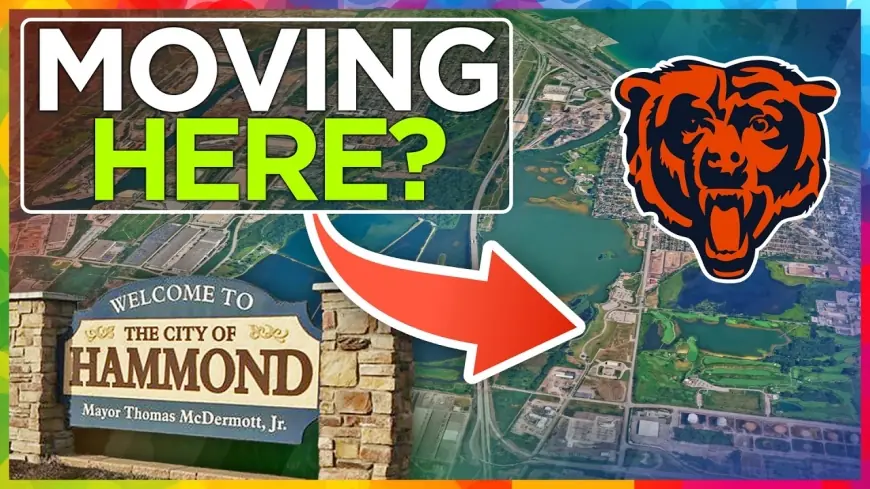
Speculation that the Chicago Bears could move to Indiana surged after lawmakers in Indiana advanced a plan designed to make a new stadium project possible in Hammond, near Wolf Lake. The latest developments put real legislative muscle behind the idea of “Bears moving to Indiana,” but they do not amount to a finalized relocation decision. The Bears have not publicly locked in a move across the state line, and major hurdles remain on financing, governance, and league-level approvals.
Still, the timing matters. The push in Indiana is happening while Illinois options remain unresolved, keeping the franchise’s long-running stadium search in the spotlight and intensifying pressure on leaders in both states to put firmer offers on the table.
What happened: Indiana advances a Hammond, Wolf Lake stadium pathway
In the past 24 hours, Indiana lawmakers moved forward with legislation aimed at creating a development structure that could support a domed stadium and surrounding district in Northwest Indiana, with Hammond and the Wolf Lake area positioned as the centerpiece. The proposed framework is meant to coordinate financing tools, land planning, and public infrastructure, clearing practical obstacles that typically stall mega-projects before they leave the concept stage.
Political leaders in Indiana have publicly framed the effort as a serious play to attract the Bears, and the number that keeps circulating is a team contribution on the order of 2 billion dollars toward stadium construction. The key nuance is that Indiana’s pitch is progressing faster than the Bears’ public commitment: state and local officials are eager to project certainty, while the team continues to keep multiple options alive.
Behind the headline: why “Bears moving to Indiana” is suddenly credible
This is not just internet chatter. A stadium move becomes credible when three things align at the same time:
First, a site is named and repeated consistently. Wolf Lake in Hammond is now being referenced in a way that feels less hypothetical and more like an active target.
Second, a government vehicle appears. Legislation and an agency structure signal that leaders are ready to do more than cheer from the sidelines. They are building the machinery that can borrow, build, and negotiate.
Third, a dollar figure emerges. Even if the number is still fluid, the public expectation of a large private contribution helps Indiana sell the pitch as a partnership rather than a blank check.
That combination is why “are the Bears moving to Indiana” shifted from a rumor question to a live political and business story.
The stakes for Chicago, Illinois, and Indiana
The Bears have been chasing a modern stadium solution that controls revenue streams beyond game day, including concerts, year-round events, premium seating, and adjacent real estate. For the franchise, the incentive is straightforward: a new facility can change the balance sheet for decades.
For Illinois and the City of Chicago, the incentive is defensive. Losing the Bears would be a reputational blow and a real economic hit, even if the team technically remains within the broader metro orbit. It would also raise uncomfortable questions about why stadium negotiations repeatedly stall and whether public infrastructure investment can be aligned with private development.
For Indiana, the incentive is expansion. Landing the Bears would create jobs, lift regional profile, and potentially reshape Northwest Indiana’s tax base and tourism patterns. But it also carries risk: public financing tools can become controversial fast, especially if residents perceive the benefits as concentrated while costs are shared.
What we still don’t know about a Hammond, Indiana Bears stadium
Several missing pieces will determine whether this becomes a genuine relocation track or a negotiating lever:
-
Whether the Bears will issue a direct statement naming Hammond and Wolf Lake as a preferred site, rather than one option among many
-
The exact split between private money, state support, and local financing tools
-
What infrastructure costs would be required, including roads, transit access, and utilities
-
How land use and environmental constraints around Wolf Lake would be handled
-
Whether Illinois counteroffers will move from concept to binding commitments
-
Any timeline that is detailed enough to be more than a political headline
Until those points are clarified, the safest read is that Indiana is accelerating its readiness, while the Bears are preserving leverage by keeping every door open.
What happens next: 5 realistic scenarios and triggers to watch
-
The Bears narrow the field publicly
Trigger: a formal statement or presentation that prioritizes one site over others -
Indiana finalizes a financing and governance package
Trigger: legislation passes, an agency is formed, and concrete funding mechanisms are defined -
Illinois responds with a clearer infrastructure plan
Trigger: state or city leaders put forward specific commitments tied to a preferred Illinois location -
The story cools into a long negotiation
Trigger: no binding agreements, but continued planning meetings and revised proposals over months -
A surprise compromise keeps the Bears in Illinois
Trigger: a deal resolves the biggest blockers, such as public infrastructure funding, tax structure, or site control
Why it matters for fans asking “are the Bears moving to Indiana”
For fans, the practical answer right now is: a move is possible, but not decided. The Hammond, Wolf Lake concept has progressed far enough to be taken seriously, yet the gap between political momentum and an actual signed relocation plan is still wide.
The next few weeks are likely to determine whether Indiana’s push becomes the Bears’ primary route or remains a high-powered alternative that shapes negotiations back in Illinois. Either way, the rivalry is no longer just on the field; it is now a cross-border contest over who can build the clearest, fastest, least controversial path to a new Bears stadium.