






















USA vs Canada Women’s Hockey Gold Medal Game: Megan Keller’s Overtime Winner Delivers Olympic Gold and Rewrites the Rivalry Script

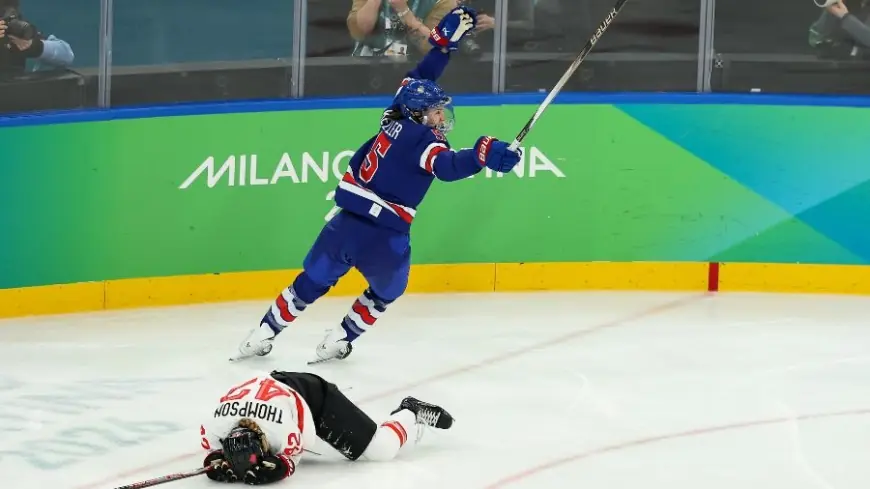
The women’s hockey gold medal game at the 2026 Winter Olympics ended the way the USA vs Canada rivalry often does: breathless, bruising, and decided by a single moment. On Thursday, February 19, Team USA beat Canada 2–1 in overtime, with Megan Keller scoring the sudden-death winner 4:07 into the extra period. The result delivers Olympic gold to the United States in women’s ice hockey and snaps the final in a tournament where margins felt microscopic from the opening faceoff.
For a U.S. group built around leadership, defensive structure, and goaltending, the finish was a statement as much as a celebration: this team could absorb pressure, chase a game without unraveling, and still execute a clean, composed winner when legs and lungs were burning.
What happened in the women’s hockey final
Canada carried the familiar edge of experience in this matchup, pushing pace and testing the U.S. defensive layers. The United States stayed connected through the middle of the ice and leaned on a calm, calculated approach: keep shifts short, live to the next puck battle, and trust that one break would be enough to flip the game.
The turning point came late when the U.S. forced overtime, resetting the contest into a one-shot reality. In extra time, Keller jumped into the play at the right instant and finished the winner, instantly becoming the defining image of the women’s hockey Olympics in 2026.
The people at the center: Keller, Hilary Knight, Aerin Frankel, and John Wroblewski
Megan Keller entered these Games as an alternate captain and one of the program’s most trusted defenders, the kind of player whose value is often measured in denied entries and clean first passes rather than highlight clips. That changed with one swing in overtime. Her goal also underscored a modern truth in elite women’s hockey: defense wins you minutes, but defense that can join the rush wins you medals.
Hilary Knight, the U.S. captain, remains the emotional and tactical anchor of this era. Knight is 36 years old, born July 12, 1989, and these Olympics were framed by the idea of legacy and final chances. In a rivalry that can turn chaotic, her role is to keep the U.S. identity intact: hard on pucks, direct through the middle, and relentless on retrievals.
In net, Aerin Frankel gave the U.S. the stabilizing backbone championship teams rely on. A goalie does not have to steal a final to decide it, but she has to remove panic from the bench. Frankel’s calm handling and rebound control helped keep the game within a single bounce even when the tempo spiked.
Behind the bench, head coach John Wroblewski’s fingerprints were visible in the team’s discipline. The U.S. didn’t chase hits out of structure and didn’t overextend trying to force the perfect look. That restraint is often what separates gold from silver in this matchup.
Behind the headline: why the U.S. won, and why Canada couldn’t finish it
This rivalry is never just about talent. It is about incentives under pressure.
Canada’s incentive in these finals is typically to turn the game into a high-tempo contest where skill can overwhelm structure. The U.S. incentive is often the opposite: compress the ice, force decisions early, and make every Canada possession cost a second or two more than it wants to spend. In a one-goal game, that extra friction is everything.
Stakeholders extend beyond the players. National programs, pro leagues, and the next generation of youth players all watch this game as a referendum on style. A U.S. gold strengthens the case for a defense-first blueprint that still allows elite defenders to attack at the right moment, exactly what Keller did.
Second-order effects show up quickly. A gold medal tends to accelerate roster stability, sponsorship leverage for stars, and resource allocation for development pipelines. For Canada, a final loss can trigger pressure to refresh systems, adjust special teams priorities, and reconsider how to generate more net-front chaos against a U.S. team that thrives on keeping the slot clean.
What we still don’t know
Even with the score settled, key details still shape the longer story:
-
How the special teams battle truly tilted in terms of chances created versus chances conceded
-
Whether any top players were managing injuries or fatigue that influenced shift length and late-game decisions
-
Which tactical tweaks each side used to attack matchups in the third period and overtime
These are the missing pieces that often explain why one team looked a half-step sharper when it mattered most.
What happens next: realistic scenarios for USA women’s hockey after gold
-
Leadership transition planning accelerates, especially as veteran voices decide what comes next after the Olympic cycle.
-
The U.S. program leans harder into its defensive identity, using Keller’s goal as proof that structure does not limit offense, it enables timely offense.
-
Canada responds with a renewed push for pace and depth scoring, prioritizing ways to create second and third chances rather than relying on clean looks.
-
The rivalry heats up immediately in the next international window, where both sides will treat this final as the new baseline, not the finish line.
For fans searching women’s hockey schedule and results, the headline is simple: USA women’s hockey won Olympic gold by beating Canada in overtime. The deeper truth is more revealing: the United States won because it stayed emotionally steady in the sport’s most emotionally unstable matchup, then trusted a defender to deliver the defining moment.