
























ski mountaineering Debuts at Milan-Cortina: A Grueling, Rooted Addition to the Winter Games

On Thursday, Feb. 19, 2026 (ET), ski mountaineering — known to fans as skimo — arrived on the Olympic stage in Bormio, Italy, with a compact, dramatic program designed to showcase the sport’s blend of uphill endurance, quick transitions and technical descending. The event married centuries-old mountain travel traditions with modern athletic spectacle, delivering rapid-fire sprints and an endurance-heavy mixed relay that played out on some of the same slopes where the discipline originated.
What viewers saw: sprints, relays and frantic transitions
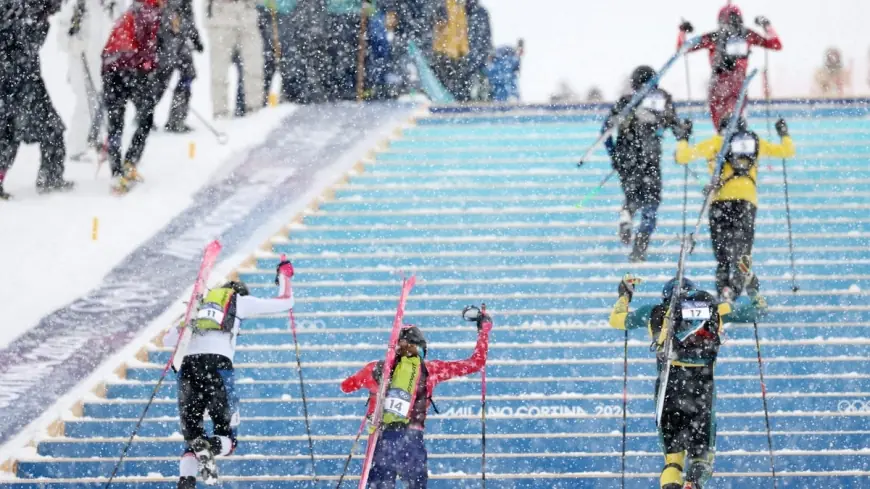
The Olympic showcase included men’s and women’s sprints alongside a mixed relay format. Sprint races are short and brutal: competitors climb on skis using adhesive skins for traction, shed skis to continue on foot for a staircase segment, then reattach skis to finish a final ascent before a downhill dash. Each sprint lasts roughly three minutes and carries around 230 feet of vertical gain at its peak, compressing climbing, running and skiing into a near-sprint endurance test.
The mixed relay extends those demands. The female partner completes two ascents and two descents — totaling roughly 400 to 500 feet per effort — then tags her male teammate to repeat the sequence. The relay runs about 30 minutes and rewards teams that combine steady climbing power, clean transitions and aggressive but controlled descent skills. Observers were advised to watch the transitions closely: teams gain or lose time when athletes strip skins, shoulder skis for the run section, and then reattach gear under pressure.
U. S. competitors and the sport’s growth
Two American athletes made the trip to the alpine venue, both representing a nation where skimo has expanded only in recent years. One of them, Cameron Smith, has emerged as a leading figure in U. S. ski mountaineering and described the sport as demanding both explosive power and repeatable endurance: “You have to be powerful, explosive, fast, and also be able to repeat these climbs over and over again. ” His teammate Anna Gibson, relatively new to the discipline, emphasized the track-like intensity of sprint heats and the tactical nuance required in close quarters.
Development at the grassroots level has helped build a competitive pipeline. Early North American champions who trained in Europe seeded clubs and youth programs back home, particularly in mountain communities with strong skiing cultures. Those local efforts, paired with increased international visibility, created the conditions that allowed U. S. athletes to qualify and compete on the Olympic stage this week.
Why the Olympic inclusion matters — and what’s next
Skimo is the first new Olympic winter sport introduced since snowboarding joined the program in 1998, and its debut injects a fresh test of mountain endurance into the Games. The event highlights centuries-old alpine practices—people moving across snowbound terrain under their own power—updated with modern skis, synthetic skins and race tactics crafted for short, intense formats.
Whether ski mountaineering will return to the Olympics beyond this showcase remains undecided. Its strongest footholds are in alpine Europe, where nations have long cultivated a competitive scene, but the sport’s expanding presence in North America and advocacy from its international federation aim to keep it in future Games. For viewers, the newfound visibility on an Olympic stage may translate into more athletes, more youth programs and greater acceptance of skimo as both a competitive discipline and a way to experience high mountains.
For those watching the debut, the defining imagery was consistent: athletes sprinting uphill on skins, shouldering skis to scale staircases, then reattaching gear and letting gravity take over on the descent. In three-minute sprints and half-hour relays alike, races were decided by tiny margins in transitions, precise technique on the climb and fearless, controlled skiing on the way down — a compact but comprehensive test of what it means to move across mountains on skis.