























iftar dua: Crescent sighting sets Ramadan start for Wednesday, February 18 — fasting hours, suhoor and iftar times explained

The moon-sighting committee has observed the new crescent, setting the first day of Ramadan for Wednesday, February 18, 2026 (ET). As communities prepare for the month of fasting and increased worship, leaders are highlighting the practical consequences: variable fasting hours around the globe, the lunar rules that govern the start and end of the month, and customary practices such as suhoor, iftar and the iftar dua recited at sunset.
Moon sighting, lunar rules and the calendar impact
The start of Ramadan follows the sighting of the crescent, a tradition rooted in the lunar Hijri calendar. That calendar makes months either 29 or 30 days long, so the exact length of Ramadan will be confirmed toward the end of the month. Because the lunar year is about 10 to 12 days shorter than the solar year, Ramadan shifts earlier each year on the Gregorian calendar — a movement that explains why observance dates change annually. It also means unusual scheduling patterns lie ahead: by 2030, Ramadan will be observed twice, beginning on January 5 and again on December 26 of that year.
Moon-based determination also affects local timetables. The crescent sighting that led to the February 18 declaration triggers coordinated announcements of suhoor (pre-dawn meal) and iftar (post-sunset breaking of the fast) times for communities and mosques, which rely on local sunrise and sunset calculations for daily worship and fasting observance.
Fasting hours, suhoor and iftar times — what to expect this year
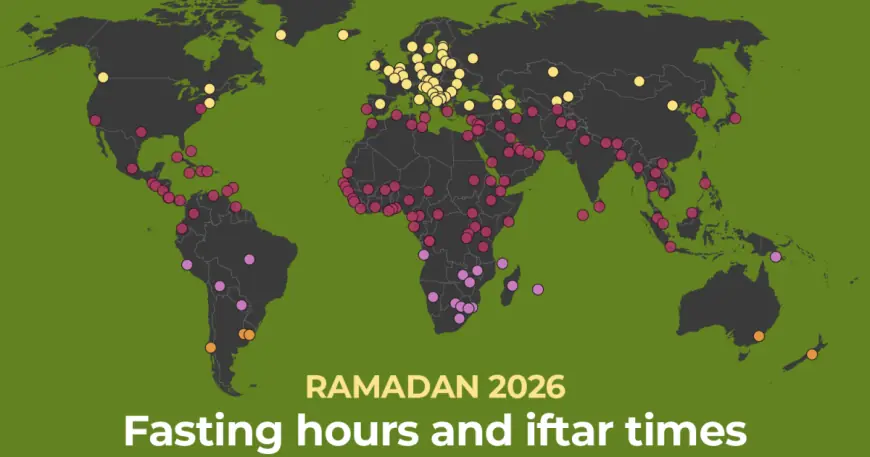
Fasting this Ramadan will vary widely by location. Dawn-to-dusk fasts will last anywhere from roughly 11. 5 to 15. 5 hours depending on geographic location. For nearly 90 percent of the world’s population in the Northern Hemisphere, the first day’s fast will be shorter than in recent years — about 12 to 13 hours on the first day — and those daylight durations will continue to shrink through the month as the region moves further into winter. Conversely, communities south of the equator will face longer first-day fasts, near 14 to 15 hours, with those durations also changing as the month progresses.
Practically, this means suhoor schedules will shift earlier or later depending on longitude and latitude: worshippers will plan pre-dawn meals and final morning prayers before the local true dawn, and will break their fast at local sunset times. The obligations of the fast include refraining from eating, drinking, smoking and sexual relations during daylight hours — practices observed to cultivate greater taqwa, or God-consciousness, throughout the month.
Preparing spiritually and practically — the role of iftar dua and communal rhythm
Communities are already mobilizing practical support for worshippers: distribution of published timetables, mosque announcements of suhoor and iftar times, and volunteer-led iftar arrangements for those in need. Many will mark sunset with communal or family iftars, and it is common to utter an iftar dua at the moment of breaking the fast to give thanks and seek blessings.
Beyond the daily rhythm of meals and prayers, Ramadan remains a season of intensified recitation, reflection and charity. Observant Muslims will use the confirmed start date and local timing guides to plan nightly prayers, special taraweeh services, and zakat or charity disbursements that commonly accompany the month. With the crescent sighting now announced for February 18, communities can finalize logistics, publish local suhoor and iftar timetables, and prepare for a month that will last either 29 or 30 days depending on the next sighting.
As the month unfolds, worshippers and institutions will watch the skies again near the end of the cycle to determine Eid timing, completing the lunar rhythm that has governed these observances for centuries.