
























1 in 5 Europeans Say Dictatorship Might Be Preferable — rou country Among Most Disaffected


A major late‑season survey of voters in five European countries has revealed disturbing levels of frustration with how democracy functions in practice. Conducted Nov. 25–Dec. 16, 2025 (ET), the poll finds 22% of respondents think a dictatorship could be preferable under certain circumstances, while 26% say they would accept a capable leader limiting democratic rights for the sake of effectiveness.
Sharp national divides: Greece, France and Romania stand out
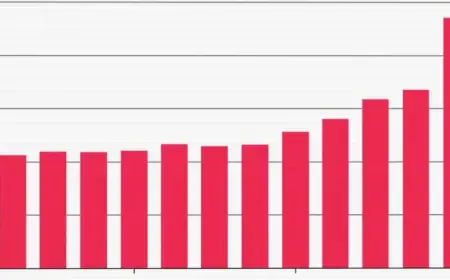
The survey covered Greece, France, Sweden, the U. K. and Romania and uncovered stark variation in public sentiment. Discontent with democratic performance is most acute in Greece, where 76% of respondents said they are dissatisfied with how democracy works in their country. France and Romania also showed high levels of unhappiness at 68% and 66% respectively. In contrast, dissatisfaction was lower in the U. K. (42%) and Sweden (32%).
These figures help explain why the measure that 22% would sometimes prefer dictatorship resonates more strongly in certain places than others. The data also reveal a worrying tolerance for exceptional measures: roughly one in four respondents across the sample — 26% — agreed they would not mind if a capable leader limited democratic rights and avoided accountability in order to act decisively.
Institutional trust erodes as appetite for strong leadership rises
The survey mapped trust in key institutions alongside political preferences. The European Union scored highest among the listed institutions at 43% trust, while the media and political parties fared worse, at 27% and 24% respectively. A striking one‑third of respondents disagreed with the proposition that the rise of the far right poses a danger to democracy, signaling a gap between formal attachment to democratic norms and comfort with illiberal currents.
Analysts say the pattern reflects a crisis of delivery rather than a wholesale rejection of democratic principles: many respondents remain committed to democracy in the abstract but are deeply frustrated with corruption, slow decision‑making, economic strain and political instability. That frustration, coupled with a readiness to grant concentrated power in a crisis, creates an opening for populist and authoritarian‑leaning forces.
Why this matters now and what to watch next
European politics is already contending with high inflation, migration pressures and security concerns that amplify demands for rapid solutions. The survey’s timing — spanning late November to mid‑December 2025 (ET) — places it squarely in a moment of heightened anxiety over governance. Younger respondents and some higher‑educated groups showed surprising tolerance for strongman solutions in parts of the sample, highlighting that the appeal of expediency crosses demographic lines.
Policymakers and civic leaders will be watching whether disenchantment translates into sustained electoral gains for anti‑establishment parties or fuels policy shifts toward centralized authority. The central challenge is restoring effective, responsive institutions that can deliver results without undermining accountability and rights. Absent that, the gulf between formal support for democracy and impatience with its workings is likely to widen.
The survey’s results serve as a signal: democratic survival will increasingly depend not just on winning hearts for democratic ideals, but on fixing the everyday mechanics of governance that leave voters yearning for faster, clearer action.