












Illinois committee cancels hearing as chicago bears stadium fight intensifies

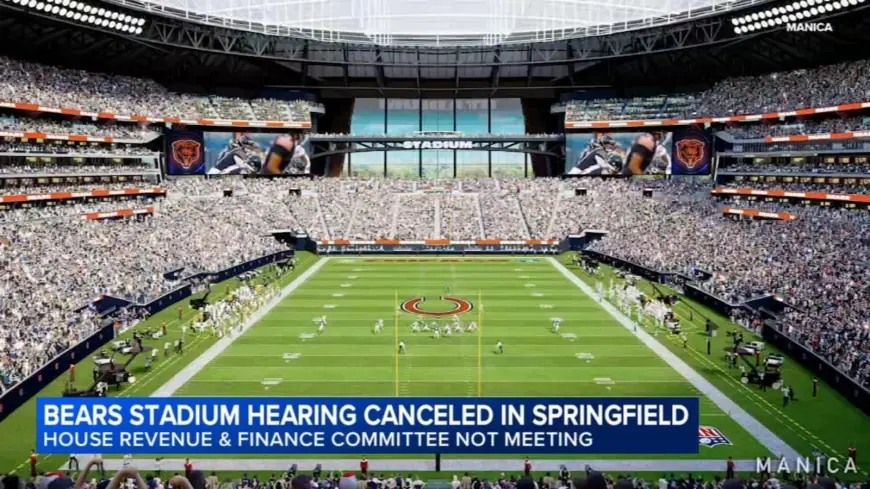
The Illinois House Revenue and Finance Committee canceled a scheduled meeting Wednesday that would have considered a high-stakes tax bill tied to a proposed new stadium for the Chicago Bears in Arlington Heights. The pause in Springfield comes as Indiana lawmakers prepare competing measures aimed at luring the team across state lines.
What changed in Springfield
Lawmakers pulled the Mega Project Assessment Freeze and Payment Law from the committee agenda this week, delaying debate over a package that would allow very large development projects — including a Bears stadium — to lock in property tax assessments for decades. The proposal would permit assessment freezes for qualifying projects with price tags at or above a $500 million threshold and could stretch for as long as 40 years.
State leadership and team officials have held private discussions in recent days. The governor has publicly said progress is being made toward keeping a new stadium in Illinois, and top aides and legislators have been meeting with team representatives behind closed doors to try to iron out outstanding details. Supporters of the proposal argue that tax certainty is necessary to prompt a multi-billion-dollar investment in stadium construction and surrounding development; critics counter that taxpayers should not subsidize an NFL franchise with long-term tax concessions.
Beyond the assessment freeze itself, the legislative package includes requests for significant state investment in supporting infrastructure such as new roads, upgraded utilities, and other public works needed to make a suburban stadium project viable. While team leadership has maintained it would finance the stadium structure, the public funding request for related infrastructure has been described as exceeding $850 million.
Indiana steps up its pitch
At the same time Illinois lawmakers paused, Indiana moved swiftly to advance measures designed to make a move across state lines more attractive. State legislators in Indiana are weighing the creation of a stadium authority modeled on an existing Illinois agency that handles sports facility financing, and one bill carrying that language faces a near-term deadline to clear a committee.
Lawmakers in Indiana have signaled urgency: committee action was slated for Thursday morning ET on language that could be appended to a larger bill and formalize a path for a Bears site in northwest Indiana. The region’s leaders have been courting the team with proposals focused on cities such as Hammond, Gary and Portage, and some outside coverage has suggested Hammond is a leading contender.
Competitiveness between the two states is shaping the timetable in Springfield. Proponents of keeping the team in Illinois warn that delays could allow Indiana to lock down commitments and create irreversible momentum for a relocation. Opponents continue to point to fiscal risks for Illinois taxpayers and question whether the long-term tax breaks and public infrastructure bills are appropriate uses of state resources.
What comes next
With the Springfield hearing postponed, lawmakers in Illinois say they need more time to refine language and negotiate local agreements before bringing the measure forward again. The delay buys time for additional private negotiations between state officials and team leaders, but it also hands a narrow window to Indiana to press its advantage in committee chambers.
For local communities, the stakes are high: the Bears’ lease at their current home runs through 2033 and the team’s future site would shape regional development, tax revenue streams, and traffic and infrastructure planning for decades. Observers expect renewed urgency in the coming days as both states attempt to finish work on legislation and as team decision-makers weigh competing offers. The next moves by legislators and the franchise will determine whether the debate stays centered in Illinois or shifts to Indiana before the end of the legislative session.