

























itv news: Bristol council's van dweller tax could push people 'back to kerbside'

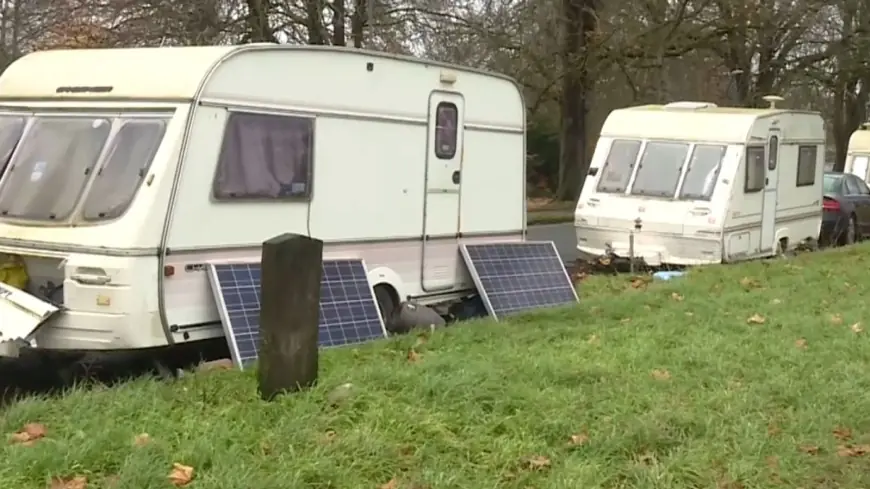
Plans to charge council tax on vehicles parked on temporary pitches in Bristol have prompted strong objections from residents on those sites who say the extra cost could force some back onto kerbsides and roads. The authority says the move is intended to reflect the wider use of local services and to support expansion of managed spaces across the city.
What the charge would mean for people living on meanwhile sites
Under the proposal, people living on the city’s meanwhile sites will be asked to pay Band A council tax — set at £35 per week — in addition to the existing pitch fee of £30 per week. The meanwhile sites were established during the pandemic on disused land and provide basic facilities such as waste removal and porta-loos. Pitch fees are designed to cover the cost of running and servicing those sites; council tax is intended to contribute to a wider range of local services.
Residents who use the pitches say the setup does not mirror conventional housing. On a typical 6x6m pitch, vehicles sit on former car parks that do not offer many of the protections or services associated with rented accommodation. Concerns have been raised about drinking water that has not been fully tested for safety, and the fact that pitch users are already paying for site servicing.
One resident, who uses the name Geren, warned that adding council tax on top of pitch fees could be the "tipping point" for some people and push them to leave the meanwhile sites and return to living on kerbsides. Another resident, named Ann, said she is grateful for the managed spaces but unwilling to pay council tax "under the current conditions. " A community mental health worker living on a site described the new banding as unfair, noting that many residents are happy to contribute to community projects but lack the same rights and resources as standard tenants.
Council rationale and practical issues
The local authority has framed the change as part of a wider effort to increase the number of managed pitches across the city. It says it will work with residents and offer help to apply for any council tax discounts that may apply. Previously, the council used its discretion and did not charge council tax on meanwhile sites.
Officials point to practical obstacles in extending services tied to a postal address. People living on the pitches are currently unable to use their pitch as a postal address for voter registration, with the authority saying it cannot guarantee secure delivery to individual pitch spaces. That limitation factors into how sites are assessed for council tax and other formalities.
Still, van dwellers argue that being banded as a Band A property does not reflect the realities of their living conditions. They stress the temporary, often precarious nature of the pitches and the lack of long-term tenancy protections that typically accompany council tax assessments for housing.
Wider context and possible consequences
Bristol has become a focal point for vehicle-based living in recent years, with the number of live-in vehicles growing significantly. The apparent surge in van dwelling makes the council’s decision about how to fund services and expand managed spaces especially sensitive. Critics say that imposing extra charges on those already struggling could erode the appeal of managed options and lead to a rise in roadside parking and kerbside living, which the meanwhile sites were set up to reduce.
The debate highlights a broader policy question: how to balance the cost of providing managed, safer spaces with the financial pressures on people who live in vehicles. If some residents do move away from managed pitches to informal roadside locations, the public-health and congestion issues the meanwhile sites were designed to address could re-emerge.
The council has indicated it will continue discussions with the community as it seeks to roll out more spaces. For residents, the coming weeks — and the implementation of the charge from April — will be a critical moment in determining whether managed sites remain a viable option or whether financial pressures will push people back onto the city’s streets.