





















Why chicago weather left cars dust-covered after Tuesday night's rain

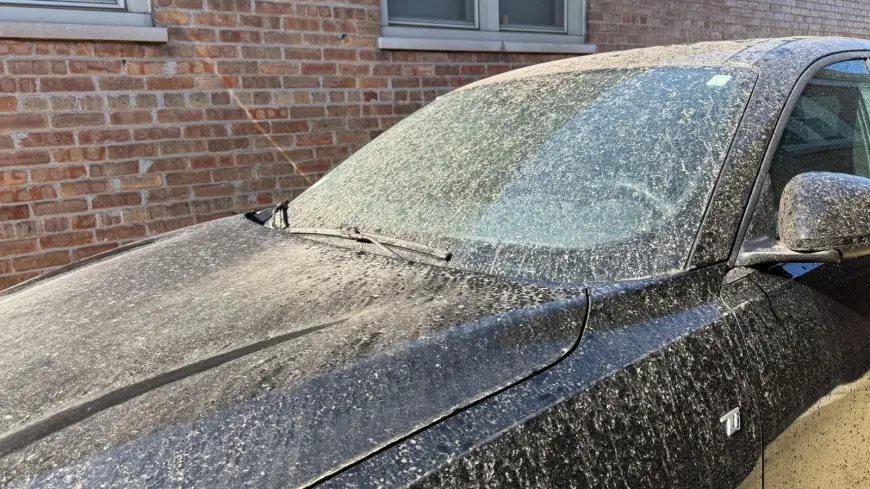
Chicago woke up to cars speckled in brown this Wednesday morning (ET) after a mix of dust, smoke and light rain combined to deposit particulate matter on vehicles across the region. Meteorologists and witnesses say the unusual dirty-rain event was driven by strong winds that lofted material from Great Plains wildfires and agricultural dust ahead of a light precipitation band overnight.
How dust and smoke turn ordinary rain into dirty rain
Rain normally forms when water vapor condenses on tiny particles in the air. When those condensation nuclei are abundant — from dust, smoke, ash or dirt — raindrops can capture more of that material as they fall. In this case, a layer of particulates was lofted into the atmosphere by gusty southwest winds and then intercepted by light rain late Tuesday night into early Wednesday morning (ET).
The precipitation was not heavy enough to wash the dust completely away. Instead, the droplets carried the particles down and left a thin, stubborn coating on windshields, hoods and rooftops. Drivers noticed windshield wipers and washer fluid struggling to clear the grime, and many described the rain as feeling unusually dirty while driving home the night before.
Where the particles came from and the role of wildfires
Storms and high winds across parts of the Great Plains kicked up dirt and dust, pushing that material hundreds of miles east. Wildfires further southwest added smoke and ash into the same air mass. One large blaze in Oklahoma expanded rapidly and burned tens of thousands of acres in a short time, turning into what fire managers classify as a megafire. Evacuation orders were issued in nearby communities as crews worked to protect residents.
Gusty southwest winds that delivered the particulates to the Chicago region also brought drier air on Wednesday (ET), prompting fire-weather concerns across parts of the Midwest. That same wind pattern explains why the so-called dirty rain appeared in a narrow window: the particulate plume was present when light rain moved through, but conditions later dried out so there was no additional rain to follow up and re-soil vehicles.
Impact on drivers, carwashes and what to expect next
Car owners responded quickly. Lines formed early at wash bays across the city, and some operators said business surged in the morning. One worker described an unusually long lineup and a rapid pace: between 7 a. m. and 9 a. m. (ET) they cleaned more than two hundred cars. Drivers who had washed their vehicles the day before were particularly frustrated to find a fresh layer of dirt.
For vehicle owners there's some good news: forecasts for Wednesday (ET) showed no additional rain expected, meaning a proper wash should remain clean for the immediate future unless more dust or light precipitation arrives. Residents are advised to avoid letting abrasive dust sit on paint for long periods; a thorough rinse followed by a gentle wash will minimize scratching.
Meteorologists note this is a relatively rare but not unprecedented event. It requires a conjunction of high winds that loft particulates, a plume that travels into a populated region, and light precipitation that is insufficient to wash surfaces clean. Stronger storms with heavy rainfall would have likely washed the dirt away rather than deposit it.
In the short term, the focus for emergency managers in the Plains remains on firefighting and protecting vulnerable communities. For those in the Chicago area, the immediate inconvenience has been a surge in carwash traffic, a few puzzled drivers, and an unusual reminder of how far airborne dust and smoke can travel under the right weather setup.