
























bbc news: Company fined after employee dies in Ripon lawnmower crash

A grounds maintenance company has been fined after a 23-year-old employee was killed when the ride-on lawnmower he was operating slid down a slope and toppled into a pond. An investigation found the machine's roll-over protection system had been removed and the employer had not completed a suitable, site-specific risk assessment.
Investigation findings
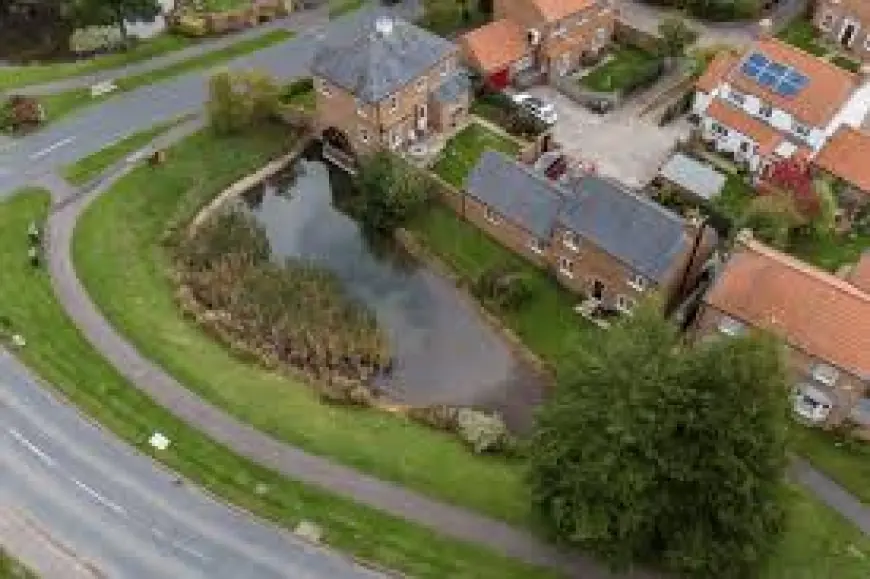
The incident took place in October 2021 while the worker was cutting grass on an inclined bank near a village pond. The worker was found face down in the water. A postmortem concluded he suffered sharp blunt force injuries to the left side of his head caused by the mower's blades and died as a result.
Regulatory inspectors determined the mower had been used without a roll-over protection system (ROPS) fitted. ROPS is described as a critical safety feature intended to protect operators if a machine overturns, particularly on uneven or sloping ground. The investigation concluded the ROPS had been removed at some point before the work took place, and that no suitable and sufficient site-specific risk assessment had been carried out for the task.
Court ruling and penalties
The company pleaded guilty to breaching duties under the Health and Safety at Work Act and was fined £27, 000 at York Magistrates' Court on 17 February 2026 (ET). It was also ordered to pay £11, 166. 41 in costs. The total financial penalty and costs were presented at sentencing as the consequence of failing to manage foreseeable hazards linked to working on slopes near water.
One inspector said this was a profoundly tragic case made more harrowing because the safety feature designed to prevent such incidents had been removed. The inspector added that the failure to assess risks and to ensure suitable safety measures were in place resulted in an entirely avoidable loss of life.
Family reaction and wider safety implications
The victim's parents described the day as their son's last and said the pain they feel is unimaginable. They expressed their belief that his death could have been prevented and should never have happened.
Regulatory guidance highlights that suitable risk assessment is essential when operating ride-on machinery, particularly on slopes or near water. Employers must ensure equipment is appropriate for the terrain and fitted with necessary safety features to protect operators. In addition to equipment checks, supervisors should confirm that every task has a site-specific risk assessment that accounts for terrain, proximity to hazards like water, and the condition and configuration of machinery.
Safety specialists note that removing or disabling safety-critical equipment can dramatically raise the probability of catastrophic outcomes. Preventive steps include maintaining ROPS and other protective systems, training operators on safe use of machinery on sloping ground, and implementing controls such as exclusion zones around water, mechanical barriers, or the use of smaller, more stable equipment for steep banks.
The prosecution and penalty underline that the duty to protect workers is an active one: employers must identify hazards, eliminate them where possible, and where elimination is not practicable, must put effective controls in place. In this case, the absence of those measures led to a fatal accident and a criminal conviction.