

























nasa asteroid warning: agency admits blind spot on ‘city‑killer’ rocks

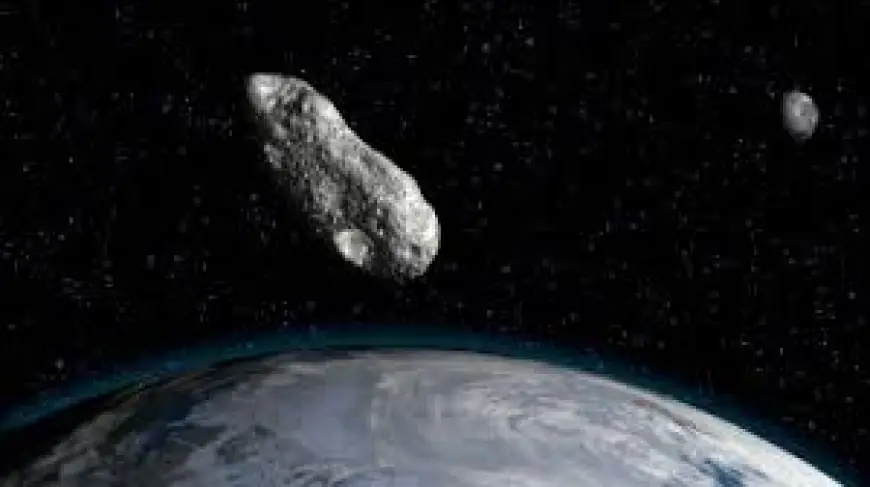
NASA planetary defense officials are raising the alarm about a class of near‑Earth asteroids that could inflict catastrophic regional damage but remain largely uncharted. Scientists say small meteors strike frequently and the very largest objects are tracked, but it is the mid‑size bodies — roughly 140 meters and up — that pose the greatest near‑term uncertainty.
Why medium asteroids keep scientists up at night
Kelly Fast, the agency’s planetary defense officer, told participants at a major scientific meeting in Arizona that what worries her most are the asteroids we do not yet know about. "What keeps me up at night is the asteroids we don’t know about, " she said, stressing that these objects are small enough to evade current survey coverage yet large enough to cause severe regional devastation on impact.
Small rocks enter Earth’s atmosphere regularly and tend to burn up or create only local damage. At the opposite end of the scale, the very largest asteroids have long been cataloged and tracked, reducing the immediate threat they pose. The intermediate category — objects around 140 meters (about 459 feet) and larger — is the gap that worries planetary defenders.
How many are out there and how well are they tracked?
Estimates place the population of these medium‑sized near‑Earth objects at roughly 25, 000. Current surveys have located only about 40 percent of that population, meaning tens of thousands remain untracked. Finding them takes time, even with some of the most capable telescopes and sky surveys in operation.
Officials note that the term “near‑Earth object” covers a broad range of asteroids whose orbits bring them into the Earth’s orbital neighborhood. A subset of those are classed as potentially hazardous asteroids (PHAs): objects generally larger than about 460 feet whose orbits can bring them within roughly 4. 6 million miles of Earth’s orbit around the sun. The label highlights long‑term possibilities, not an imminent hit on any particular timescale.
Paul Chodas, manager of the Center for Near Earth Object Studies, has explained that the “potentially hazardous” designation means an object’s orbit could evolve over centuries or millennia into one that raises an impact chance. Those long‑term possibilities are not the focus of short‑term impact assessments, he said.
What recent cases reveal about detection and risk
Recent asteroid tracking episodes underline the limits and strengths of current systems. For example, data at one point showed an elevated impact probability for an object labeled 2024 YR4 in 2032. Initial calculations placed the chance in the single digits, but continued observations and analysis removed the immediate threat and found no significant risk for 2032 or beyond.
That episode demonstrates how early uncertainty can generate alarming figures, only to be resolved as more observations refine an object’s orbit. It also shows the importance of rapid detection and follow‑up: the earlier an object is found, the more time there is to refine its orbit and, if necessary, plan any mitigation.
Despite the progress in cataloging larger NEOs, experts stress that defensive posture remains incomplete. The current priority is to accelerate discovery of the mid‑size population so that potentially dangerous objects can be tracked long before they pose short‑term threats. Building more survey capacity, improving follow‑up networks and investing in deflection technologies are central themes of the work ahead.
For now, planetary defense leaders are clear about the challenge: the combination of relatively small size, sparse detection coverage and potentially serious regional consequences makes medium‑sized asteroids the highest near‑term concern. Closing that detection gap is the key task if a future impact is to be predicted and, ultimately, prevented.