























Texts show Bannon urged use of 25th amendment to remove Trump

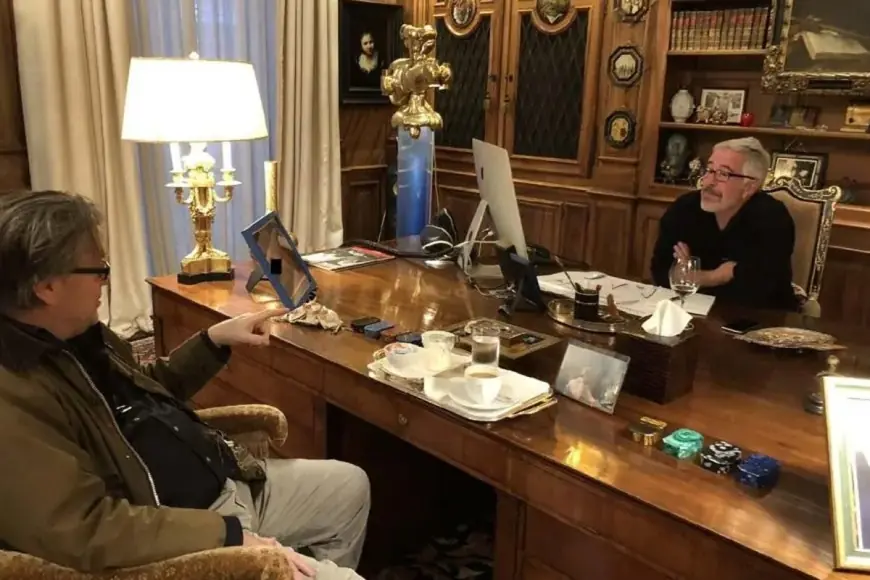
Newly released documents reveal a late-2018 text exchange in which a prominent political adviser suggested invoking the 25th Amendment to remove the president from office. The messages, exchanged around New Year’s Eve 2018 (ET), form part of a broader trove of material that also details months of communications between the adviser and a convicted sex offender in the run-up to the latter’s 2019 arrest.
What the texts reveal
The correspondence began on December 31, 2018 (ET), shortly after a midterm election shift in Congress. In the exchange, the adviser lamented what he described as a White House with “zero plan to punch back” and warned that the president was “really borderline. ” The other participant replied with concern about the president’s potential actions. The adviser then wrote, “I think it’s beyond borderline — 25 amendment, ” explicitly invoking the constitutional mechanism that allows the vice president and a majority of cabinet members to declare a president unfit and remove him from office.
Elsewhere in the same string, the adviser suggested that “we really need an intervention. ” Those messages sit alongside dozens of other texts and emails from the period between late 2017 and mid-2019 that track frequent contact between the two men. In many exchanges the adviser provided strategic guidance on media strategy and reputation management, including recommendations about lawyers and public messaging.
Political fallout and scrutiny
The revelation that a close political operative discussed the 25th Amendment with a disgraced financier has prompted immediate political firestorms. Critics argue the messages raise questions about loyalty and judgment, and some called for formal questioning by law enforcement. Others seized on the communications as evidence of inappropriate closeness to a figure whose criminal history makes any association politically explosive.
The discussion of the 25th Amendment taps into an earlier, persistent debate about whether that constitutional provision should ever be wielded for political, rather than strictly medical or cognitive, reasons. Senior law-enforcement and national-security figures have privately weighed the option in past administrations, but its public invocation remains rare and controversial. The new messages add a fresh, partisan dimension to that debate ahead of upcoming political events.
Context and the adviser’s response
In public statements tied to these disclosures, the adviser characterized the relationship with the financier as professional and framed his outreach as part of a filmmaking project. He said he was pursuing a documentary and sought extensive interviews from a reclusive subject to expose wrongdoing.
Documents from the same period show the adviser offering media training and image-rehabilitation strategies even as the financier’s legal troubles deepened. Those exchanges intensified in the six months before the financier’s 2019 arrest, with messages about when to lie low, when to push back, and how to rebuild a philanthropic image.
The adviser’s post-White House activities have continued to draw attention. He later served a four-month prison sentence in 2024 for defying a congressional subpoena related to an investigation into a major January security breach in Washington, adding a punitive chapter to his controversial public life.
Legal scholars and constitutional experts note that while private discussion of the 25th Amendment is not unlawful, advocacy of its use by political actors against an elected leader stokes institutional concerns. The new messages are likely to renew calls for clarity around both the adviser’s motives at the time and the broader norms that govern extraordinary constitutional maneuvers.
The release of these documents comes amid ongoing efforts to parse millions of pages connected to the financier’s activities. The exchanges now public will almost certainly be scrutinized by both opponents and defenders, further fueling debate over political strategy, personal associations, and the proper application of constitutional remedies in moments of political crisis.