

![Florida Panthers Face Off Against [Team Name] on April 4, 2026](https://www.filmogaz.com/uploads/images/202604/image_430x256_69d2395a47e1f.webp)












Champions League tie halted after Vinicius Jr alleges abuse by gianluca prestianni

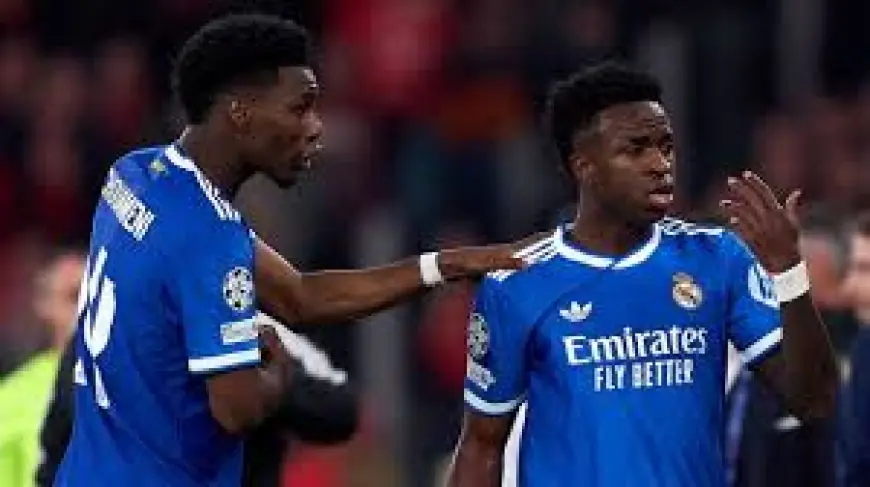
Real Madrid forward Vinicius Jr says he was racially abused by Benfica midfielder gianluca prestianni during Tuesday’s Champions League play-off first leg, a confrontation that forced the referee to activate football’s anti-racism protocol and pause the match. European authorities have opened a formal investigation and have appointed an ethics and disciplinary inspector to gather evidence.
Match stoppage, immediate reactions and the probe
The game was stopped for around eight to ten minutes after the referee implemented FIFA’s three-step anti-racism procedure following an on-field exchange shortly after Vinicius scored a stunning solo goal. The referee made the ‘No Racism’ gesture and halted play while the situation was assessed.
Vinicius says the abuse came from gianluca prestianni; the Benfica player denies the allegation and has issued a statement rejecting the claim. Several Real Madrid teammates publicly backed Vinicius, with Kylian Mbappe saying he heard the alleged slur repeated multiple times. The Benfica coach suggested the celebration had provoked the incident and pointed to the club’s historic links to a past Black icon as evidence against the club being racist—comments that have fueled further debate about how such incidents are framed.
UEFA has opened an inquiry and assigned an ethics and disciplinary inspector to collect witness statements, match footage and other evidence. Given the complexity and profile of the case, investigators expect the process to stretch into weeks rather than days. A similar disciplinary process in a past European competition resulted in a lengthy ban that was imposed about a month after the original incident, illustrating how long these proceedings can take.
Implications for the second leg and wider consequences
The second leg is scheduled for next Wednesday at the Bernabéu, and with the investigation just starting, the accused player is likely to be available for selection unless immediate match or competition measures are taken. UEFA’s disciplinary code sets a minimum ten-match ban for proven racist conduct in European competition, and any formal sanction would typically be accompanied by mandated education and awareness measures for the club and individuals involved.
Beyond potential suspensions, the case spotlights recurring issues around how racism allegations are handled on and off the pitch. Vinicius has previously said he has been subject to multiple incidents during his time at Real Madrid—marking this episode as the latest in a pattern he describes as persistent, something that has fueled accusations that clubs, officials and governing bodies must do more than issue statements.
Sporting and social fallout
What began as a match-defining piece of skill from Vinicius has been overshadowed by the allegation, reigniting debates about player conduct, crowd responsibility and managerial responses. Some voices have defended Vinicius’s right to confront perceived abuse; others have argued that celebrations should be more restrained. That tension—between action that players view as self-defence and criticism that they are provoking incidents—has repeatedly complicated efforts to build a clear, consistent response to racism in football.
For now, the dispute will be resolved through formal processes. The inspector’s findings, any subsequent disciplinary ruling, and whether UEFA imposes education measures or a suspension will determine immediate sporting consequences. But the longer-term question remains whether the game’s institutions can translate investigation and punishment into meaningful changes that reduce repeat incidents and change the matchday environment for players of all backgrounds.
The upcoming week will be watched closely: legal and disciplinary timelines will run in parallel with media scrutiny and reaction from players, clubs and fan groups. Whatever the final ruling, the incident has again pushed football to confront its handling of racism at the highest level.