
![Florida Panthers Face Off Against [Team Name] on April 4, 2026](https://www.filmogaz.com/uploads/images/202604/image_430x256_69d2395a47e1f.webp)















sugar bowl academy Members Among Victims in Deadly Lake Tahoe Avalanche

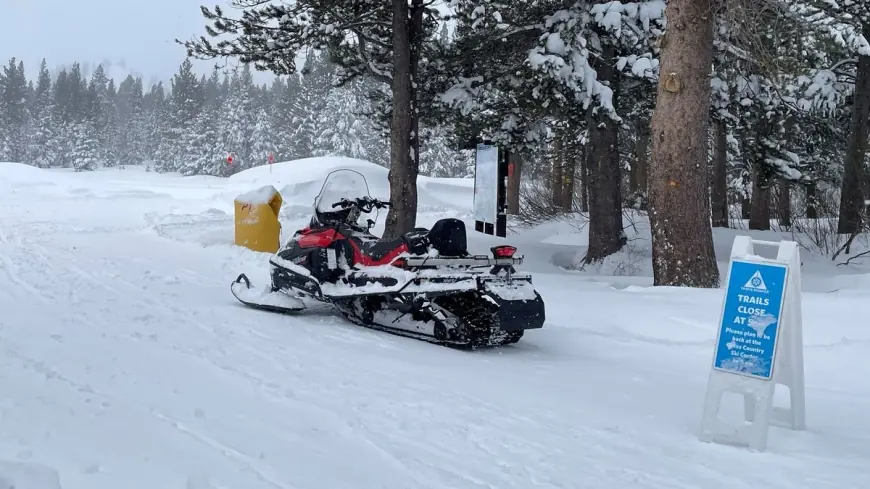
Several members of Sugar Bowl Academy are confirmed to be among those who died when an avalanche struck a group of skiers in steep backcountry terrain near Lake Tahoe. Six survivors communicated with emergency responders using an iPhone’s Emergency SOS satellite feature and an emergency beacon during the multi-hour rescue effort.
Satellite texts helped coordinate a prolonged rescue
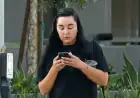
Emergency crews were dispatched at about 2: 30 p. m. ET on Tuesday after reports of an avalanche in the Castle Peak area northwest of Lake Tahoe. With cell service unavailable at the scene, the Emergency SOS feature on newer iPhones enabled survivors to establish a text link to emergency responders by connecting to a satellite.
Don O’Keefe, chief of the state office overseeing law enforcement responses, said one member of his personnel maintained a four-hour text exchange with one of the guides, relaying information to the county sheriff’s office and helping to coordinate what rescues could be attempted. The satellite link proved essential for sharing location details and the condition of those involved when traditional cellular calls were not an option.
The Emergency SOS feature is built into recent iPhone models and is designed to be used when a user cannot place a standard emergency call. Users are advised to try an emergency call first; if that cannot connect, the phone will offer the satellite path. For the phone to reach a satellite, the user must be outdoors with a clear view of the sky and horizon. When connected, responders ask for key details such as the precise location, emergency contacts and remaining phone battery life. The service is available on all models of iPhone 14, 15, 16 and 17 running iOS 16. 1 or newer and is free for two years after activation. Some Android devices, including certain Pixel models, also offer satellite-based texting to emergency services.
Sugar Bowl Academy community reels as investigations continue
School leaders released a statement saying multiple members of the Sugar Bowl Academy community and those with close ties to it died in the avalanche. The academy, a boarding and day school for competitive skiers in grades 8–12, said it is focusing on supporting athletes, students, staff and families as they grieve.
The academy has a long record of developing high-level skiers who go on to national teams and collegiate programs. Notable alumni include World Cup winner Alice Robinson, U. S. Olympian Luke Winters and Freeride World Tour champion Isaac Freeland. Leaders have emphasized the tight-knit nature of the community and pledged ongoing support for families affected by the loss.
The avalanche has been called the deadliest in the United States in roughly four decades. On the third day of the backcountry trip into Sierra Nevada terrain, an avalanche struck, killing multiple guides and guests and leaving several survivors; one person remains unaccounted for and is presumed dead. Search and rescue teams responded rapidly, but the remote, uncontrolled nature of the terrain complicated operations.
Land managers and local conservation groups note that areas such as the Frog Lake region are uncontrolled avalanche terrain that require appropriate avalanche education and gear. The group that organized the trip is now under scrutiny, and investigators are reviewing planning, route choice and public safety messaging. Posts from the guiding company acknowledged possible avalanche threats in the region in the days leading up to the incident, a detail that officials say will factor into ongoing inquiries.
School leadership called for patience and space for grieving families while signaling plans for long-term support. An executive director for the academy said the community will continue to be present for affected families in the months and years ahead, underscoring the depth of connection among athletes, staff and local residents.
Authorities continue to investigate the circumstances of the avalanche, the decisions made by the party in the backcountry and whether any additional measures could reduce future risks in this notoriously dangerous terrain. In the meantime, the role of satellite-enabled emergency communications has drawn attention as a potentially life-saving tool in remote rescue operations.