





















Macron-Modi meeting in bombay spotlights Rafale expansion and push for India-made components

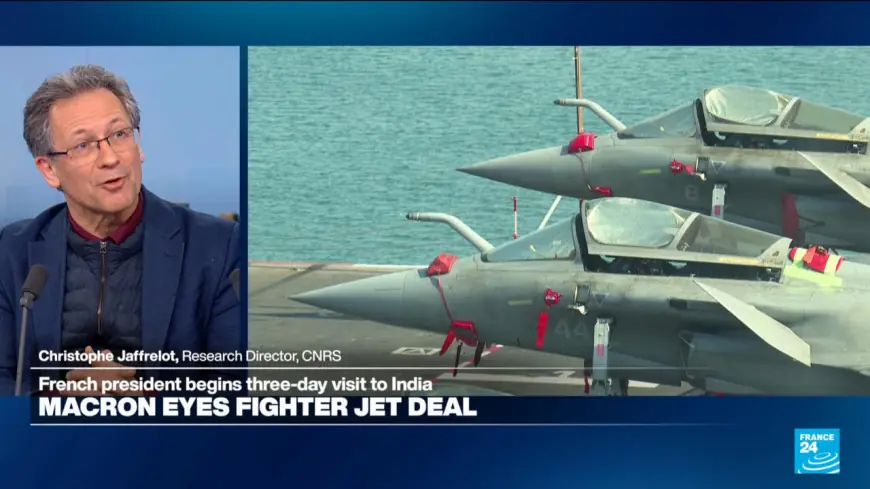
Short intro: French President Emmanuel Macron's visit to India on Feb. 17, 2026 ET sharpened focus on defence cooperation and industrial partnership. Discussions ranged from a prospective multibillion-dollar Rafale fighter jet procurement to increased localisation demands and the opening of a private-sector helicopter final assembly line.
Defence talks zero in on Rafale order and higher India-made content
Defence procurement dominated bilateral discussions as New Delhi and Paris examined a possible contract for dozens more Rafale fighters. Negotiations explored options that could see a multi-platform expansion, including a proposal discussed for 114 additional aircraft that would significantly scale the air combat partnership between the two countries.
India's defence minister pressed for a higher India-made component in any follow-on Rafale agreement, signalling New Delhi's intent to convert large defence purchases into industrial opportunities for domestic firms and suppliers. The push for greater localisation would encompass maintenance, repair and overhaul work, avionics, sub-systems and elements of final assembly, aiming to broaden the role of Indian private industry in high-end military manufacturing.
French and Indian officials weighed a model that pairs sovereign platforms with deeper technology transfer and joint production lines, a shift intended to align strategic procurement with long-term industrial policy. For manufacturers on both sides, the prospect of amplified participation in a Rafale programme raises questions about supply-chain commitments, offsets and timelines for transfer of critical technologies.
Economic and strategic partnership widens beyond fighter jets
Leaders framed the talks as part of a broader acceleration in economic and strategic ties. In Mumbai, they highlighted cooperation spanning trade, technology and energy, positioning the bilateral relationship as a stabilising force amid geopolitical uncertainty. Artificial intelligence collaboration and supply-chain resilience also entered the agenda, reflecting both countries' desire to anchor high-tech industries closer to home.
The leaders jointly inaugurated a final assembly line for H125 helicopters in the southern state of Karnataka. The facility, a joint venture between an Indian aerospace firm and a European manufacturer, is the country's first private-sector final assembly site for helicopters. Officials hailed the plant as a milestone for defence industrialisation and private-sector participation, noting that it creates local jobs while shortening delivery and sustainment chains for rotary-wing platforms.
Beyond hardware, discussions touched on maritime security and an increased presence in the Indo-Pacific, where shared concerns about stability have driven closer defence coordination. Both capitals framed their partnership as pragmatic and long-term, aiming to marry strategic cooperation with tangible industrial outcomes.
Next steps and industry implications
Diplomatic and defence teams will now need to translate political intent into contractual reality. Key questions remain about the scale and sequencing of any Rafale purchase, the scope of mandatory offsets, and how intellectual property and critical technologies will be handled. Indian industry stands to gain from explicit commitments to localisation, but the transition will require careful scheduling to ensure capability and quality benchmarks are met.
For European manufacturers, deepening ties with India offers a foothold in one of the world's fastest-growing defence markets, but it also demands flexibility on transfer-of-technology demands and significant investments in joint production infrastructure. The helicopter assembly line inauguration provides a template for what successful industrial collaboration might look like: a mix of private-sector leadership, local workforce development and ongoing operational sustainment.
As follow-up meetings and technical negotiations are expected in the coming months, both governments presented the visit as a signal that defence ties will be a cornerstone of a wider economic and strategic partnership. The outcome will shape not only future equipment purchases but also the contours of defence industrial policy and international cooperation for years to come.