























Being gordon ramsay review — six hours of setups, family life and a £20m gamble

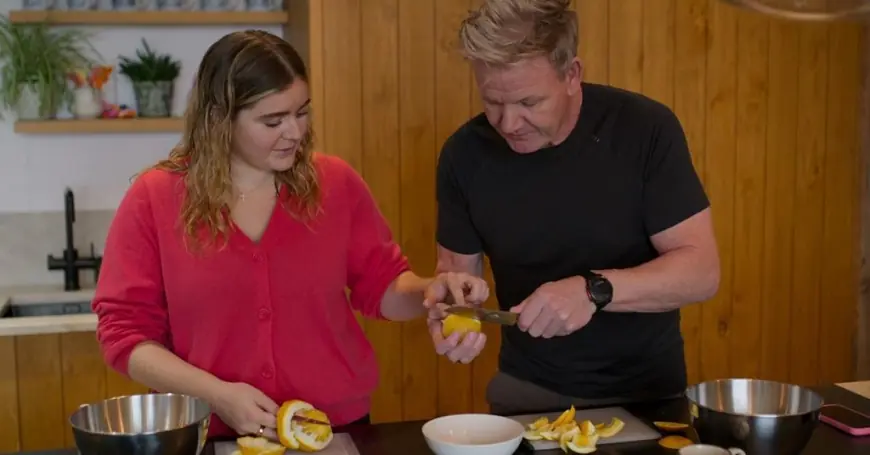
Gordon Ramsay’s six-part series turns an enormous hospitality launch into six hours of televisual drama. The programme follows the chef as he attempts to open five distinct venues across the top floors of a London skyscraper, intercut with fly-on-the-wall family scenes and candid moments that underline why he still sells ratings. It is part brand exercise, part business case study and part character portrait — and it raises the question of whether viewers needed quite so much of him at once.
A high-stakes hospitality gamble
The project at the heart of the series spans 27, 000 square feet across the upper floors of a City tower and includes a 60-seat rooftop garden with a retractable roof, a 250-cover Asian-influenced restaurant called Lucky Cat, an outpost of a brasserie brand, a private dining concept and a culinary academy. The on-screen stakes are explicit: this is presented as a £20 million personal investment, a venture the chef frames as “one of my final stakes in the ground … If it fails, I’m fucked. ”
That scale allows the cameras to linger on everything from menu engineering to lighting choices. Viewers see chefs and front-of-house staff obsess over portion sizes and plating, prototype aprons tweaked to banish sloppy pockets, and leather seating vetoed for practical reasons. There are construction calamities, supplier headaches and last-minute menu tastings that underline what it takes to open multiple concepts under one roof. The cumulative effect is both illuminating — a useful primer on what successful hospitality requires — and repetitive, as similar crises recur across episodes.
Branding, family and the limits of a six-hour window
The series doubles as an extended piece of self-presentation. The chef is credited in a producing role and the camera is invited into intimate family territory: children’s birthdays, pancake mornings and lighter domestic moments that sit in stark contrast to the kitchen heat. Those sequences humanise him, showing a side that tempers the public persona of the notoriously fiery restaurateur. When he’s off the clock he is affectionate, playful and clearly adored by his family, even as older children display a measured awareness of their father’s driven personality.
That dual focus — the warm family portrait alongside the high-pressure business narrative — is the series’ most successful gambit. It explains why the chef remains such a compelling onscreen presence: the footage establishes both the origin story of his relentless work ethic and the ongoing pressure that prevents him from slowing down. Yet the series is unabashedly promotional in tone. The extended runtime allows for deep dives into design minutiae and brand decisions, but it also means viewers are confronted with long stretches that function as marketing for the chef’s expanding empire rather than a neutral documentary exploration.
What the series delivers — and what it overstays
There is pleasure in watching skilled cooks construct impeccable dishes, and the programme succeeds when it lets craft and technique take centre stage. The culinary choreography — the precision, the timing and the artistry — is often delicious to watch. Where the series falters is in pacing: six hours is generous, and some storylines feel stretched to justify the runtime. Repeated scenes of managerial stress, celebrity appearances and staged jeopardy dilute the urgency that might have driven a tighter, more revealing film.
Still, for viewers curious about how a big-city restaurant launch unfolds, or for fans keen on seeing a more private side of a public figure, the series delivers a close-up view that few hospitality documentaries attempt. Whether that view is worth six hours depends on how much patience a viewer has for brand-building by proxy — and how hungry they are for behind-the-scenes detail.