























Why Chiefs Shouldn't Chase tyreek hill Reunion, Even as Teammates Push to Bring Him Back

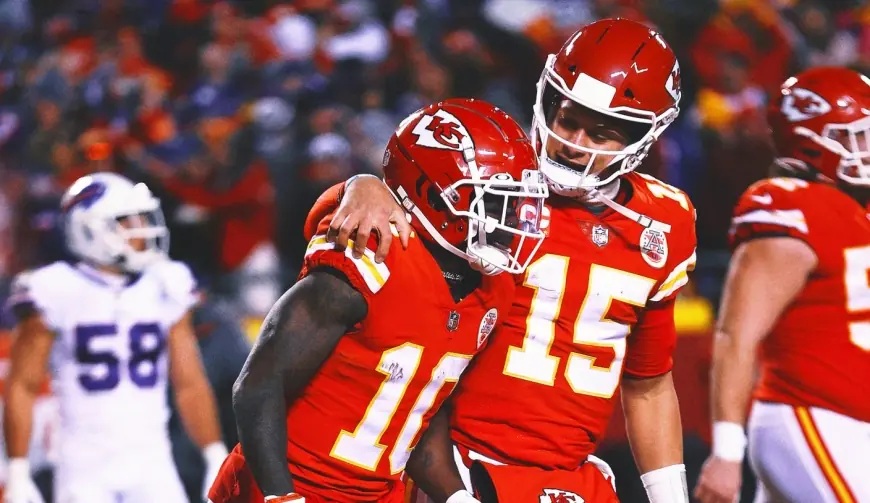
When the Miami wide receiver Tyreek Hill hit free agency after his release on Monday (Feb. 17, 2026 ET), a familiar question resurfaced across the league: should he return to the Kansas City Chiefs? The answer is split. Veteran voices in the broadcast world argued that chasing the past would be a costly gamble, while current Chiefs players publicly urged a reunion. Between a hefty salary-cap burden, Hill's serious knee injury and several wide receiver unknowns in Kansas City, the calculus is complicated.
Cap realities and health risks make a reunion perilous
The Chiefs face a narrow offseason path financially, with projections placing them roughly $55 million over the salary cap. That reality forces difficult decisions: invest big in a recovered star or spread resources to shore up multiple needs. Hill turns 32 in March and is coming off an ACL tear and a dislocated knee suffered late in the season. Those medical issues typically push down market value and increase uncertainty about immediate availability and long-term durability.
Market estimates for Hill’s 2026 salary fall notably below what he earned previously, with some projections in the range of roughly $18 million for the upcoming season. Even at that discounted price, the Chiefs would be committing scarce dollars to a single, high-variance player. That commitment would limit flexibility to address other pressing roster questions, including whether to retain veteran contributors on defense and in the tight end room who remain critical to the offense’s identity.
On-field production is another open question. Kansas City’s receiving corps underperformed last season: no wideout cleared 600 receiving yards, and both veteran free agents and early-career talents present more questions than certainty. Bringing Hill back could solve some scoring woes, but it would also introduce another question mark into a room already lacking a clear No. 2 or consistent depth beyond the top targets.
Locker-room chemistry and a narrative pull for a return
Not everyone sees the return as a risk. A vocal defensive leader for the Chiefs publicly urged Hill to come home, feeding a view that a reunion could restore swagger and align with recent coaching changes that hint at a return to previous offensive philosophies. For fans and teammates, the memory of Hill’s elite speed and game-changing plays creates a strong emotional case for bringing him back.
There’s also a schematic argument: with the offensive coordinator who once engineered big-play looks back in the building, reintroducing a dynamic deep threat who already knows the system could shorten the transition and produce immediate returns. That said, nostalgia is not a substitute for pragmatic roster construction. A player’s fit must be weighed against availability, price and the team’s ability to retain or acquire other pieces that maintain balance on both sides of the ball.
What comes next for Hill and the Chiefs
Hill will likely draw interest around the league, but his decision will hinge on whether he prefers a fresh start or a reunion with familiar faces. For Kansas City, the choice is less romantic and more strategic: commit to a marquee signing at the cost of long-term flexibility, or focus on low-risk, high-floor moves that shore up weaknesses without mortgaging the future. The franchise also faces an immediate priority in locking up key veterans whose presence stabilizes the roster and helps the quarterback regain peak form.
In short, the Chiefs must balance sentiment with pragmatism. A reunion with Hill would excite fans and could pay dividends if he returns to top form. But given salary-cap pressure, medical uncertainty and multiple roster questions, the safer path for the team is to prioritize stability and calculated upgrades rather than chase a high-profile reunion driven largely by nostalgia.