iftar time 2026: Ramadan start confirmed, fasting hours and why local times differ

Moon spotters verified the new crescent on Tuesday, February 17, 2026 (ET), setting the start of Ramadan at sundown that day and the first full day of fasting on Wednesday, February 18, 2026 (ET). Communities around the globe now turn to local timetables for suhoor and iftar as fasting begins.
When Ramadan begins (ET) and what that means for suhoor and iftar
The sighting of the waxing crescent on Tuesday, Feb. 17, 2026 (ET) means Ramadan begins at sunset that evening; the daily fasts will start before dawn and end at sunset each day thereafter. The month of observance will last 29 or 30 days, so the end date will be confirmed later in March. Community celebrations marking the close of the month are expected to begin on the evening of March 18, 2026 (ET), pending the final sighting.
Practitioners wake before dawn for suhoor, the pre-dawn meal, then refrain from eating, drinking, smoking and sexual relations until iftar at sunset. For many communities, iftar is a focal point for family and communal gatherings, with times tied to the moment the sun sets in each locality.
How long will the fasts be — global variation in fasting hours
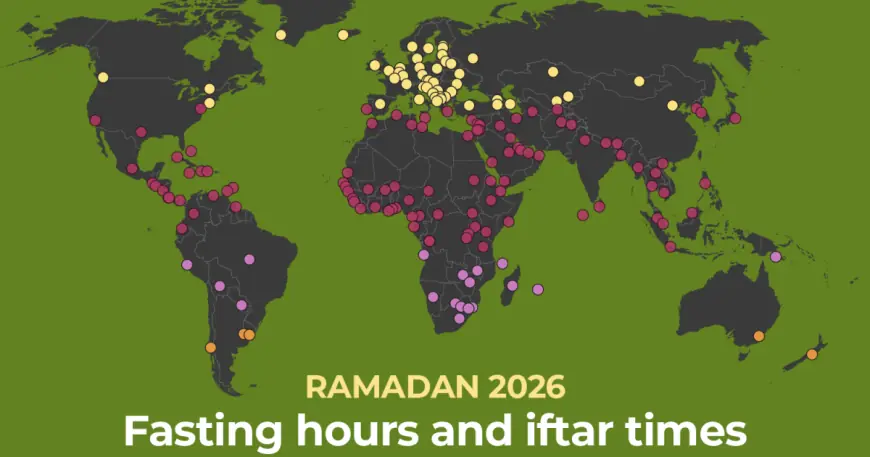
Fasting durations this year vary considerably by location. The dawn-to-dusk fast ranges roughly from 11. 5 to 15. 5 hours worldwide, with most places falling within a 12-to-15-hour span. Because it is winter in the Northern Hemisphere, the majority of people there will have relatively shorter fasts on the first day — typically about 12 to 13 hours — and those durations will slowly lengthen as the month progresses.
By contrast, communities south of the equator will generally face longer first-day fasts, commonly about 14 to 15 hours in countries such as Chile, New Zealand and South Africa, though those hours will ease as local daylength shifts. For people in many populated regions, sunset — and therefore iftar time — will fall somewhere in the evening between roughly 5: 30 PM ET and 8: 30 PM ET on early days of the month, depending on longitude and local daylight patterns.
Over the next several years the timing will continue to shift earlier in the solar calendar because the Islamic lunar year is about 11 days shorter than the solar year. That shift means fasting hours and local iftar timings will cycle through different seasons; by 2031 Ramadan is expected to coincide with the winter solstice in some areas, yielding the shortest daylight hours of the year.
Why different communities announce different start dates and how that affects local iftar time 2026
Disagreements about start dates often stem from differing methods: some communities use direct moon sighting, others rely on astronomical calculations, and some combine both approaches. That can produce rival start dates within the same country, creating confusion for families and institutions planning communal iftars on the first night.
Local religious authorities, mosques and community centers usually publish daily prayer timetables with suhoor end times (dawn) and iftar times (sunset) specific to their city or region. For accurate iftar time 2026, consult local mosque announcements or municipal prayer calendars. Those schedules account for latitude, longitude and local definitions of dawn and sunset, ensuring fasting start and end times match local observations or calculation methods.
Communities are reminded that exemptions exist for people who are ill, traveling, pregnant, nursing, elderly or otherwise unable to fast; such individuals can observe other aspects of the month and make up missed fasts later or provide charitable substitutions where permitted.
With Ramadan now under way, households and institutions will finalize timetables for suhoor and iftar in the coming hours. The coming weeks will also show how different local practices and time-keeping choices shape community rhythms around iftar time 2026.