

















Macron Visit to Bombay Sparks Push for More India-Made Rafale Components

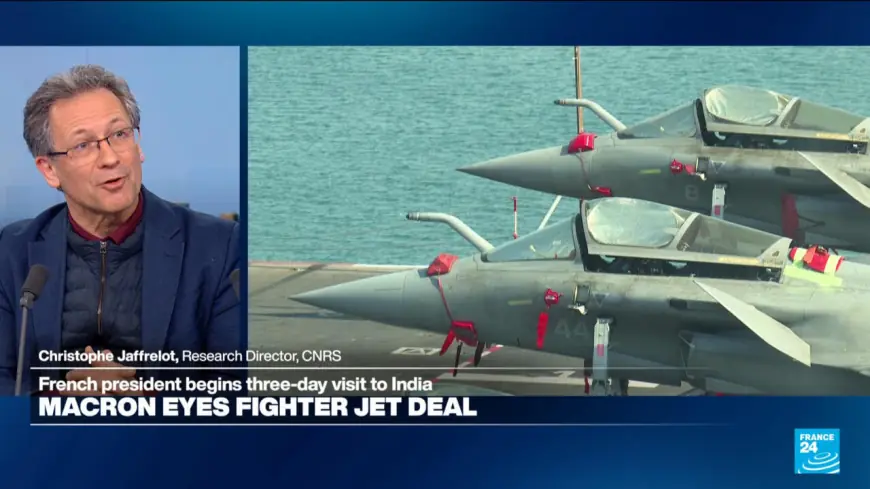
French President Emmanuel Macron's visit to India on Feb. 17, 2026 (ET) accelerated high-stakes discussions on defense industrialisation and bilateral economic ties. Indian leaders used the summit in Bombay to press for a higher share of India-made content in any future Rafale fighter-jet deal while also highlighting new manufacturing wins that underline a shift toward local production and strategic cooperation.
Rajnath presses for higher India-made content in Rafale talks
Defence Minister Rajnath Singh raised a clear demand for a significant increase in India-made components within the scope of ongoing Rafale negotiations. The push is aimed at deepening manufacturing partnerships, securing technology transfer and ensuring that any expanded fighter-jet purchase delivers meaningful workshare for Indian industry.
Paris and New Delhi are understood to be discussing a potential package that could include additional aircraft beyond earlier orders. Indian officials are prioritising local sourcing and offsets, seeking to convert major defence purchases into opportunities for domestic suppliers and for the aerospace supply chain to scale up capacity.
Analysts note the move forms part of a broader defence procurement pivot away from single-source reliance, with New Delhi intent on diversifying suppliers and building self-reliant manufacturing capability. Any enlargement of the Rafale programme would therefore be judged not only on platform numbers but on the share of components and systems produced in India and the depth of technology partnerships established.
Economic and industrial agenda broadens beyond jets
The Macron-Modi talks in Bombay also spotlighted a wider industrial agenda: artificial intelligence cooperation, trade linkages and energy ties that complement the defence docket. The leaders jointly inaugurated a final assembly line for H125 helicopters in Karnataka, a private-sector facility established through a joint venture between Indian and European aerospace firms. The new line marks a first for helicopter manufacturing in India's private sector and signals a tangible step toward localised aviation production.
That industrial milestone is likely to be held up as a model for how future aerospace projects can be structured: combinations of foreign technology, Indian manufacturing capacity and private-sector execution. For policymakers, the objective is to translate headline agreements into factory floors, supplier development programmes and skills upgrades that create high-value jobs across regions.
Implications for timelines, procurement and geopolitics
If the Rafale discussions yield a larger order with increased local content, the ramifications will be felt across procurement timelines and the domestic defence ecosystem. Localising key subsystems and components adds complexity to delivery schedules but promises longer-term resilience for supply chains and maintenance capability within India.
Geopolitically, deeper defence-industrial ties with France further anchor New Delhi's partnerships in the Indo-Pacific while offering a degree of strategic balance as India recalibrates older procurement relationships. Observers expect a series of follow-up commercial and technical negotiations to determine exact workshare, certification pathways and offset commitments. Industry players on both sides will be watching the next weeks for memorandums of intent and contracting signals that will define investment flows and production ramps.
For now, the Bombay summit has placed local manufacturing and technology transfer squarely at the centre of bilateral cooperation, converting diplomatic momentum into concrete industrial priorities that could reshape India's aerospace and defence landscape over the next decade.