
















2026 Winter Olympics: Ilia Malinin meets simone biles after figure skating heartbreak

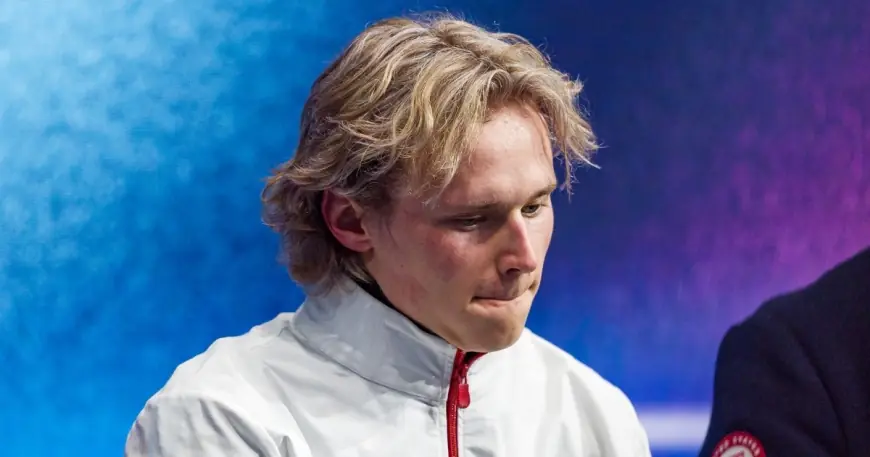
Simone Biles, who watched from the stands in Milan, reached out to fellow American Ilia Malinin after the 21-year-old's free skate unravelled in the men’s figure skating final at the 2026 Winter Olympics. Malinin, long the favorite for individual gold, fell twice, failed to land his signature quadruple axel and slipped from first to eighth overall. The meeting in Milan underscored the growing conversation around elite athletes, pressure and mental health on the Olympic stage.
Milan free skate: a fall from favourite to eighth
Malinin entered the final as the clear frontrunner, but his free skate turned into a shock evening. Errors and two falls cost him vital points, and the attempted quadruple axel — a move that has defined much of his competitive identity — went uncompleted. Visibly distraught after leaving the ice, he posted a cryptic social-media message reflecting on the invisible battles athletes carry and the corrosive effect of online hostility and expectation.
In public comments after the event on Feb. 18, 2026 ET, Malinin framed the experience as a painful but instructive moment, saying he planned to keep pushing the technical limits of the sport and would not let one performance define him. He also acknowledged the emotional toll of Olympic scrutiny and the challenge of performing under the weight of global expectation.
Biles reaches out: a shared understanding of pressure
Biles, an 11-time Olympic medalist with a history of openly prioritizing mental health, was in the audience for the free skate. She said she was immediately concerned about how the result might affect Malinin’s wellbeing, drawing on her own experience of having to step back from competition when mental blocks threatened her safety and performance.
After the final, Biles contacted Malinin and they met in Milan. She described entering a protective mode, wanting to offer both practical and emotional support. "I was really worried about how his mental health was going to be, " she said, noting that when a top athlete doesn't deliver on the world’s biggest stage, there are real consequences beyond the scoreboard.
Biles told him she had jotted a few key points to share — a rapid, grounded attempt to shift the conversation from blame and shame toward recovery and perspective. For Biles, who withdrew from events at prior Games to safeguard her wellbeing and later returned to win more medals, that kind of pragmatic reassurance can be decisive in helping athletes process immediate fallout.
Aftermath and the road ahead
The public reaction to Malinin’s skate quickly split between harsh criticism and sympathetic calls for compassion. Sports psychologists emphasize that pressure alters internal thought patterns, intensifying threat scanning and negative self-talk, which in turn can manifest as physical errors. In high-stakes moments, even athletes accustomed to leading the sport can be vulnerable to those dynamics.
Malinin said he intends to keep competing, eyeing the upcoming world championships and a return to technical progression. He framed his Olympic setback as part of a longer career arc: a difficult day, he said, but also a learning opportunity. Biles’s intervention — a private meeting and public show of solidarity — offered both a personal connection and a reminder that elite sport increasingly recognizes the importance of mental health support, not just technical coaching.
As Malinin prepares to skate again, the episode remains a vivid illustration of how expectation, media attention and the immediacy of social reaction can converge at the Olympics. For now, the focus for him and those around him appears to be simple and forward-looking: recover, analyze what went wrong, and get back to the work of refining the jumps that have made him a standard-bearer for the next generation of skaters.