
















Emerald Fennell’s new wuthering heights movie divides critics and audiences

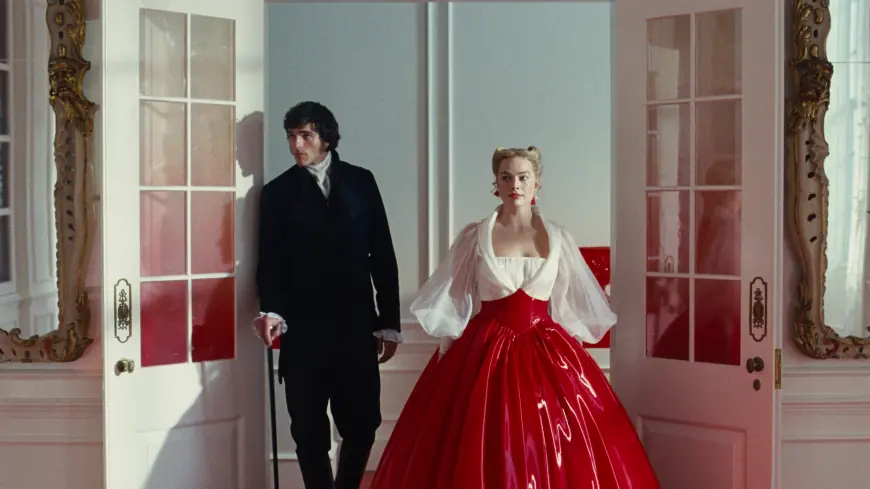
The director’s stylized reimagining of Emily Brontë’s 1847 novel opened this weekend (mid-February, ET) and has already sparked polarized reactions. Some viewers praise its audacious aesthetics and star power, while a growing chorus of critics and readers argue the film sacrifices the novel’s codified cruelty and moral complexity for glamour and sex appeal.
Stylized fantasia or sentimental retread?
Fennell framed the project as a fantasia rather than a straightforward adaptation, a choice that is visible from the first frame. The film leans into provocative production design, eroticized imagery and a contemporary pop-inflected soundtrack. That boldness has impressed audiences who expected a high-gloss, sensory experience: many praised the leads’ chemistry and the movie’s willingness to be explicit and theatrical.
But this same stylistic confidence has fueled criticism. Longtime readers of the novel feel the film neuters the story’s essential antagonisms. Where Brontë’s protagonists are often read as feral, morally compromised figures whose love is as ruinous as it is transcendent, the movie’s versions of those characters land as attractive, victimized romantic leads. For critics who prize the novel’s moral ambivalence, that choice softens what made the book unsettling and powerful in the first place.
Casting, race and the erasure debate
Casting choices have become a focal point of the conversation. The actor playing Heathcliff is presented as a conventionally handsome romantic lead, a decision some viewers have read as a move away from the character’s original racial othering and ambiguous origins. For those who see Heathcliff’s marginalization as central to the novel’s dynamics, the transformation raises questions about what is lost when the story’s social and racial complexity is smoothed over for mainstream appeal.
Supporters of the film argue that reinterpretation is a legitimate artistic choice: a fantasia can illuminate a small facet of a sprawling book rather than reproduce it wholesale. Detractors insist that the aspect chosen—romantic glamour at the expense of moral cruelty—amounts to a simplification that changes the story’s heart. The debate has become as much about adaptation ethics as it is about cinematic taste.
Audience reactions: raucous screenings and divided impressions
Early screenings have produced vivid, sometimes contradictory responses. Some audience members treated the film as an event picture, cheering the leads and applauding the production’s erotic energy. Others walked away unsettled, noting that much of Brontë’s relentless bleakness—domestic abuse, coercive control, generational damage—receives only partial treatment, and in some moments is reframed as romance rather than culpability.
Beyond the polarizing aesthetics, the film has reignited a longer-running conversation about how classic texts are adapted in an era of heightened sensitivity to representation and power dynamics. The director’s decision to foreground sex, style and spectacle invites fresh viewers but risks alienating readers for whom the novel’s darkness and structural complexity are inseparable from its claim to greatness.
As the box-office window and awards season approach, expect the debate to continue. The film’s defenders will point to the audacity of a director willing to make such a singular, modern-minded vision of a canonical work. Its critics will keep insisting that radical stylistic choices do not exempt filmmakers from wrestling with the source material’s thornier social and moral questions. Either way, this version of Wuthering Heights has succeeded at one thing: it has reopened a classic, prompting fresh argument about why the story still matters and what it should look like now.