
























Is charles bronson on the verge of freedom? Parole review brings 52-year case back into focus

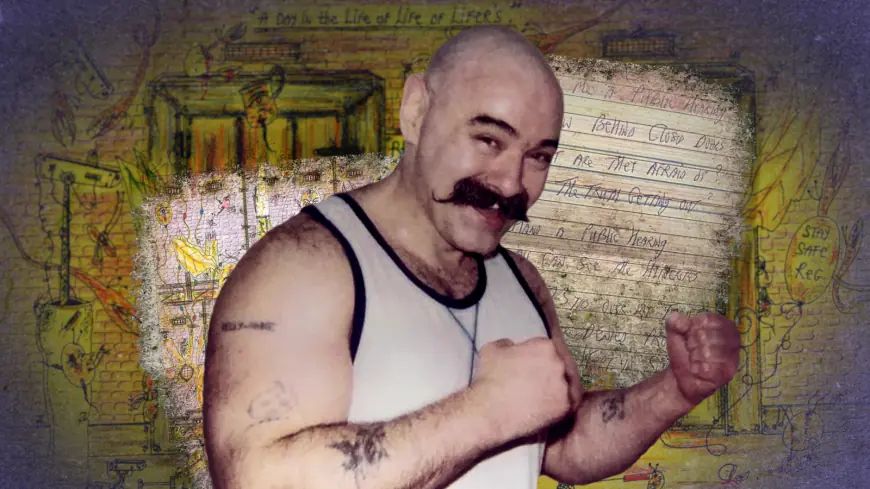
On Feb. 18, 2026 (ET), a Parole Board panel was scheduled to consider whether Charles Bronson — the 73-year-old who has spent more than half a century behind bars — should be released, transferred to an open prison or face an oral hearing that could delay any decision. The review marks his ninth appeal and arrives against a backdrop of long-term violence, sporadic cooperation and a fractious legal posture.
Parole review and possible outcomes
The panel’s examination is primarily a paper exercise: written assessments from prison staff, psychiatrists and probation services are weighed alongside submissions from Bronson’s legal team. The decision framework is straightforward in principle — is the prisoner safe to be released into the community? If not, can any residual risk be managed by gradual moves to less restrictive regimes?
There are three core outcomes the panel may reach. It can direct immediate release, order a transfer to an open prison where behaviour is tested in a lower-security environment, or delay and schedule an oral hearing at which the board can probe outstanding concerns more directly. Each option carries implications for both public safety and the prisoner’s prospects: a move to an open prison is often a gateway to eventual release, while another oral hearing can prolong detention for months.
Bronson’s record and the obstacles to release
Bronson was first jailed in 1974 for armed robbery and, save for two short periods of liberty, has been continually detained since. Multiple violent incidents against staff and inmates led to progressively harsher measures, including long spells in solitary confinement and a life sentence handed down after he took a prison art teacher hostage in 1999. His most recent conviction dates from 2014 for assaulting a governor.
That record is central to the board’s task. Critics and former prison managers point to a Catch-22: he is kept in high-security conditions because of past violence, yet without being tested in less restrictive settings he cannot demonstrate sustained change. One former governor who worked with Bronson years ago described the dilemma as a situation in which the system struggles to provide the environment needed for rehabilitation while managing serious risk.
Bronson’s stance and the human element
In the run-up to the review, Bronson surprised officials by dismissing his legal team and signalling non-cooperation. In a letter he declared, "Sacked the legal team!" and criticised the parole process as a "farcical jam roll, " asking rhetorically, "What are they afraid of? The truth getting out?" Those words underline a combative posture that may complicate prospects for an oral hearing, though legal experts note the board can rule without direct testimony from the prisoner.
Separately, a psychiatrist who treated Bronson decades ago suggested his refusal to engage stems from anger built up over long incarceration rather than an inability to participate constructively. That view reflects the human complexity of a man described by some as violent and by others as deeply affected by decades inside.
The Parole Board’s remit requires balancing public protection with the possibility of rehabilitation. For Bronson, whose behaviour has been described as at times improved yet unpredictably volatile, that balance is particularly fraught. Even if the panel accepts that risk is reduced, officials must decide whether it is sufficiently low to permit a structured step-down, or whether further scrutiny is needed before any change is made.
Whatever the outcome of the Feb. 18, 2026 (ET) review, Bronson’s case is likely to remain emblematic of a wider debate about how the prison system manages the most violent and long-term inmates: whether containment alone is enough, or whether careful, risk-managed opportunities to test change are required to resolve decades-long detention.