






















Ilia Malinin admits he wasn't ready for Olympic pressure — simone biles and other stars exemplify the cost of expectation

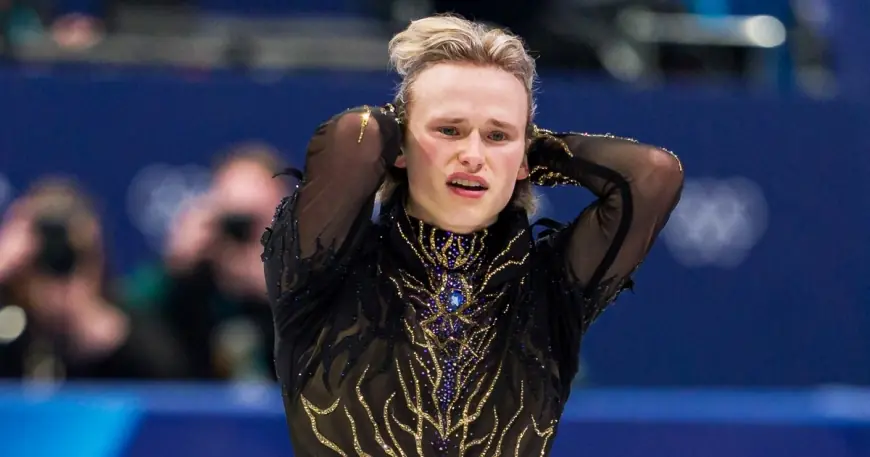
Ilia Malinin conceded that the intense spotlight at the Milan Cortina Winter Games overwhelmed him during the men’s individual free skate, producing an error-strewn performance that cost him dearly. The 21-year-old, who helped his country secure gold in the team event, described a moment when pre-competition confidence gave way to the reality of performing under immense scrutiny.
What happened in Milan
After a strong short program that left him in a promising position, Malinin’s free skate unraveled. He lost 72 points in deductions and posted a free skate score of 156. 33, a steep drop from the high marks he had posted throughout the 2025–26 season. In the four competitions leading into the Olympics his free skate totals were 209. 78, 238. 24, 228. 97 and 215. 78, and he had scored 200. 03 in the Olympic team event free skate that helped the United States to gold.
Stepping onto the ice in the individual final, Malinin said he felt the "amazing environment" of the Games but that the flood of attention affected him more than he expected. At times, elite athletes carry the hopes of a nation and the eyes of the world into a single routine; Malinin acknowledged that he was not fully prepared to channel that pressure into performance.
How pressure reshaped the moment — and what comes next
At 21, Malinin has already altered the technical landscape of men’s figure skating. He became the first skater to land a quadruple axel in competition and has landed seven quadruple jumps in one program. That ambition and technical risk-taking are central to his identity as a competitor, but they also raise the stakes: the higher the technical ceiling, the less margin for error on the biggest stage.
Malinin framed the Milan experience as a lesson rather than an endpoint. He said the disappointment will shape how he prepares mentally and physically for future championships. He still plans to skate in the exhibition gala on Saturday, February 21, 2026 (ET), and intends to compete at the world championships in Prague next month. He also expressed hope that he can adapt his approach for the 2030 Games, should he choose to pursue another Olympic campaign.
High-profile athletes across disciplines often become shorthand for the interplay between expectation and performance. That dynamic played out in Milan: an elite performer who has pushed technical boundaries faced a moment when preparation for the spotlight proved incomplete. Malinin’s response — acknowledging the role of pressure, committing to learn, and confirming upcoming competitive plans — is a familiar arc for athletes who recover and recalibrate.
Community reaction and perspective
Back home, students and supporters gathered to watch and react, expressing shock at the outcome but pride in what Malinin has already accomplished. Many emphasized that his youth and ongoing development are reasons for optimism, noting that an athlete who has transformed a sport technically still has time to grow mentally and strategically.
Malinin will leave Milan with an Olympic gold medal from the team event and a rare technical legacy already secured. The individual setback will now be measured against how he adapts: the tweaks he makes to mental preparation, the adjustments to competition routine under pressure, and the resilience he shows on the ice over the coming months. For an athlete with a résumé that reshaped what’s possible in men’s skating, the response to this moment may be as defining as the moment itself.