








Mixed Reaction Greets Emerald Fennell's wuthering heights movie on Opening Weekend

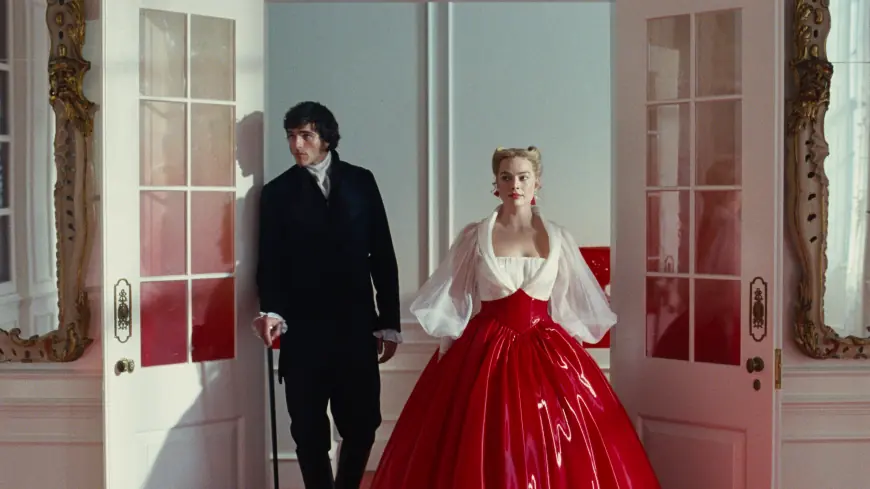
Emerald Fennell’s reimagining of Wuthering Heights opened the weekend of Feb. 14–16, 2026 (ET) and immediately polarized reaction. Early coverage highlights an intense split: some praise the film’s audacious design and cinematic swagger, while others argue it softens the novel’s essential brutality and recasts monstrous lovers as conventional romantic leads.
Critical split: daring visuals, diluted darkness
Reviewers have seized on the film’s striking production choices — a deliberately fetishized aesthetic, close-up, sensory filmmaking, and a contemporary pop-infused soundtrack — as proof of a confident, provocative reframe. The director has characterized the project as a fantasia, an intentional reinterpretation rather than a faithful retelling, and many viewers say that approach yields memorable images and bold moments that announce the film as its own thing.
At the same time, a significant thread of criticism centers on what the film removes from Emily Brontë’s novel: the book’s feral cruelty, its moral messiness and the generational consequences of obsessive love. Detractors argue that by streamlining character flaws and reworking narrative cruelty into more conventional romantic suffering, the adaptation loses the novel’s unsettling paradox — that love in Brontë’s work is both destructive and redemptive. For these viewers, the film becomes less a salvage of Brontë’s strangeness and more a stylized, accessible romance.
Audience response and casting controversy
Audience reactions have been equally mixed. Some screenings delivered rapturous responses to the leads’ chemistry and the film’s eroticized energy, with viewers praising central performances and the spectacle of the staging. Others walked away unsettled by what they see as a romantic glossing of coercive relationships and domestic abuse that are central to the novel’s moral force.
Another point of contention is the depiction of Heathcliff. The novel’s characterization is racially ambiguous and has historically been interpreted as central to Heathcliff’s outsider status. The film’s casting and presentation of the character as a traditionally handsome, charismatic figure has prompted debate about whitewashing and about how the reinterpretation alters the story’s dynamics. Critics argue this choice further softens the character’s otherness and complicates — for some, diminishes — the novel’s social and psychological bite.
What the adaptation keeps and what it discards
Viewers and critics trying to account for the adaptation’s choices point to several consistent patterns. The film amplifies mood, texture and intimacy while compressing the book’s nested narratives and generational scope. Scenes that in print function as shock or moral transgression are often reframed as stylized tableaux or sensual set pieces. The result is a picture that can feel immediate and visceral but, for some, lacks the novel’s layered cruelty that makes the romance feel dangerous rather than merely tragic.
This is not merely a debate about fidelity; it’s a debate about what gives Wuthering Heights its power. Does the story survive when its monstrous elements are humanized and its structural complexity pared down? Early responses suggest audiences are split along those exact lines: those seeking a transgressive, unsettling love story find the film wanting, while those open to a bold, image-driven fantasia appreciate its cinematic ambitions.
Whatever verdicts settle in, the film is likely to keep conversation alive about adaptation, representation and the risks of translating a notoriously strange novel to a contemporary screen. The split reaction on opening weekend signals that this particular Wuthering Heights will be discussed for some time, both for what it does and what it leaves behind.