







wuthering heights movie divides critics and audiences after polarizing opening weekend

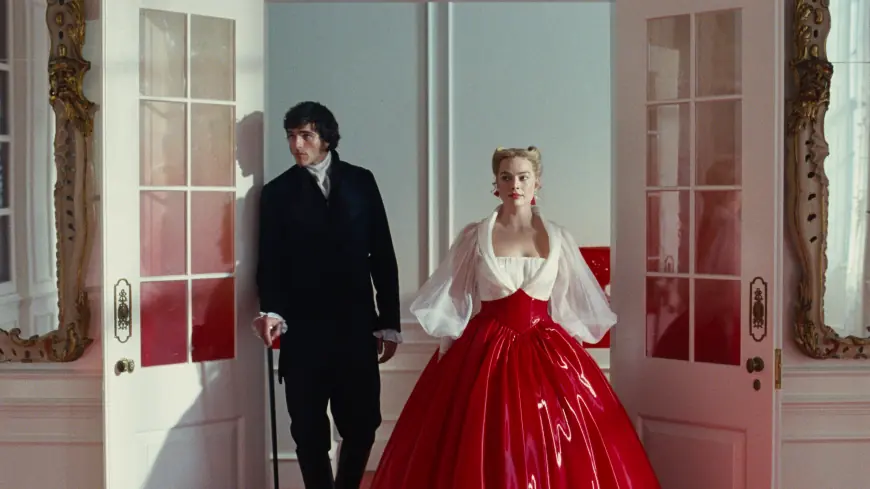
Emerald Fennell’s wuthering heights movie opened the weekend of Feb. 14–16, 2026 (ET) and arrived with both fanfare and controversy. Early critical responses argue the film strips away the novel’s corrosive edge, recasting monstrous lovers as attractive, sympathetic figures. At the same time, packed screenings and vocal audiences have embraced the director’s lurid, modern vision — setting up a wider debate about fidelity, spectacle and the ethics of romanticizing violence.
Critics: a familiar novel made less strange, less dangerous
Many reviewers who have seen the film argue it removes crucial tensions that make the original novel enduringly unsettling. Where Emily Brontë’s text presents love as an obsession that devours lives and generations, this film leans into sleek eroticism and glossy melodrama. Critics note that by smoothing out the characters’ uglier impulses, the adaptation loses the novel’s central contradiction: that its most magnetic figures are also the most destructive.
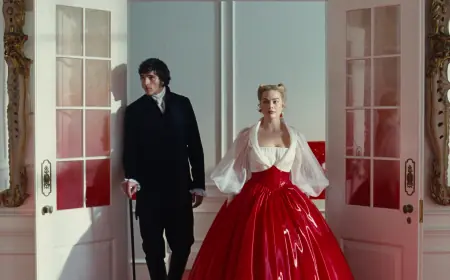
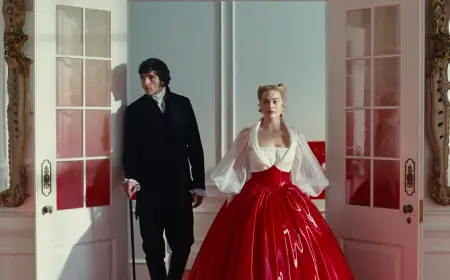
Visually, the movie is unmistakable — lavish production design, intentionally grotesque textures, and a pop-infused soundtrack. Yet for some viewers those flourishes amount to surface provocation rather than a way to deepen the moral complexity of the story. The theatrical choices that foreground fetishized imagery and sexual spectacle, critics say, often distract from or even sanitize the harder themes of abuse, vengeance and inherited trauma that drive the original narrative.
Audience reaction and casting controversies
At the same time, audience response has been emphatic and often celebratory. Numerous early screenings drew enthusiastic crowds, with many viewers praising the chemistry between the leads and the film’s willingness to be bold and erotic. Social screenings held around Valentine’s weekend produced strong word-of-mouth among younger viewers who cited the movie’s stylistic risks and star turns as major draws.
But that enthusiasm has not been universal. A key flashpoint is the casting of the leading man. The book’s depiction of Heathcliff includes racial ambiguity and a marked otherness; some viewers argue that the choice to cast a conventionally handsome, white actor strips the role of that complexity and risks whitewashing an essential element of the character’s identity and motivations. Critics and commentators worry that this choice, combined with a softer moral framing, contributes to an unintended romanticization of coercive or abusive behavior.
Those concerns intersect with larger questions about how modern adaptations handle difficult source material. When a story’s power comes from its capacity to unsettle, the act of smoothing edges for broad appeal can erase the very features that made it meaningful.
What’s at stake for adaptations of classic, uneasy works
Emerald Fennell has framed her film as a fantasia rather than a page-for-page translation, and that framing has emboldened both defenders and detractors. On one side are viewers who welcome a new, provocative reimagining that foregrounds desire and sensory excess. On the other are readers and critics who say the novel’s strangeness — its moral ambiguity, its ugliness, its capacity to both enthrall and appall — is not optional if an adaptation seeks to claim the same name.
Whether the film succeeds commercially or becomes a cultural lightning rod, the conversation around it underscores a persistent challenge: adapting a work whose power lies in being both beautiful and brutal demands more than style. It demands embracing discomfort, not excising it for glamour. The debate now unfolding in reviews and at packed screenings suggests that for many viewers, the question isn’t just whether the movie is good on its own terms, but whether it honors the singular, unsettling force of its source.