















Rupert Lowe launches new party restore britain as ex-Reform figures join his movement

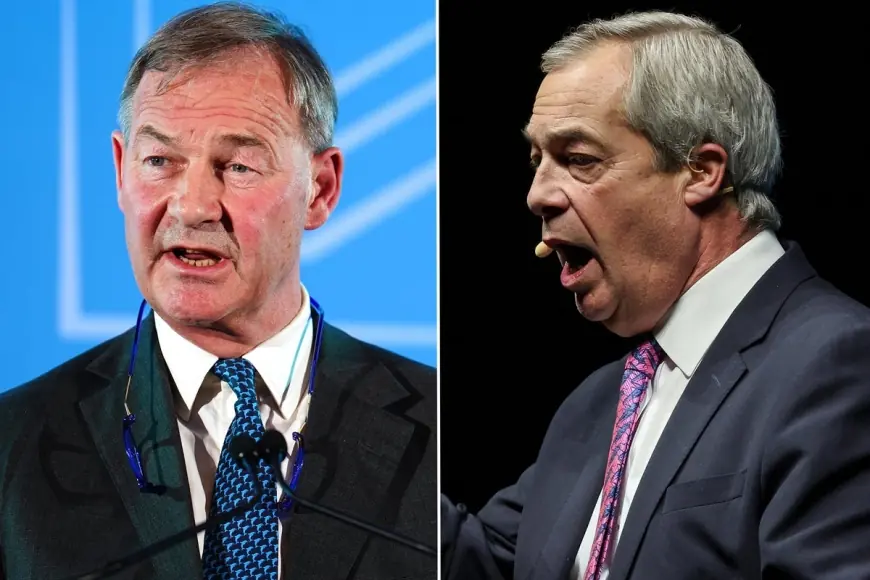
Rupert Lowe has formally launched restore britain as a national political party, moving beyond the movement he created after leaving his former party. The Great Yarmouth MP, now sitting as an independent, unveiled the new organisation on Friday night (ET) and said it would act as an umbrella for locally based groups and independent campaigns.
Party launch and structure
Lowe presented restore britain as a national home for locally rooted political groups, with the aim of partnering with organisations such as Great Yarmouth First. He indicated he intends to stand again in his Norfolk constituency under that local banner, coordinated with the new national vehicle. When first set up as a movement following his suspension from his previous party, the project was described as a way to give local initiatives greater national visibility; the relaunch as a party marks a clear escalation of those ambitions.
The launch comes after Lowe was suspended last March amid allegations involving threats against a former party chairman. The Crown Prosecution Service later concluded there was insufficient evidence for a realistic prospect of conviction. Lowe has maintained his position that the allegations were vexatious and has framed restore britain as an attempt to close the perceived gap between mainstream politicians and the public.
Defections and political fallout
Within days of the formal launch, seven councillors on Kent County Council who had been aligned with the former party announced they had joined restore britain and will form a group on the council. The councillors named in the announcement include Maxine Fothergill, Robert Ford, Paul Thomas, Dean Burns, Isabella Kemp, Brian Black and Oliver Bradshaw. Several had previously been expelled from their old party last year.
The arrival of sitting councillors gives the new party an immediate foothold in local government and a platform to test policy positions and candidate selection ahead of any national polling. Lowe has argued there is room on the right of the political spectrum for a party that emphasises independence of mind and localism, especially in constituencies where traditional party ties have weakened.
Some senior figures who had been linked to the project while it was a movement have stepped back now that it has formalised as a party. Two high-profile political names that earlier served in an advisory capacity are understood to be leaving the group's board following the relaunch.
Prospects and local strategy
Political strategists cautious about the crowded landscape of small parties nevertheless acknowledge that a locally anchored umbrella model can give a new organisation practical advantages: existing councillors, constituency networks and campaign infrastructure allow faster mobilisation than building national structures from scratch. Lowe points to private polling and local feedback that he says suggest substantial backing in his own town, where no by-election has yet tested support since his departure from his former party.
Critics say the bar for recruits appears low and warn that absorbing expelled or disgruntled figures risks importing factional disputes into the new party. Supporters counter that many local activists feel cut off by mainstream parties and welcome a fresh national vehicle that respects local autonomy.
For now, restore britain will focus on consolidating its local partners, fielding candidates where alliances exist, and building a public identity that distinguishes it from other right-leaning groups. With immediate representation on at least one county council and a sitting MP at its centre, the party will be watched closely for whether it can translate local momentum into broader electoral traction.