























isabeau levito helps lead Team USA’s ‘Blade Angels’ in Olympic short program

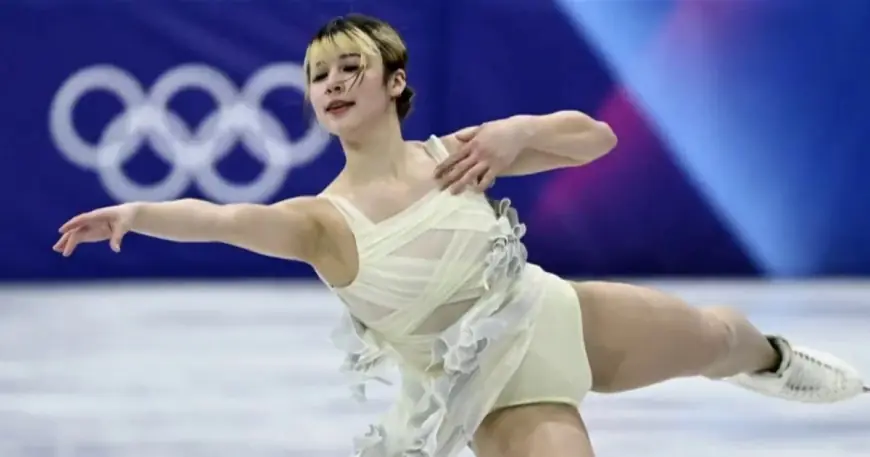
On Feb. 17, 2026 (ET), Americans Amber Glenn, Alysa Liu and Isabeau Levito took to the ice for the women's short program at the Milan-Cortina Winter Games. The trio — already nicknamed Team USA’s “Blade Angels” — skated with poise and personality, staking early claims as they head toward the free skate.
Blade Angels bring flair and consistency to short program
The three American women combined athleticism with distinct artistic choices, reinforcing a sense of depth and confidence within the U. S. contingent. Each skater presented a short program that balanced technical elements with choreographic expression, making for a strong showing under Olympic pressure.
Isabeau Levito delivered a performance noted for its clean lines and commitment to her choreography. Her jumps were executed with focus, and she skated with an intensity that suggested readiness to push for a higher placement in the free skate. Alysa Liu leaned on her trademark speed and attacking jump entrances, while Amber Glenn emphasized performance quality and musical connection. Together, the group has come to be called the “Blade Angels” for their combination of edge work and ethereal presentation.
Observers inside the arena reacted to the combined impact of the three skaters: the Americans offered programs that are competitive both on technical merit and on presentation, which will be crucial when the scores are finalized and the free skate looms. Their short programs set a tone of momentum and showed that Team USA remains a force in the women's field at these Games.
Men’s field: pressure and disappointment for a top contender
The men's competition produced a candid moment from Ilia Malinin, who spoke about the intense pressure of Olympic competition and expressed disappointment at finishing eighth. Malinin acknowledged the weight of expectation that comes with entering the Games as a top contender, and he framed his result as a learning moment rather than an endpoint.
His remarks reflected the high stakes and razor-thin margins that define Olympic figure skating. For athletes at this level, small errors or an off-night can reshuffle the leaderboard dramatically. Malinin's willingness to address the disappointment openly points to a competitive resilience; many skaters use setbacks at a major event to recalibrate and return stronger in future competitions.
The broader men's field will remain tightly contested as the competition progresses. Skaters who can combine technical difficulty with composure under pressure will have the best chance to move up in the standings, and Malinin's experience underscores how mental and emotional preparation can be as decisive as a clean program on the ice.
What comes next for the Americans
With the short program concluded, attention now turns to the free skate where points and placements will be decided. The American women have created momentum with their short programs, but the free skate provides a larger canvas to showcase endurance, technical range and sustained performance quality.
For Isabeau Levito and her teammates, the task is to build on the energy of the short program, sharpen technical executions, and maintain the artistic identity that has earned them recognition. For the men, including those who faced disappointment, the remainder of the competition offers a moment to reflect and aim for recovery in subsequent events.
These Olympics have already produced emotional highs and sobering reminders of how quickly fortunes can change on the ice. As the Games move forward, the performances that blend precision with poise will be the ones that define medal contention.