



















Colbert Says Network Lawyers Blocked James Talarico Interview, Posts Conversation Online

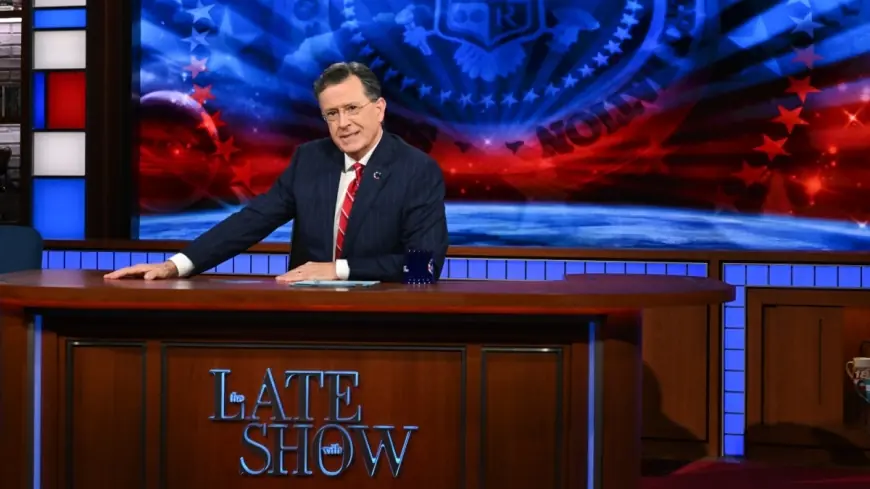
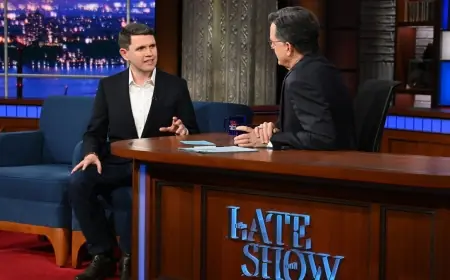
Stephen Colbert told viewers Monday night that network lawyers had instructed him not to air an interview with Texas state representative James Talarico — and that he was even advised not to mention the cancellation. Defying that directive, Colbert confronted the decision on his late-night program and released the unaired conversation online, framing the dispute as part of a broader fight over Federal Communications Commission guidance on political interviews.
Host challenges network restriction on the air
On Monday, Feb. 16, 2026 (ET), Colbert opened his show by noting Talarico’s absence and outlining the instruction he had received: the state legislator, who is running for U. S. Senate, could not appear on the broadcast, and the hosts were told they could not mention that restriction. Colbert proceeded to discuss the issue anyway, telling the studio audience, “Because my network clearly doesn’t want us to talk about this, let’s talk about this. ”
Colbert explained the legal backdrop: a long-standing equal time requirement for radio and broadcast television that has historically included an exception for news interviews and talk shows. He said a letter released on Jan. 21 by the chairman of the FCC signaled a potential rollback of that exception, which would complicate how broadcast programs handle appearances by political candidates. Colbert criticized the chairman’s move as politically motivated and framed the network’s caution as a form of self-censorship driven by fear of regulatory trouble.
The host then released the unaired interview on the program’s online channel. He said he was barred from putting a direct on-screen link or QR code to the clip during the broadcast, but the conversation nonetheless drew significant attention online.
Political and legal stakes for broadcasters and candidates
The dispute highlights tension between broadcast compliance concerns and long-standing norms that allowed late-night and daytime interview programs to host politicians without triggering equal time obligations. If the FCC removes the talk-show exemption, broadcasters could face pressure to provide matching airtime to opposing candidates or to avoid booking active candidates altogether during election seasons.
James Talarico used the conversation to critique the current political climate and the role of corporate media gatekeepers. He said that a party that once campaigned against cancel culture now appears to be exerting control over what viewers can see and hear, and he warned that corporate executives who yield to political pressure are undermining the First Amendment. The exchange included discussion of a recent probe into a daytime program that had him as a guest, an inquiry centered on whether equal time rules were violated.
One federal commissioner criticized the network’s decision as an example of corporate capitulation that chills free expression, arguing that broadcasters are fully protected in choosing what to air and that yielding to pressure is disappointing. The commissioner’s remarks framed the episode as part of a larger debate over whether regulators or political actors can reshape broadcast practices ahead of a heated election cycle.
What this means going forward
For broadcasters, the episode is a warning about the choices that lie ahead: risk regulatory scrutiny by booking controversial candidates, or preemptively restrict coverage to avoid entanglement. For candidates such as James Talarico, the incident has provided an unexpected platform to amplify campaign messaging and critique regulatory moves, even when traditional broadcast avenues are closed.
As election season advances, the clash between network risk management and hosts’ appetite to engage politicians is likely to produce more standoffs. The question now is whether the FCC will take formal action to alter the talk-show exception and how networks will respond to guidance that they see as forcing political calculus into routine editorial choices. For viewers, the episode served as a reminder that the boundaries between entertainment, journalism and regulation remain contested.