












Wuthering Heights movie draws swooning crowds and renewed debate after Galentine's screening

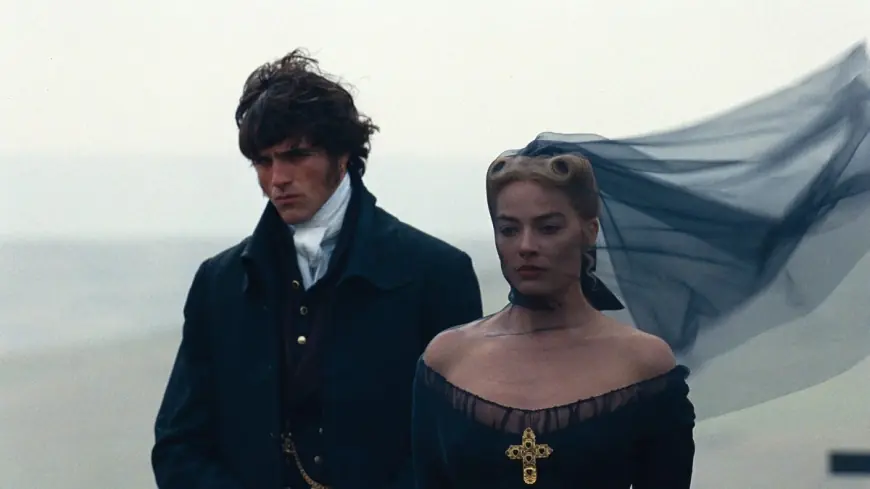
On Feb. 13 at 3: 30 p. m. ET, a private theater rented for a Galentine's screening became a microcosm of the wider conversation swirling around Emerald Fennell's new Wuthering Heights movie. Eighteen friends packed the house, ordered themed cocktails and watched an unorthodox, polarizing reimagining of Emily Brontë's Gothic classic that had them alternately cheering, stunned and debating what the film has changed — and why.
Audience reactions: swoons, shocks and soundtrack-fueled energy
The screening felt more like a party than a quiet matinee. Specialty drinks themed to the holiday circulated through the lobby and into the auditorium: gin-based and tequila-based concoctions that matched the occasion and the heightened tone of the film. When Jacob Elordi — in tall, lean form as Heathcliff — took the screen, the room erupted in audible swoons. Margot Robbie's Catherine prompted similar reactions whenever she appeared opposite him.
Moments that in other screenings might draw uncomfortable silence instead prompted whistles and playful commentary from the crowd. Early scenes that reference sexual encounters or display physical coercion pulled gasps; later romantic moments inspired whoops and joking lines from friends about male beauty and ‘what women want. ’ The film’s pulse is amplified by a contemporary soundtrack, and that pop energy stitched the audience’s reactions into a communal experience — even as the film’s darker beats landed hard and left some viewers visibly unsettled.
Casting choices and the question of whitewashing
Fennell's adaptation has reignited debate over the casting of Heathcliff. The character in Brontë’s novel is described using language that marks him as racially and socially othered, and readers have long wrestled with how that description should be handled onscreen. In this new take, Heathcliff is played by an Australian actor widely admired for his looks, which has prompted criticism that the film smooths over or erases the book’s racial and social complexities.
That criticism is intensified by the fact that, historically, Heathcliff has rarely been portrayed as nonwhite in major adaptations; one earlier film adaptation in 2011 cast the character as Black. For many observers, the decision to cast a conventionally handsome, fair-skinned leading man in Fennell’s version reads as a deliberate move toward crowd-pleasing romance, and away from the novel’s thornier questions about identity and displacement.
Beyond casting, viewers are confronting a tonal shift: several of the novel's assaults, cycles of revenge, and intergenerational trauma are condensed or reshaped. Some in the crowd felt the movie romanticized abusive dynamics that, on the page, are meant to unsettle and disturb. Others argued the film translates those dynamics into a modern, genre-bending melodrama that knowingly courts excess.
Why the film still draws viewers — and controversy
Put simply, the Wuthering Heights movie is provocative in every sense. It pairs marquee names with a loud, contemporary soundtrack and a visual sensibility that leans into glamor and menace. For fans who want a more conventional, swooning romance, the casting and polished cinematography provide the irresistible draw. For readers who revere the novel’s gothic unease and social subtext, the adaptation’s choices feel like omissions or glosses.
The Feb. 13 screening made clear that reactions are likely to remain split as more audiences encounter Fennell's take. The film provokes conversation — about adaptation, representation and the ethics of reshaping canonical texts — even as it entertains. Whether that ongoing debate will change how future viewers interpret the movie, or how the film fares in awards season and cultural memory, remains to be seen. For now, it's doing what provocative cinema should: getting people to talk, to cheer, and to leave the theater still arguing about what the story means.