

























‘Ring of fire’ solar eclipse set for Feb. 17, 2026: path, visibility and what to expect

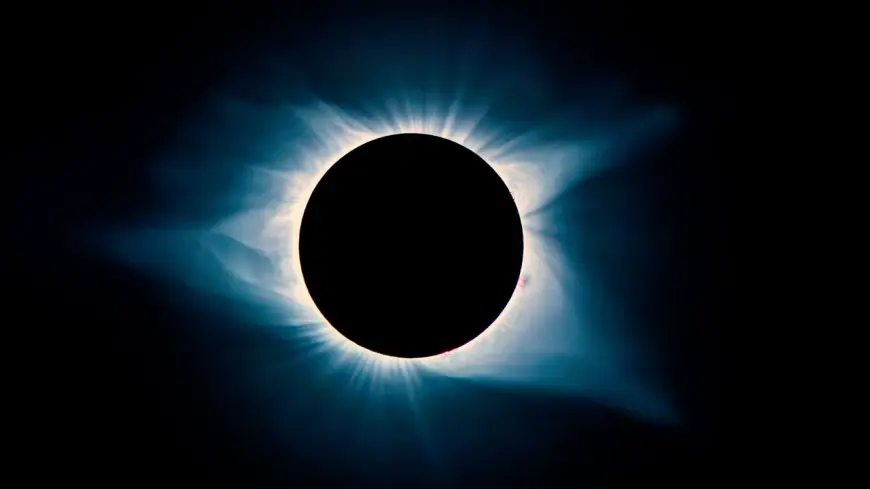
The next major solar event — an annular solar eclipse often called a “ring of fire” — will take place on Feb. 17, 2026 (ET). Skywatchers in a narrow corridor of Antarctica will see the full annular phase, while viewers across wider swaths of Antarctica and parts of southern Africa and southernmost South America will witness a dramatic partial eclipse. The eclipse also coincides with a new moon in Aquarius and the celebration of Chinese New Year, giving the day extra attention from both astronomers and astrologers.
Where the annular path falls and who will see it
The annular path — where the moon will appear slightly smaller than the sun, leaving a luminous ring at maximum — tracks across a very limited region of Antarctica. That corridor stretches roughly 2, 661 miles long and about 383 miles wide. Observers inside that strip can see the moon cover about 96% of the sun’s disk, producing the distinctive thin ring of sunlight known as a “ring of fire. ” The peak annularity at the greatest eclipse will last up to about 2 minutes and 20 seconds in the best locations.
Outside the path of annularity, a broad area will experience a partial eclipse. Large portions of Antarctica will see the sun partially obscured, and parts of southern Africa and the southern tip of South America will register a partial event. Exact appearance and timing will vary by latitude and longitude, so those planning to observe the partial phases should check local sky conditions and eclipse timing for their location in advance.
Safety and observing guidance
Never look directly at the sun without proper eye protection. Even during a partial or annular eclipse, unfiltered sunlight can cause severe and permanent eye damage. Observers must use certified solar eclipse glasses that meet international safety standards for direct viewing. Cameras, binoculars and telescopes require solar filters fitted to the front of the optics at all times; using cameras or telescopes without adequate filtration can damage equipment and eyes.
For those who cannot travel into the narrow annular path, partial views can still be compelling through safe projection methods or filtered optics. Local astronomy clubs and observatories often organize viewing events with proper equipment and guidance; such events are a good option for safe, guided observation.
Astronomical and cultural context
Annular eclipses occur when the moon is near apogee, the point in its orbit where it is farthest from Earth, making the moon appear slightly smaller than the sun. The alignment still blocks most of the sun’s disk but leaves a bright outer ring visible at greatest eclipse. Because the moon’s apparent size is smaller, totality does not occur — the defining bright ring remains.
The Feb. 17 eclipse falls on the same day as the lunar new moon in Aquarius and coincides with Chinese New Year, drawing additional attention from those who follow celestial events for cultural or astrological reasons. Some astrologers view this eclipse as a catalyst for change over the coming months, suggesting it may herald shifts in personal and collective trajectories. Observers interested in the symbolic or personal meanings attached to eclipses often pair astronomical viewing with cultural reflection.
After this event, the next notable solar eclipse in 2026 will be a total solar eclipse on Aug. 12, visible from parts of Greenland, Iceland and northern Spain, with a wider partial view across Europe and Africa.
Plan carefully if you hope to witness the annular phase in Antarctica — travel logistics are challenging and weather can be unpredictable. Wherever you are, prioritize safety: certified solar filters, eclipse glasses and expert guidance will ensure the experience is memorable without putting eyesight at risk.