

























‘Ring of fire’ eclipse set for February 2026: path cuts across Antarctica, partial views for South Africa

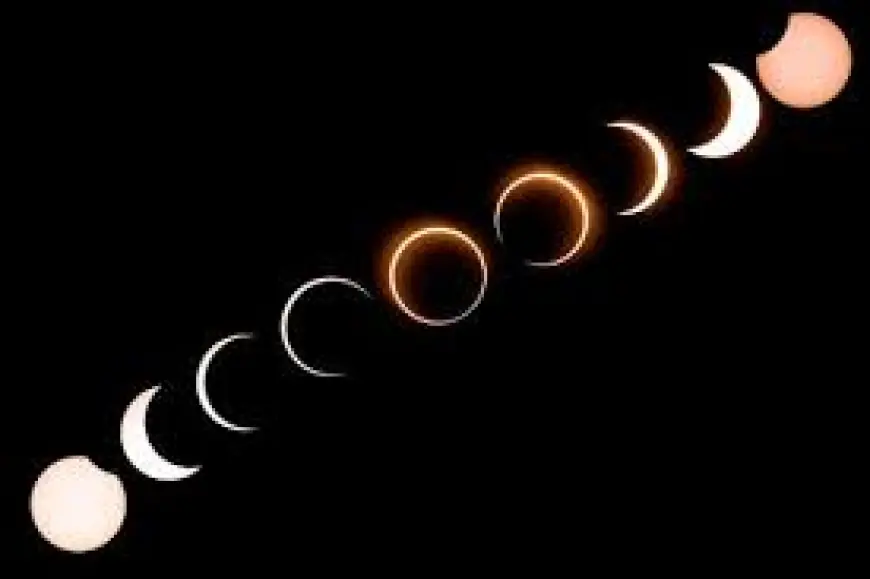
A striking annular solar eclipse—commonly called a "ring of fire"—is scheduled for February 2026 (ET), tracing a narrow path across Antarctica while producing a broad partial eclipse across parts of the Southern Hemisphere, including South Africa. Scientists and skywatchers are already planning observations and trips to witness the dramatic sight.
What is an annular 'ring of fire' eclipse?
Solar eclipses occur when the Moon passes between the Earth and the Sun. An annular eclipse happens when the Moon is too distant from Earth to completely cover the Sun's disk. Instead of full darkness, observers along the central path see a thin, bright ring of sunlight surrounding the Moon—a "ring of fire. " Outside that central track, large swaths of the hemisphere will see a partial eclipse, with the Sun appearing to have a bite taken out of it.
Annular events differ from total eclipses in how much daylight is lost and how the environment responds. While totality plunges locations into near-night and allows coronal observations, annularity leaves a distinct, glowing ring and does not expose the solar corona in the same way. Nevertheless, annular eclipses remain highly sought after for their visual drama and unique photographic opportunities.
Where and when it will be visible
The corridor of annularity for the February 2026 event will cut across Antarctica, offering the longest and most complete views to observers on and above the frozen continent. Many coastal and inland points along that path will see the full ring when conditions cooperate. Large portions of the Southern Hemisphere will experience a partial eclipse; South Africa is expected to fall within the zone of partial visibility.
Exact timing will vary by location; official local circumstances for contacts and maximum eclipse must be consulted before planning travel or observation. All times are cited in Eastern Time (ET) for coordination and international planning. Weather conditions over Antarctica and southern oceans can be highly variable, so on-site success will depend heavily on cloud cover and local atmospheric conditions.
How to view safely and what to expect
Directly viewing the Sun without proper protection can cause serious and permanent eye damage. For the annular phase and partial views, use ISO-certified solar eclipse glasses or solar filters designed for telescopes, binoculars and cameras. Regular sunglasses are not sufficient. When photographing the event, attach a solar filter to camera lenses and avoid exposing imaging sensors to unfiltered sunlight.
For photographers and researchers, the event presents worthwhile opportunities: high-contrast limb views, accurate timing of contacts for orbital studies, and atmospheric measurements as sunlight is altered over the observation corridor. Field teams aiming for Antarctica will need to coordinate logistics well in advance—transport, permits, and contingency plans for weather are crucial. For viewers in South Africa and elsewhere seeing only a partial eclipse, the spectacle is still impressive and easier to reach without polar travel.
Local outreach programs and astronomy clubs typically organize safe-viewing events around major eclipses. Those unable to travel can still follow real-time updates and imagery shared by observation teams and researchers on the day of the eclipse. Whether experienced eclipse chasers or first-time viewers, people should plan ahead, secure certified viewing equipment and be prepared for rapid weather changes, particularly in polar regions.
The February 2026 annular eclipse promises to be a memorable celestial event for scientists and skywatchers alike. With careful planning and safety precautions, observers across the Southern Hemisphere will have the chance to witness one of nature's most dramatic alignments.