

























'Remember you are dust': Why Ash Wednesday fills pews — and when it lands in 2026

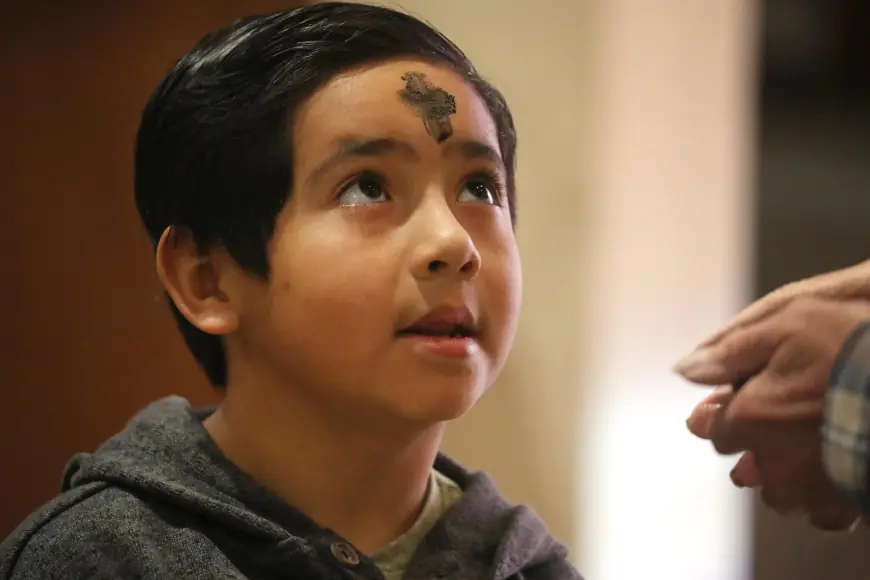
Masses on Ash Wednesday regularly draw large crowds, often packed with faces unfamiliar to regular parishioners. The rite's visible mark — a smudge of ashes on the forehead — is a striking public symbol that sends many people back to the pews even though the day is not a holy day of obligation. Ash Wednesday in 2026 falls on Wednesday, Feb. 18 (ET), beginning the season of Lent that leads to Easter.
Why people show up: identity, mortality and a gesture of repentance
Data tracked by a Georgetown University center that monitors Catholic practice finds Ash Wednesday consistently competes with Easter and Christmas as one of the year's best-attended Masses, and Ash Wednesday 2024 even exceeded Christmas 2023 attendance. The numbers point to a ritual that carries meaning beyond a quick trip to receive ashes.
For many worshippers, receiving ashes is a clear identity marker. Parishioners and casual attendees alike treat the sooty cross on the forehead as a public statement of faith. Clergy and scholars observing contemporary trends note that younger adults, in particular, often embrace the outward sign as an emblem of belonging.
Beyond identity, the rite presses directly against two heavy themes: mortality and sin. The ashes, traditionally made from the palms blessed on the previous year's Palm Sunday, are a tactile reminder of human fragility. That simplicity of gesture — a priest or minister making the sign of the cross in ash — resonates even among people who do not otherwise keep regular sacramental practice. It invites an interior response: reflection, penance and an orientation toward spiritual renewal.
Yet the public visibility of the ritual does not always translate into deeper sacramental engagement. Observers point out that while pews fill for the distribution of ashes, there is not a comparable surge in the use of confession. Still, the ash ritual functions as a powerful, symbolic nudge toward conversion and the Lenten disciplines of prayer, fasting and almsgiving.
Dates and the ritual calendar for 2026
Ash Wednesday in 2026 falls on Wednesday, Feb. 18 (ET), marking the start of the 40-day Lenten season in Western Christian practice. Lent runs through Thursday, April 2, 2026 (ET), with Good Friday observed on April 3, 2026 (ET) and Easter Sunday celebrated on April 5, 2026 (ET). These dates shift each year because Easter is set by a lunar calendar tied to the spring equinox, which moves the entire liturgical schedule forward or backward.
The Lenten period is intended as a season of penitential preparation for Easter. Many churches offer multiple Ash Wednesday services to accommodate the influx of attendees, and some clergy make the imposition of ashes available in public spaces for those who cannot attend a full liturgy. Ritual practice varies by tradition, and several Protestant denominations also observe an ash-imposition ritual, so the distinctive forehead mark is not exclusive to one branch of Christianity.
What the ritual aims to accomplish
Historical roots of the ash practice reach back centuries and evolved from penitential customs in the early church. Church guidance emphasizes that receiving ashes should be more than an external act: it is intended to prompt interior repentance and a renewed commitment to the disciplines of Lent. For many participants, that call to conversion, combined with the communal, visible nature of the rite, explains why Ash Wednesday remains a spiritual touchstone and a significant Sunday-into-weekday gathering for congregations across the country.
As the calendar turns to Feb. 18, 2026 (ET), parishes and ministries can expect large attendance once again, drawn by a ritual that quietly blends mortality, identity and hope for renewal as the Christian calendar moves toward Easter.