






















Rupert Lowe launches Restore Britain as national party, pledges to contest Great Yarmouth under new banner

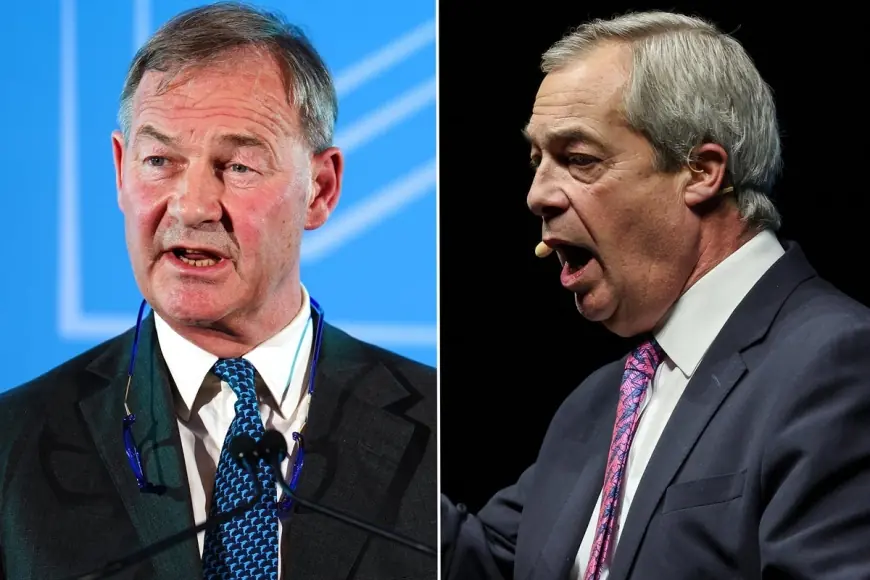
Rupert Lowe, the independent MP for Great Yarmouth, has converted his Restore Britain movement into a national political party, announcing the move on Friday night (ET). Lowe said the party will act as an umbrella for locally based groups and signalled he will seek re-election in Great Yarmouth under a partnership with a new local outfit, Great Yarmouth First.
From movement to party: structure and immediate plan
Restore Britain was originally set up by Lowe as a political movement after he was suspended from his former party last March. The new party is intended to function as a national vehicle that can partner with existing local organisations rather than start from scratch in every area. In practice, that means Lowe plans to stand again in Great Yarmouth on a joint ticket with Great Yarmouth First, which will act as a local partner of Restore Britain.
Lowe is a businessman and farmer who also has a background in football club management. He has cultivated a constituency-focused message that stresses a disconnect between mainstream politicians and voters in coastal towns such as Great Yarmouth. Local campaigning and private polling shown to party operatives suggest he retains a base of support in the town.
Controversy, departures and shifting alliances on the right
The new party launch revives tensions that followed Lowe’s split from his previous party last year. He was suspended amid allegations that he threatened physical violence against his former party chairman; prosecutors later concluded there was insufficient evidence to bring charges. Lowe has strongly denied wrongdoing and described the fallout as a smear campaign.
The conversion of Restore Britain into a registered party has prompted changes on its advisory board. Senior Conservative figures who had been linked to the movement are stepping away following the formal switch, and at least one former minister indicated they would end involvement now that the group is a political party. The move has also attracted interest and overtures from other right-leaning groups exploring cooperation or mergers, raising the prospect of a wider re-alignment on the right of the political spectrum.
Analysts note that a splintering of votes on the right could alter tight electoral arithmetic in marginal seats. A strategist observed that small challengers can have outsized impact in contests won by narrow margins, suggesting Restore Britain could complicate electoral math for established parties if it expands beyond its local roots.
Outlook and next steps
Lowe presents Restore Britain as an independent-minded alternative that will prioritise local issues and stricter controls on immigration, a focus that has attracted some hardline activists. The party aims to grow by signing partnership agreements with local parties and by courting activists and elected councillors interested in a national umbrella organisation that retains local autonomy.
For the immediate future, attention will centre on Great Yarmouth, where an election fight would test Lowe’s standing as an independent candidate backed by a local party. If Restore Britain can translate local traction into an organised national presence, it could reshape contest dynamics on the right. If it remains largely a local vehicle, its impact will be limited to a handful of constituencies and council chambers.
Lowe’s next moves — candidate selections, policy roll-outs and the building of a local partner network — will determine whether Restore Britain becomes a persistent force or another short-lived entrant in an already crowded field.