
























When is Ramadan 2026? Moon sighting will decide whether fasting starts Feb. 18 or Feb. 19

Muslim communities worldwide are preparing for Ramadan 2026, with the first day of fasting set to fall on either Wednesday, February 18, or Thursday, February 19, Eastern Time. The exact start will hinge on the traditional sighting of the new crescent moon or the calculation methods used by different communities.
Timing and visibility: why two possible start dates
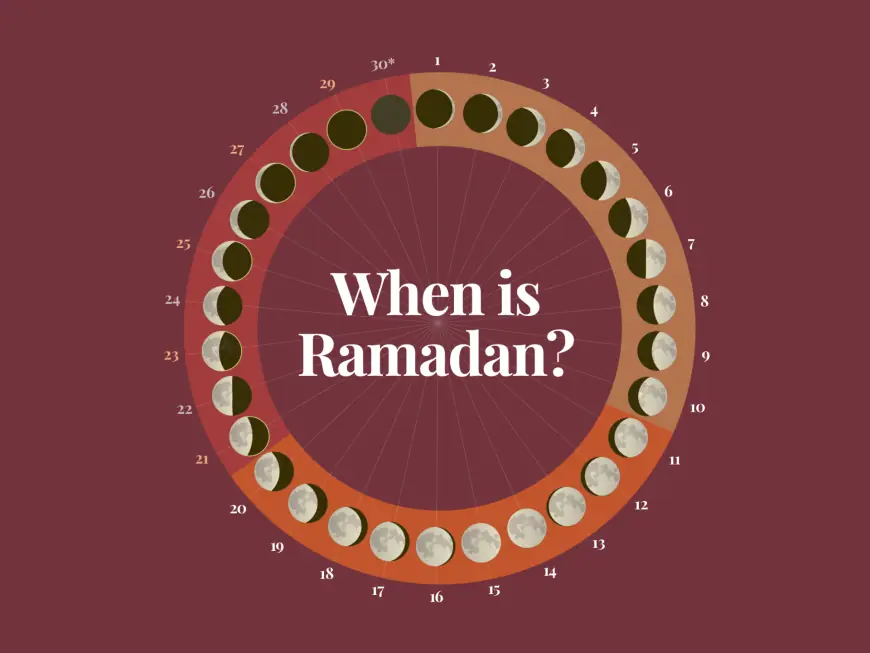
Ramadan begins with the appearance of the faint crescent that marks the start of the Islamic lunar month. If observers sight the crescent after sunset on the 29th day of the preceding month, the new month starts the next day; if not, the previous month completes 30 days and the fast begins a day later.
Astronomical models place the new moon phase on Tuesday, February 17, and the moon will be very young at sunset in parts of the world that evening. In Mecca the new moon phase occurs just after dawn on February 17, which in Eastern Time is 7: 01 a. m. ET. The local sunset on that evening is the equivalent of 10: 19 a. m. ET, and the moon would set only three minutes later, at about 10: 22 a. m. ET—leaving virtually no window for a naked-eye sighting. Given that narrow interval and the moon's age of roughly three hours and 18 minutes after conjunction, sighting on the evening of February 17 is highly unlikely for most locations.
By the following evening, however, the moon will be substantially older—nearly 26 hours—and will sit higher above the horizon at sunset. That makes a visible crescent much more likely across large parts of the globe, and many communities will therefore observe the start of Ramadan on Wednesday, February 18, ET.
How moon sighting works and who decides
Communities use two main approaches to set the start of Ramadan: traditional local sighting, where eyewitness testimonies of a crescent are collected, and astronomical calculation, where the new month is determined by established visibility criteria. Both approaches remain widely used and can lead to differences from country to country and within diaspora communities.
A naked-eye crescent sighting depends on three key factors. First, elongation—the angular distance between the moon and the sun—must be large enough that sunlight reflects off a visible sliver; a reliable naked-eye sighting generally requires an elongation of about 10–12 degrees, and a crescent closer than 7 degrees is usually too thin to see. Second, altitude matters: the moon should be high enough above the horizon at sunset to escape atmospheric haze; an altitude near 10 degrees is often sufficient. Third, lag time—the interval between sunset and moonset—needs to be long enough for twilight to deepen; roughly 45 minutes or more is preferable for dependable naked-eye viewing.
Where communities rely on eyewitnesses, statements are typically collected and reviewed by local or national religious authorities before an official announcement is made. Where astronomical calculation is adopted, religious bodies use predefined visibility rules to set the date in advance; several organizations that follow calculation methods have already indicated February 18, 2026 as the first day of fasting in their calendars.
Because of these differing practices, some countries and communities may begin fasting on February 18, while others will wait until February 19. The determination also affects the date of Eid al-Fitr, which marks the end of Ramadan and is set by the sighting or calculation that begins the month.
Observers and congregations are preparing watch parties and official sightings for the evenings in question, and many mosques and community centers will announce local decisions once sighting reports or calculation rulings are final. For most people, the coming weeks will be a familiar combination of astronomy and tradition guiding the start of one of the most important months in the Islamic calendar.