



















Ryan Murphy’s Love Story Reignites Interest in jfk jr and Carolyn Bessette Kennedy

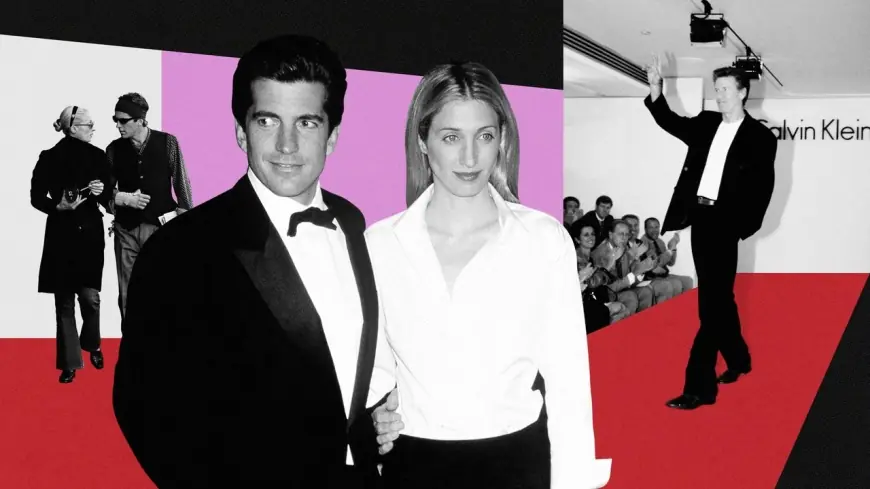
Ryan Murphy’s new limited series about jfk jr and Carolyn Bessette Kennedy has landed with equal parts nostalgia and controversy. The three-part premiere dropped on Feb. 12, and new episodes air weekly on Thursdays at 9 p. m. ET. What began as a glossy retelling of a well-known romance has quickly become a flashpoint for debates about taste, ownership of personal tragedy and the curious afterlives of celebrity style.
Drama and dissent: family objections and creative pushback
The series has drawn sharp public responses from within the Kennedy orbit. One family member publicly accused the showrunner of "profiting off his family's tragedy 'in a grotesque way', " rekindling an old argument about who has the right to tell intimate stories about real people. The showrunner’s retort—that it was an "odd choice to be mad about your relative that you really don't remember"—further inflamed the dispute, turning a promotional moment into a culture-war flashpoint.
Beyond family friction, critics and viewers are split on whether the dramatization honors its subjects or exploits them. The production leans into the private moments of grief and glamour: scenes portray Jackie Onassis handling readers’ condolences after a health diagnosis, and the series stages tense encounters between the younger Kennedys and Hollywood figures from their orbit. The show’s early episodes have prompted renewed scrutiny of small historical claims—some venerations, some unflattering vignettes—and prompted viewers to ask how much dramatized biography should reshape public memory.
Style, timing and the Calvin Klein echo
The series’ wardrobe choices have become a story in themselves. The production channels late-20th-century minimalism and high-collar restraint, spotlighting the chic, pared-back looks associated with Carolyn Bessette Kennedy. The timing was striking: the show’s launch coincided with a major runway presentation from the storied label where Bessette once worked, inviting instant comparisons between television costume and current fashion direction.
The brand’s creative lead said the recent collection reached not for the familiar ’90s shorthand associated with Bessette’s iconic look, but farther back to the late 1970s and early 1980s. The result was a collection that sometimes unsettled devotees of the archetypal Bessette silhouette—experimental tailoring, backless suiting and unconventional finishes replaced some classic staples. The fashion moment underlines an odd cultural loop: a serialized portrait of a famous couple influences what designers revisit on the runway, and those runway choices, in turn, reframe our view of the original style.
Fact, fiction and the long shadow of myth
The series has also spurred viewers to examine verifiable elements of the Kennedys’ lives. Public accounts establish that Jackie Onassis worked as an editor in the late 1970s and held strong views about privacy; testamentary anecdotes describe her destroying personal correspondence rather than preserving it for posterity. Such details—some debated, some corroborated in memoirs and archival accounts—are being parsed by audiences trying to separate storytelling flourish from historical record.
At the heart of the reaction is a simple question: what is the purpose of a dramatization of living memory? For some, the series is an elegy that brings back a vanished era and reignites fascination with jfk jr’s blend of charisma and vulnerability. For others, it is a commercialized retelling that sits uncomfortably close to real grief. Either way, the show has succeeded in doing what much contemporary television aims to do: turn cultural memory into watercooler argument, runway fodder and renewed interest in a family whose public life has never fully receded.
Whatever viewers make of the dramatization, one outcome is already certain: jfk jr, Carolyn Bessette Kennedy and the surrounding myths are back in the spotlight, and the conversation about how we dramatize recent history is only beginning.