




















Reality Check: Inside America’s Next Top Model — tyra banks comes across poorly in new exposé

The new three-part documentary revisits the early 2000s reality franchise that made a global cultural splash and finds it badly dated and often cruel. With extensive interviews featuring former contestants and many of the show’s on-air figures and producers, the series paints a picture of repeated body-shaming, humiliating challenges and decisions that many participants still view as exploitative.
What the documentary uncovers
Access to former contestants and key creative staff delivers sharp, often unsettling anecdotes. The show’s strict physical scrutiny is on display: contestants were weighed on camera and their bodies openly criticized. One contestant who was cast as a supposed victory for diversity later recalls being mocked for having a “wide ass. ” In another controversial photoshoot, a competitor deemed to be larger was directed to pose as an elephant in a safari-themed concept.
The series also revisits moments that now feel like ritual humiliation. A contestant was pressured to close the gap in her teeth or risk elimination. Another was asked to pose as a murder victim despite having a mother who had been shot and left paralysed. One producer calls that shoot “a mistake, ” describing it as a “celebration of violence, ” while other crew members struggle to reconcile the creative choices with the personal harm caused.
Beyond staged challenges, the film surfaces episodes of unwanted pressure and grooming by production culture. A creative director remembers leaving after being distressed by the show’s direction and says his split prompted a cold reaction from the host. Contestants who came from economically vulnerable backgrounds say they were led to believe the series was their ticket out, only to find the show often worked against them when it mattered most.
tyra banks’ image and the documentary’s portrait
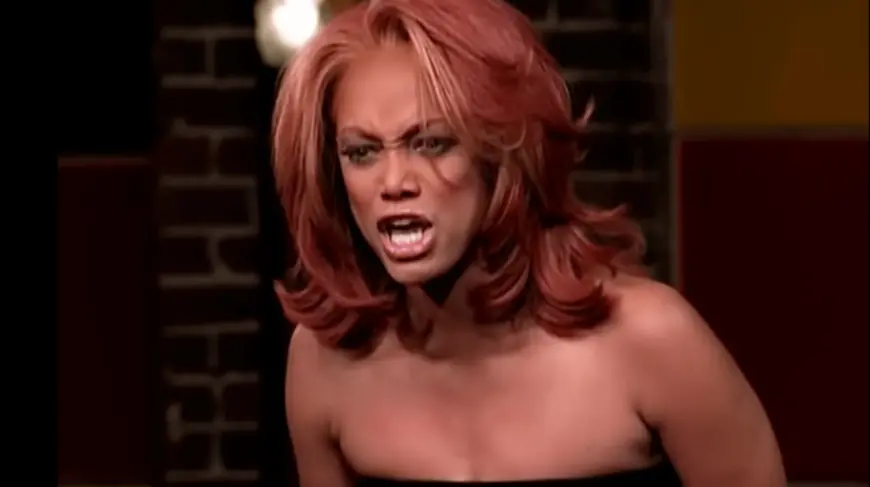
The host and creator appears throughout in interviews, but the film frames her legacy in a complicated light. She is shown as both a trailblazer who publicly pushed for greater diversity in modeling and as a distant figure who, at times, deflects responsibility for production decisions. A now-infamous on-air tirade — remembered by viewers as a meme-worthy clip — reappears as an emblem of the show’s harder edges.
Several former judges and staff express contrition for choices that would not meet today’s standards. Producers and coaches vary in their remorse; some offer more sincere apologies while others strike a defensive tone. The net effect leaves the host appearing at times evasive and at others contrite, a portrait that complicates her earlier role as an industry reformer.
Legacy, industry reaction and unanswered questions
The documentary contends that many of the show’s most sensational concepts failed to translate into meaningful industry change. High-concept photoshoots that traded on shock and spectacle rarely led to sustained careers for the competitors, and the fashion world largely remained unmoved by the program’s attempts at inclusion.
Where the series is most provocative is in showing how participants expressed distress at the time and were nonetheless steered back into damaging storylines. It underscores a broader reckoning with how reality television constructs drama at contestants’ expense and how power imbalances play out behind the scenes.
For viewers revisiting the franchise, the documentary serves as both a retrospective and an indictment: it captures the cultural reach of that early reality era while cataloguing personal harms and managerial lapses that demand accountability. Whether it prompts substantive industry change remains uncertain, but the testimonies collected ensure these episodes will not be easily dismissed.