
























Air France Cancellations Leave Hundreds Stranded as European Snow and Strikes Ripple Through Hubs

On Sunday, February 15, 2026 (ET), dozens of Air France services were canceled across Europe, creating widespread disruption for passengers traveling domestically and internationally. The cancellations — affecting routes to Paris, Toulouse, Amsterdam and other cities — compounded weather and labor pressures already straining the continent’s air network.
Scope of the disruption
Operational problems on February 15 and extending into February 16 hit multiple routes, with major impacts at Paris Charles de Gaulle and Paris Orly. Domestic pairs such as Paris CDG to Toulouse and Paris Orly to Toulouse were among those removed from schedules, while international legs including Toulouse to Amsterdam and Nantes to Amsterdam were also shelved. The cascading effect of these cancellations has touched connections across Europe and beyond, with some transfers into and out of North America also delayed.
Weather played a key part in the wider congestion: bands of snow swept through Benelux and parts of northern Europe, forcing airports to reduce movements and prioritize safety during peak operational hours. A separate wave of labor action in parts of the network further complicated aircraft rotations and crew availability, meaning aircraft that should have been ready for later sectors were either delayed or unable to depart.
Impact on travelers and key hubs
Thousands of passengers faced sudden itinerary changes. For many, flights to Charles de Gaulle were the principal casualty, with travelers arriving at the airport to find departures canceled or connections missed. Tourism and business travel both felt the strain: winter-break holidaymakers scrambled for alternative plans while corporate travelers confronted missed meetings and tight schedules.
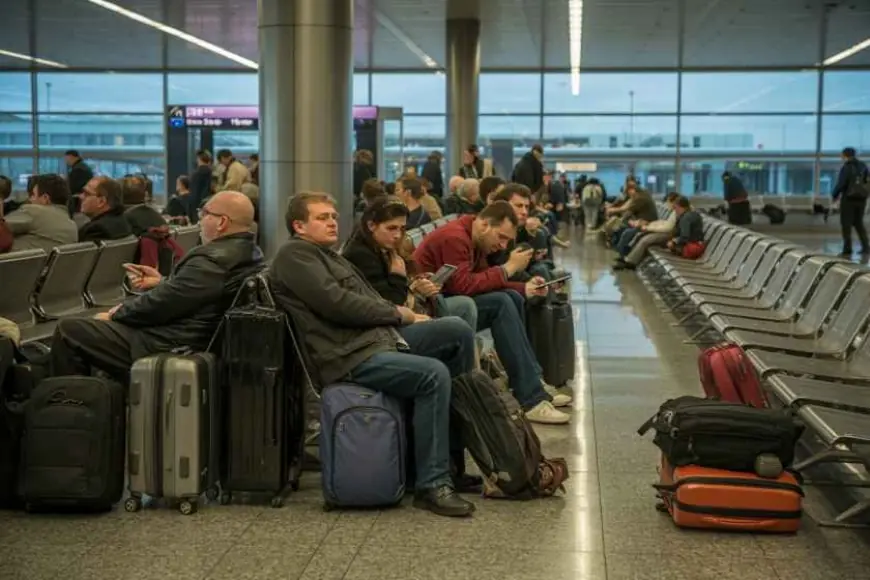
At affected airports, long queues formed at customer-service desks and rebooking counters as staff worked to redistribute passengers on remaining flights. With a high volume of disrupted services, finding seats on the next available flight proved difficult for many, and some travelers were forced to overnight in transit cities or seek last-minute lodging. Ground transport was also affected in outlying regions where snowfall made roads slower and transfers to airport terminals more uncertain.
Airline response and advice for travelers
Air France has initiated rebooking efforts for impacted customers, prioritizing alternate flights where inventory permits and offering assistance with onward connections in many instances. Given the scale of the disruption, however, affected passengers should expect delays in confirmation and should remain flexible.
Practical steps for travelers now: check the status of your booking directly with the airline or your travel agent, enroll in text and email alerts if available, and keep travel documents and any required visas accessible in case of rerouting. If you are at the airport, approach the airline’s rebooking desk early and consider asking about flights from nearby airports or later same-day options. For those whose plans are time-sensitive, such as business appointments, contacting meeting organizers to explain potential delays can reduce downstream friction.
For future bookings during unsettled weather and labor windows, consider added connection buffers and flexible fares that permit easier rebooking. Travel insurance that covers cancellations and delays can also reduce financial exposure during large-scale operational disruptions.
The recent disruptions underscore how weather and workforce dynamics can converge to unsettle even well-trafficked routes. As airlines work to restore scheduled services, passengers should prepare for residual knock-on effects in the coming days and allow extra time for onward travel.