
























Why Shooting Crime 101 Was a ‘Love Letter to Los Angeles’ — From Echo Park to the Sixth Street Bridge


Bart Layton’s Crime 101 has been framed by its cast and crew as more than a straightforward heist picture: it’s an attempt to map Los Angeles’s strata on celluloid. Shot across neighborhoods often overlooked by mainstream thrillers, the film uses real streets, markets and bridges to give its jewel-thief story a civic specificity, while probing questions of class, status and the commerce that threads the city together.
A city as character: location choices and production design
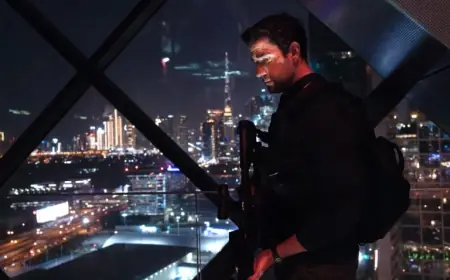
Layton and his production team deliberately sought corners of Los Angeles that cameras don’t always linger on. Sequences span Echo Park, Venice, Santa Monica, Melrose Place and stretches of the 101 corridor, pushing past glossy postcards to show the city’s topographical and social divides. Production designer Scott Dougan and the location scouts leaned into contrasts — immigrant-run jewelry rows downtown, sunlit coastal neighborhoods and the manicured storefronts of Calabasas — so that each theft and pursuit feels embedded in a distinct urban ecology.
Some set pieces hinge on very particular touchstones: a neighborhood taco stand intersection in Echo Park, the sweep of the Sixth Street Bridge, and interiors that shift from cramped downtown boutiques to a high-end Regency hotel. That geographic breadth was meant to register the journey of a diamond as it moves from modest beginnings to inflated value, dramatizing how goods and wealth travel unevenly across the same cityscape.
Themes on screen: inequality, method and moral friction
Crime 101 centers on Davis, a meticulous jewel thief who works the 101 freeway and aims to avoid harming anyone during his hits. Layton shapes the plot to ask how status anxiety, wealth inequality and social pressure shape criminal behavior — not as background color but as a motivating force. The film tracks a diamond’s lifecycle, showing its multiplication in value as it climbs social rungs, and uses that arc to illuminate who benefits from that escalation.
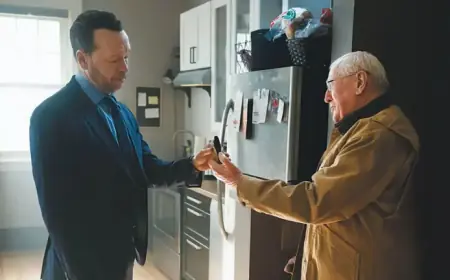
On screen, the moral geometry is complicated. An LAPD detective follows a pattern of linked robberies, while an insurance adjuster who has faced workplace bias finds herself in the middle of the triangle. Performances are calibrated to these tensions: the thief’s cool precision collides with a younger, volatile rival and with institutional forces that both conceal and enable the commerce he exploits. Layton stages heists with methodical detail, and that procedural specificity feeds into the film’s ethical questions about risk, reward and the blurred lines between survival and ambition.
Style, influences and audience takeaways
Visually and tonally, the film channels urban crime sagas of the past, borrowing stylistic flourishes that some viewers will instantly recognize. The result is a modern take that feels reverent toward those templates while attempting to carve its own angle through location-driven storytelling and a focus on the city’s social seams. Critics have praised the location work and the cast’s chemistry, even as some have argued the film leans heavily on established genre touchstones.
For audiences, Crime 101 offers both the satisfaction of well-executed robbery set pieces and a persistent civic gaze: Los Angeles is not merely backdrop but an engine of the story. The film opens in the U. S. on Feb. 13, 2026 (ET), inviting viewers to watch how place, class and technique intertwine in a thriller that doubles as a portrait of a city in collision with itself.