
























Baelor Targaryen’s Arrival and Dunk’s Trial of Seven Upend Expectations in A Knight of the Seven Kingdoms

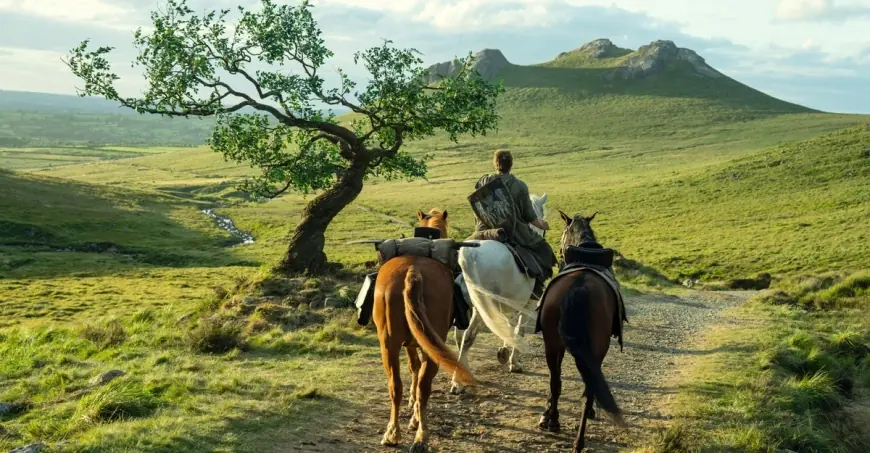
Sunday night (ET) brought the penultimate episode of the new prequel series, and what promised to be a classic all-or-nothing clash instead unfolded as a sequence of disorientation, cruelty and surprising tenderness. The moment a seventh combatant mounts the field, expectations for a sweeping, cinematic duel are quickly subverted—and the episode uses that reversal to deepen its central character.
Glory denied: a battle that feels brutal, small and merciless
The spectacle begins with a familiar flourish: a triumphant entrance that nods to epic tradition. When Prince Baelor Targaryen steps forward to serve as the final champion, the stage is set for what should be a defining, glorious combat. Instead, the trial of seven becomes a study in the fog of war and the human limits inside armor. Dunk and his fellow novice, Ser Raymun Fossoway, are so overwhelmed they vomit before the horn sounds—a raw physical reaction that underlines how unheroic the moment is for them.
Viewed largely through Dunk’s narrow helm slit, the fighting is a chaotic wash of hooves, mud, and blood. He freezes, panics, and when he finally enters the fray he is impaled by a lance and struck down almost immediately. The attack is not cinematic in the conventional sense; it is sudden, clumsy, and utterly devastating. That initial brutality is a deliberate tonal choice: this is combat stripped of romanticism, where luck, fear and chance decide fates more than noble arcs do. The presence of Prince Baelor—baelor targaryen in the most literal sense—marks the difference. His leadership of the opposing side makes clear this is not a sport but an intent to maim and kill.
Flashback as salvage: making Dunk human again
Rather than linger on the gore, the episode cuts to an extended flashback that reframes the present violence. Dunk’s near-death on the arena floor becomes the hinge that opens onto his past: a childhood in Flea Bottom, scavenging battlefields with his best friend Rafe, and the messy, human salvation offered by the drunken hedge knight Ser Arlan. These scenes give the audience reasons to root for Dunk that are quieter than battlefield heroics—his loyalties, a young love lost, and the debt he owes to the man who pulled him out of the gutter.
Detailing Dunk’s origins also underscores how the show diverges from the source novella: the adaptation compresses and reshapes early events to amplify the emotional throughline that drives the episode. Where many high-fantasy war sequences prioritize choreography and spectacle, this chapter chooses character. The flashback illustrates that Dunk’s courage is less a matter of destiny than of survival and loyalty—a very different foundation for heroism than most grand narratives offer.
Tonal shifts and what they mean for the season
Across the hour, the series toggles between irreverent lightness and sudden, unsettling violence. Earlier tonal choices—comic cutaways and human-scale stakes—remain intact, so the battle sequence lands as a jarring tonal pivot rather than a betrayal. That contrast is the point: the show is deliberately playing against the expectation that a penultimate episode delivers one grand, clarifying confrontation. Instead, it gives viewers an episode that complicates its protagonist and leaves him vulnerable.
What remains clear by the episode’s end is that the trial of seven has changed the emotional geometry of the season. The defeat, the flashback, and the exposure of Dunk’s past shift focus away from dynastic spectacle and toward the messy, intimate costs of the world’s violence. Even with a prince at the center of the opposing side, the story here belongs to a hedge knight who, for all his faults and fear, keeps getting back up. That stubborn, small-scale resilience may prove more compelling than any single victorious charge.