





















Daryl Hannah and JFK Jr.: How Love Story Reimagines a Tumultuous 1990s Romance

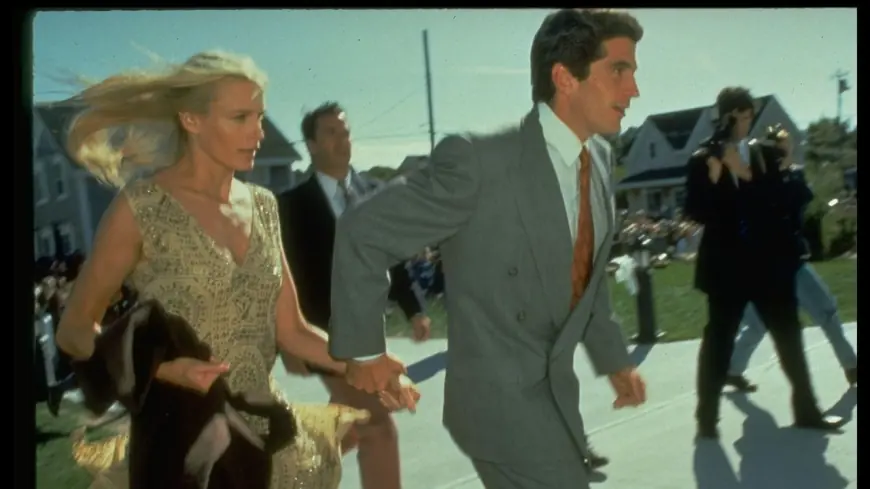
The new limited series Love Story: John F. Kennedy Jr. & Carolyn Bessette revisits one of the most talked-about romances of the 1990s, placing Daryl Hannah at the emotional center of John F. Kennedy Jr. 's early high-profile relationships. Premiered Thursday, Feb. 12, the dramatized retelling compresses real-life events to serve a streamlined narrative while leaning into the era's fashion, music and media spectacle. Episodes are released weekly on Thursdays at 9 p. m. ET.
Condensing a complicated relationship for television
The series makes clear choices about pacing and focus. Rather than tracing every stop-and-start of John and Daryl's real-life courtship, the creative team tightens moments to maintain forward momentum and dramatic clarity. That approach leaves some of the actual ebb and flow of the couple’s on-again, off-again dynamic outside the frame, but it sharpens key scenes where fame, family and rumor collide.
One sequence dramatizes how tabloid attention intersected with private moments: a dated headline and a momentary reunion that lands awkwardly for Carolyn Bessette, played in the show as a newcomer to a famously scrutinized orbit. The show uses those charged scenes to highlight how quickly public perception could shape intimate choices in that pre-internet celebrity landscape.
Dree Hemingway’s ‘love note’ to Daryl Hannah
The actress portraying Daryl Hannah, Dree Hemingway, took an unusually personal step before stepping into the role: she reached out directly to Hannah. Hemingway, who has ties to the family through her mother, wrote what she called a "love note" to express admiration and to convey what an honor it was to interpret Hannah on screen. She said she had no expectation of a reply but wanted to acknowledge the woman behind the public image.
Hemingway has spoken about filling an "iconic shoe"—a part that demands both mimicry and imaginative invention. The production treats many scenes as dramatized reconstructions rather than strict transcripts of history, and Hemingway embraced that tension, describing her task as honoring Hannah’s public presence while allowing space for fictionalized private moments the script needed to explore.
Jackie O., tension and historical context
Family dynamics move to the forefront in the series, with Jacqueline Kennedy Onassis portrayed as a wary observer of her son’s romantic choices. In one scene Daryl is shown leaving a family dinner early, convinced that the matriarch disapproves. That portrayal leans on longstanding accounts that Jackie questioned whether an actress was a suitable match for her son—less an expression of personal animus, the dramatization suggests, than maternal concern about stability and social fit.
The show also places family turmoil against the shadow of real tragedy. A later episode follows an episode of illness for Jackie, and the narrative nods to the period’s painful real-world outcome: Jackie’s 1994 diagnosis and subsequent death on May 19, 1994, at age 64. Those moments are used to underscore how grief, public attention and private choices all converged during a fraught chapter in the Kennedy family’s life.
As Love Story continues to unfold in weekly chapters, viewers can expect further dramatized intersections of fame, desire and familial expectation—anchored by a portrayal of Daryl Hannah that the production frames as both affectionate and interpretive. Whether audiences see the depiction as faithful or fictionalized will likely depend on how they weigh compressed storytelling against the messy nuance of the historical record.