






















‘Love Story’ Premiere and Calvin Klein Show Highlight a Kennedy-Era Fashion Dilemma

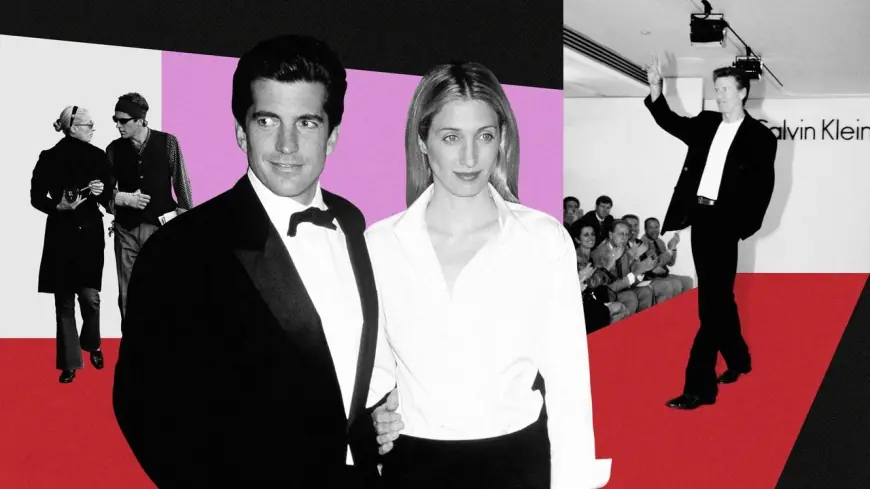
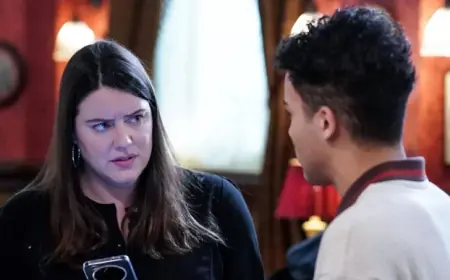
Ryan Murphy’s limited series Love Story debuted on Feb. 12, 2026 (ET), bringing renewed attention to the relationship between John F. Kennedy Jr. and Carolyn Bessette Kennedy—and to the pale minimalism that helped define her public image. The premiere landed almost simultaneously with a high-profile Calvin Klein runway show in New York, but the two events pointed in markedly different stylistic directions, prompting fresh debate about cultural ownership of a 1990s aesthetic and the ethics of dramatizing a family tragedy.
Style clash: 1990s minimalism meets a retro pivot
The series leans heavily into the restrained, pared-back wardrobes that made Carolyn Bessette Kennedy an icon: slip dresses, crisp white shirts, pencil skirts and that stoic, hands-off glamour that felt modern in the pre-digital 1990s. Production and costume design choices aimed to recreate a specific New York—no ubiquitous phones, clean lines and a controlled palette—so that the clothes and spaces feel like characters in their own right.
That carefully calibrated ’90s look collided with the runway director’s decision to reach farther back. The designer presented a collection inspired more by late 1970s and early 1980s references than by the spare Calvin Klein minimalism associated with the decade Love Story evokes. The tonal split was visible: while the show foregrounded Calvin’s influence on Bessette Kennedy’s professional and private style, the live collection tried to interrogate a less obvious chapter of the brand’s history, a moment when the house was still finding its identity.
The juxtaposition underscores how fashion brands can be pulled in competing directions—between honoring a potent historical image and staking out an independent creative path. It also opened a conversation about how much of the runway’s commercial energy will respond to the pop-cultural momentum generated by televised portrayals of famous figures.
Television, legacy and the tensions of storytelling
Bringing the intimate story of jfk jr and Carolyn Bessette Kennedy to the screen has revived old questions about who gets to tell family stories and how dramatizations intersect with grief. The series’ focus on small, domestic moments—many reconstructed with obsessive period detail—was intended to humanize two people who have long been mythologized. Yet that intimacy collides with a public appetite for spectacle, and with the objections of family members who see dramatization as exploitation.
Criticism erupted from within the extended family, with some calling the dramatization a profiting-off-of-tragedy move. Those objections fed a broader debate about whether dramatized retellings of recent pain should proceed without the blessing of descendants, especially when the real events ended in a fatal crash that left few living witnesses in the same place the couple occupied in life. The unease is not solely moral: it is also aesthetic. When a cultural moment reshapes how brands and designers approach a signature look, questions about authenticity, appropriation and commerce become unavoidable.
Designing an era: how sets and clothing recreated 1990s New York
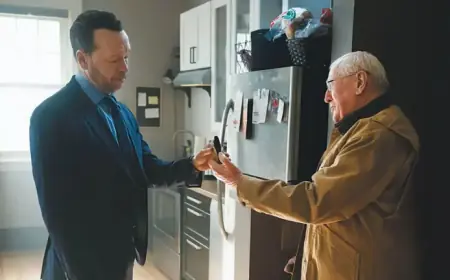
The production design embraced material cues that helped sell the narrative’s era: glass brick, industrial shelving, marble tables with chrome legs and a general high-tech minimalism that evoked showrooms and lofts of that time. The recreation of a Calvin Klein office served as an anchor for the series’ visual world. Costume choices—subtle tailoring, nude palettes, and the careful use of archival silhouettes—worked with sets to create a convincing sense of time and place.
Those decisions made the show’s version of the couple feel palpably of the 1990s, even as the fashion establishment on the runway opted for a different retrospective. Whether viewers see the series as an elegy, a reclamation of a lost aesthetic, or a commercialized reimagining of private grief will depend partly on how much sway the show’s image of Carolyn and jfk jr holds over future designers. For now, the simultaneous arrival of a dramatized life and a major runway collection has crystallized a wider cultural argument about style, stewardship and the cost of storytelling in the public square.