









Daryl Hannah and JFK Jr.: Why Their 1990s Romance Is Back in the Spotlight, and What Jacqueline Kennedy Onassis Really Meant for the Relationship

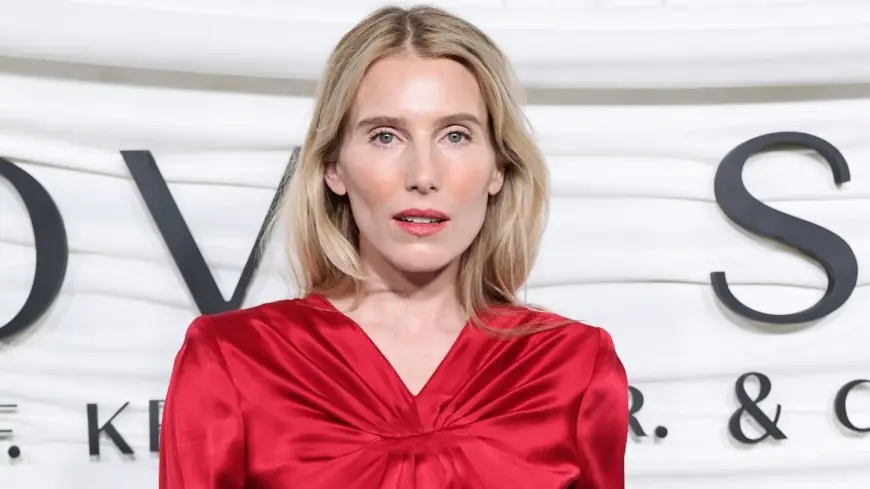
Daryl Hannah’s long-ago relationship with John F. Kennedy Jr. is having a new cultural moment in February 2026, as renewed public interest swirls around the couple’s late-1980s-to-1994 romance and the persistent question that has followed it for decades: did Jacqueline Kennedy Onassis disapprove, and did that shape the outcome?
The short version is straightforward. Hannah and Kennedy dated on and off for years, often under intense public attention. They split in 1994, a turning-point year for Kennedy personally, and he later married Carolyn Bessette in 1996. But the longer version is where the story keeps getting retold, because it sits at the intersection of celebrity culture, political legacy, and a family that lived with cameras as a permanent condition.
Daryl Hannah, Darryl Hannah Searches, and the JFK Jr. Curiosity Loop
Online interest spikes often begin with a simple search, sometimes even a misspelling. “Darryl Hannah” searches still lead people to the same question: what exactly happened between Hannah and JFK Jr., and why does it still feel unfinished?
Part of the answer is timing. Their relationship unfolded during an era when tabloid coverage was both relentless and loosely policed by today’s standards. The couple’s fame created a feedback loop: sightings fueled stories, stories fueled more attention, and attention increased the pressure on the relationship itself. When you add the Kennedy family’s symbolic weight, any girlfriend was never just a girlfriend. She was a character in an ongoing national narrative.
What Happened Between Daryl Hannah and JFK Jr.
Hannah and Kennedy were linked romantically beginning in the late 1980s and remained connected into the early 1990s, with periods of separation and reconciliation. They were photographed together frequently, traveled, and were treated in popular culture as a high-wattage pairing: Hollywood star meets American political royalty.
Their breakup in 1994 became the moment that later storytelling returns to, partly because it was followed by a clear next chapter in Kennedy’s life. Jacqueline Kennedy Onassis died in May 1994, and Kennedy’s romantic life soon moved in a new direction. The timeline invites interpretation, and interpretation is exactly what the modern attention economy rewards.
Behind the Headline: The Real Incentives and Pressures at Play
Context matters more than gossip here. For Kennedy, public visibility was never optional; it was the cost of his last name. For Hannah, fame was already a daily reality, but dating Kennedy multiplied scrutiny in a way few actors experience. The incentives for outsiders were also obvious: photographers, editors, TV bookers, and celebrity chroniclers all benefited from a tidy storyline with winners, villains, and decisive turning points.
The stakeholders extended beyond the couple. The Kennedy family brand carried reputational risk. Friends and advisers had their own views about privacy, optics, and stability. And fans projected their expectations onto Kennedy in particular, treating his personal life as a kind of public property. In that environment, even ordinary relationship problems become amplified into “reasons,” “causes,” and “fault.”
That is where the Jacqueline Kennedy Onassis question enters. The idea that a famous mother did or did not approve is narratively satisfying, because it gives audiences a simple lever to explain a complicated breakup. But it is also the kind of claim that often hardens into “fact” through repetition rather than proof.
Jacqueline Kennedy Onassis and the Persistent Disapproval Narrative
The story that Jacqueline Kennedy Onassis disliked Hannah has circulated for years, sometimes framed as a decisive factor in the relationship. The trouble is that this kind of claim is hard to verify definitively, and it is easy to overstate, especially when the people involved are no longer alive to clarify nuances.
What can be said responsibly is this: the “Jackie disapproved” narrative has been disputed over time, including by Hannah in past remarks where she pushed back on the idea that the relationship ended because Kennedy’s mother objected. That does not prove what Jacqueline felt in private, but it does show that the most repeated explanation is not universally accepted even by those closest to it.
What We Still Don’t Know, and Why That Gap Persists
Several key pieces remain unknowable or at least unconfirmed in a way that satisfies modern curiosity:
-
The couple’s private decision-making and the actual reasons for their final split
-
How much family opinion mattered versus simple relationship compatibility
-
Whether media pressure played a direct role in accelerating the breakup
-
How grief and life transitions in 1994 altered Kennedy’s priorities
The missing pieces persist because the relationship predates today’s social-media era, when public figures often narrate their own lives in real time. Back then, silence was more common, and ambiguity had room to grow.
What Happens Next: How the Story Will Keep Evolving
Expect the Daryl Hannah and JFK Jr. storyline to keep resurfacing in a few predictable scenarios:
-
A new dramatization or documentary rekindles debate, pushing old rumors back into circulation.
-
A memoir, interview clip, or archival footage re-enters the public conversation and reframes familiar assumptions.
-
The story gets re-litigated through modern lenses about privacy, paparazzi culture, and the cost of celebrity.
-
Public interest shifts from “who was to blame” to “what the era did to people,” especially as audiences reassess 1990s media norms.
Why It Matters
This is not just a nostalgia tale. It is a case study in how fame turns relationships into public puzzles, and how a powerful family legacy can distort the way outsiders interpret ordinary human decisions. The Daryl Hannah and JFK Jr. story keeps returning because it offers a simple hook, but the real lesson is more complicated: when pressure is constant and narratives are profitable, ambiguity becomes permanent, and the “truth” people repeat is often the one that fits best on a headline.