
























Ramadan 2026: Crescent sighting plans and what fasting hours will look like worldwide

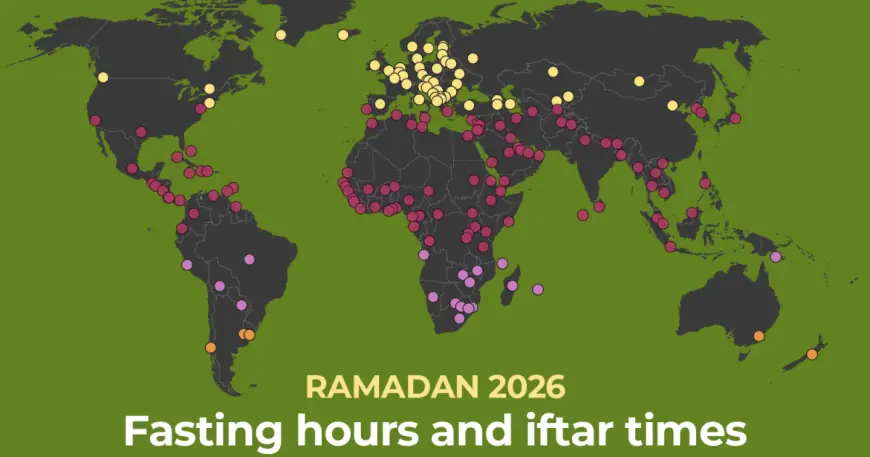
The start of Ramadan is poised to fall on February 18 or 19 (ET), depending on local moon sightings and national rulings. Saudi authorities have called on residents to attempt to sight the crescent on the evening of Tuesday, February 17 (ET), while some states have already moved to set the first day using astronomical calculations. Fasting durations this year will vary widely, ranging roughly from 11. 5 to 15. 5 hours around the globe.
Crescent-sighting guidance and safety notes
Officials in the Kingdom have urged anyone who believes they sight the new moon—whether with the naked eye or with binoculars—to report their observation to the nearest court or designated centre and to join local committees formed for the purpose. Authorities emphasized the communal and religious significance of verified sightings and called on those able to assist to participate in the official process.
At the same time, multiple astronomy teams have warned that attempting to view the moon on the same evening could pose hazards in some regions. The moon will be unusually close to the sun that night for many observers, coinciding in places with a solar eclipse. Direct observation of the sun or viewing through optical devices without certified solar filters can cause serious eye injury, including permanent damage. Professional observatories conduct such observations under strict safety protocols and specialized equipment; casual attempts to sight the crescent in risky conditions are strongly discouraged.
Some countries have chosen a science-based approach. One nation’s committee used astronomical data to determine that the crescent will set before or at sunset across all its districts on Tuesday, making visual confirmation astronomically impossible, and therefore declared Thursday, February 19 (ET) to be the first day of fasting. That decision reflects an established principle that observational reports should not contradict observable astronomical reality.
How long will daily fasts be—and who will feel the longest days?
Fasting during Ramadan runs from dawn (suhoor) until dusk (iftar), and this year daylengths will produce a wide range of fasting durations. Globally, expect the dawn-to-dusk fast to last roughly 11. 5 to 15. 5 hours depending on latitude and local sunrise/sunset times.
Because it is winter in the Northern Hemisphere, most of the world’s population will face shorter fasting hours on the opening day—about 12 to 13 hours in many northern population centres—with durations gradually increasing through the month as days lengthen toward spring. Conversely, communities south of the equator in countries such as Chile, New Zealand and South Africa will start the month with some of the longest fasts, near 14 to 15 hours on day one, though those hours will generally decrease over the course of Ramadan.
The Islamic lunar calendar moves earlier by roughly 10 to 12 days each solar year, so the timing and daily lengths of Ramadan shift significantly over time. That drift explains why fasting hours can swing between long summer days and shorter winter ones in different years and hemispheres. It also means that in 2030 Ramadan will be observed twice within the same calendar year—once beginning in early January and again at the end of December.
Local prayer timetables and official announcements will provide precise suhoor and iftar times for each community. Many countries typically issue official confirmations of the first day in the 24 hours after the expected sighting window, so congregations and families should monitor national religious authorities and local mosque committees for final rulings.
Whether communities follow traditional lunar sighting or adopt astronomical calculations, the central observance remains the same: a month of fasting, reflection and increased religious devotion. Observers are advised to prioritize safety when considering any outdoor sighting attempts and to rely on verified local guidance for fasting schedules and communal activities.