




















Connections Answer Today, February 16, 2026: Game 981 Blends Wordplay, Animal Sounds, and Stress Responses

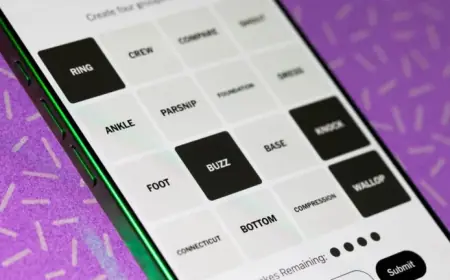
Players looking for the Connections answer today, February 16, 2026, ran into a puzzle that feels straightforward for a moment, then gets slippery as soon as you realize several words can fit multiple themes. Game 981 leans into overlap on purpose: jokes and noise, animals and verbs, language and psychology. The result is a grid that can punish confident early groupings and reward anyone who slows down to test alternate meanings.
The daily puzzle resets at midnight Eastern Time, and by early morning ET the same pattern repeats: solvers share near-misses, then compare which category they found first and which one caused the most mistakes. Today’s set is a good example of why this game keeps pulling search interest: the words are common, but the sorting logic is intentionally mischievous.
Connections Hints for Today, February 16, 2026
If you want a nudge without jumping straight to the full solution, here are gentle clues in ascending specificity:
Hint 1: One group is about laughter, but not a single word in that group is literally the word laugh.
Hint 2: One group is classic language trickery, where identical sounds hide different meanings.
Hint 3: One group is an animal theme, but it is not about the animals themselves.
Hint 4: The final group maps to a well-known cluster of human stress reactions.
If you are stuck, the fastest unlock is usually the homophone group. Once that clicks, the remaining words become much easier to separate without burning guesses.
Connections Answer Today: February 16, 2026 Full Solution
Here are today’s four groups of four:
Knee-slapper reactions
HOOT, LAUGH, RIOT, SCREAM
Homophones of the same sound
DO, DOE, DOH, DOUGH
Sounds a chicken makes
BUCK, CACKLE, CLUCK, SQUAWK
Stress responses
FAWN, FIGHT, FLIGHT, FREEZE
Behind the Headline: Why This Puzzle Design Works So Well
Today’s puzzle is built around a simple but powerful trick: it pairs high-familiarity words with high-ambiguity roles. Take SCREAM. It obviously belongs with a big emotional reaction, but it also reads like a noise, which tempts you toward the animal-sound set. BUCK can feel like an animal, a movement, or a verb with a totally different context. Even LAUGH, which looks like a giveaway, becomes part of a larger “reaction” grouping rather than a pure synonym set.
That overlap is not an accident. The game’s incentives are to create grids that feel solvable at first glance but require you to confirm, not assume. The best puzzles are the ones where your first instinct is close enough to feel smart, yet wrong enough to force a second pass.
The psychology category is the other hook. FAWN, FIGHT, FLIGHT, FREEZE is a tidy modern cluster, and it creates a satisfying late-game click. Designers love including a set like this because it feels culturally current and immediately legible once recognized, while still being easy to miss if you are staring at individual word definitions instead of the meta-pattern.
Stakeholders: Who Benefits From a Puzzle Like This
Regular players benefit because the themes are accessible and rewarding once the logic is clear.
Newer players benefit because two categories are highly gettable if you recognize basic wordplay and a common animal theme.
The game itself benefits because overlap drives discussion. When multiple groupings seem plausible, people talk about their wrong turns, which keeps the daily ritual social.
Search behavior benefits from repeatability. A daily puzzle with a single definitive solution reliably produces the same query pattern every day.
What We Still Don’t Know, Even After the Answers
Difficulty is not absolute. Some solvers will breeze through the homophones instantly, while others will never see it because they are reading each word literally. A puzzle can be objectively fair and still feel unfair depending on your vocabulary, cultural exposure, and how quickly you switch from definition-thinking to pattern-thinking.
The other unknown is tomorrow’s design direction. After a puzzle that mixes language tricks and psychology, the next one could go heavy on pop culture, niche terms, or classic word ladders. That unpredictability is part of what keeps daily interest high.
What Happens Next: 4 Realistic Solver Trends After Today
More players will start testing for homophones earlier, especially when the grid contains multiple spellings that could share a sound.
Some players will adopt a caution rule for animal-adjacent words, checking whether the theme is about the animal, the noise, or the behavior.
Expect more late-game recognition of the stress-response set as players remember it for future grids.
A noticeable slice of solvers will report one mistake caused by SCREAM or BUCK drifting into the wrong group, which is exactly the kind of near-miss that keeps people coming back.
Today’s Connections answer is a clean example of the game’s formula at its best: familiar words, deceptively overlapping meanings, and a final reveal that makes your earlier confusion feel logical in hindsight.