

















Small Prophets review — Mackenzie Crook’s magical new comedy is pure, pure pleasure

Mackenzie Crook’s follow-up to his much-loved work lands as a gentle, uncanny delight: a suburban sadcom that quietly opens out into folklore and the genuinely strange. Small Prophets rewards patience and attention, turning a modest premise into something unexpectedly moving and consistently funny.
A deceptively ordinary starting point
At first glance the series is comfortably familiar. Pearce Quigley plays Michael Sleep, a shaggy, melancholic everyman whose life has stalled since his partner Clea vanished seven years earlier. Michael’s days are composed of small rituals — a commute in a battered Capri, a repetitive retail job on the DIY shop floor, short visits to his father’s nursing home, and evenings in a house that seems to shrink with the absence at its centre. That domestic list of losses could have produced a flat, sentimental sadness; instead, Crook nudges the material toward wonder.
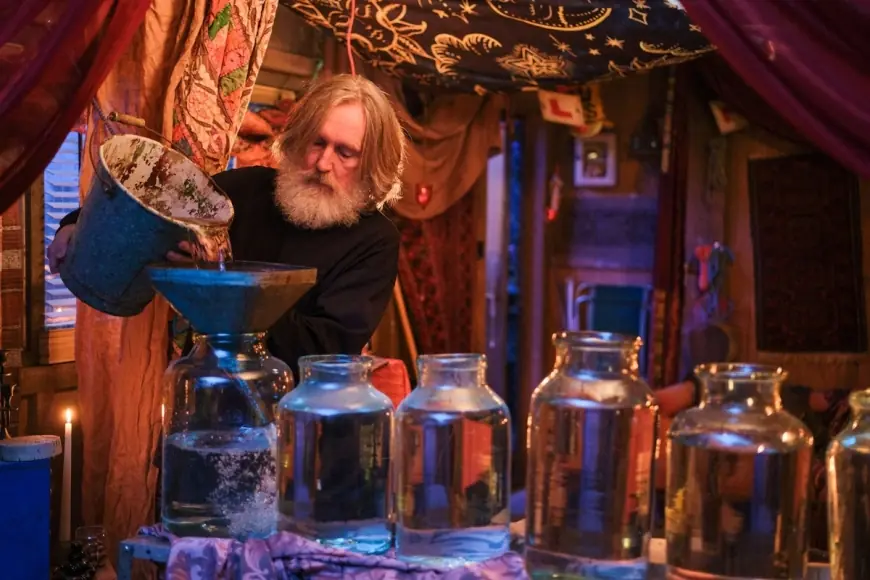
The pivot arrives in an improbable family conversation about an ancient recipe. Michael’s father, Brian, believes he knows how to make homunculi: tiny creatures kept in jars that can answer questions and glimpse the future. What begins as a baroque, slightly ridiculous conceit is treated with an exacting seriousness that allows the show’s humour and heart to flourish. The series resists obvious cynicism and never lets the fantastic feel like a cheat; instead, it becomes the story’s way of examining grief, hope and the human need for answers.
A cast that anchors the strange
Performance is everything here. Quigley gives Michael a shaggy dignity — a man whose oddities are matched by an earnest decency. His chemistry with Lauren Patel’s Kacey, a bright, compassionate younger colleague, is one of the show’s quiet joys: their friendship is tender, funny and refreshingly platonic, offering a fresh emotional centre that avoids easy romantic beats.
Michael Palin turns up as Brian, an eccentric with a fading grip on memory but an undiminished appetite for mischief and alchemy. Palin brings a weary warmth and sly sparkle to moments that might otherwise tip into sentimentality. Other supporting players — including a curmudgeonly neighbour who frets about overgrown hedges and a manager at the DIY store who becomes an unwitting foil — populate Crook’s world with small, memorable human details that add texture without ever crowding the main story.
Magical social realism and emotional payoffs
Crook has always been adept at excavating tenderness from the banal, and here he invents a new tonal register: magical social realism that feels lived-in rather than theatrical. The homunculi are not mere gimmicks; they act as catalysts for characters to confront the things they have been avoiding. Scenes that might once have been purely comic are allowed to land with genuine poignancy, and Crook resists tidy resolutions in favour of quieter, truer emotional notes.
Visually and tonally the series loves the small things — the hum of a fluorescent store, an overgrown front garden, a clumsy Rube Goldberg marble run. These textures, combined with Crook’s precise comedic timing and a score that lingers, create an atmosphere that’s at once comforting and uncanny. When the show pulls its surprises, they feel earned and human, never indulgent.
Small Prophets is not a spectacle but a patient kind of television: one that trusts viewers to sit with ambiguity and find reward in the details. Fans of Crook’s earlier work will recognise the sensibility — the humour that arises from scrupulous character work rather than punchlines — but this series also strikes out into stranger, more folkloric terrain. It’s a show that invites you to believe in small miracles, delivered with warmth, wit and an insistence on emotional truth.