

























Expert Criticizes N.B. Power’s Metric Choices for Assessing Needs

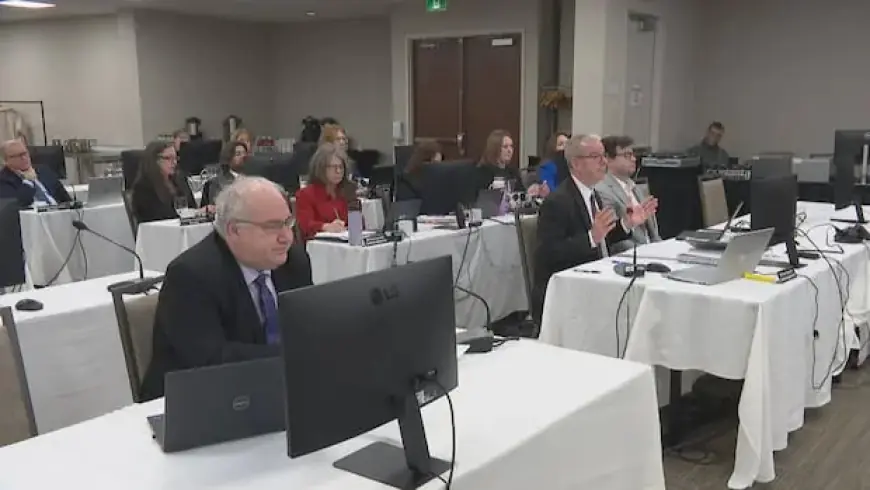
Expert testimony concluded last Friday in an Energy and Utilities Board hearing concerning N.B. Power’s proposed gas and diesel power facility in rural Tantramar. The board heard various opinions on crucial issues: the necessity for the anticipated 400 megawatts of additional power and the existence of more cost-effective alternatives to the fossil fuel plant.
Assessment of Power Needs
Jeffrey Palermo, a Florida-based energy systems consultant serving as an expert witness, asserted that N.B. Power does not currently require the projected power capacity. Furthermore, he argued that battery storage could serve as a practical alternative, should the need arise.
Concerns Over Capacity Assessment
Palermo’s criticism centered on N.B. Power’s approach to determining its capacity needs. He claimed that the utility relied on short-term operating analyses instead of long-term planning standards. This methodology, he argued, led to a pronounced capacity shortfall in calculations.
John Furey, representing N.B. Power, countered this assertion by presenting tables that indicated periods in the winters of 2023 and 2024 when the utility experienced negative net margins and exceeded its power usage plans. He raised concerns about the risk of blackouts during such times.
- Furey’s Argument: N.B. Power was close to potential outages during certain winter days.
- Palermo’s Response: Utilities possess various tools, such as voltage reductions, to manage power demands.
Point Lepreau’s Reliability
During the hearing, Furey brought up Point Lepreau, N.B. Power’s nuclear station, which can produce up to 715 megawatts. He implied that an outage at Lepreau could exacerbate the situation. Palermo acknowledged that relying on a single large generator isn’t ideal, but noted that the risk of Lepreau failing was already factored into their assessments.
Operational Considerations
Furey highlighted that operational indicators should not be overlooked, even if they signal critical conditions. Palermo maintained that planning standards should guide decisions on new power generation needs, but this stance faced challenges from other consultants, including those from the Brattle Group, who emphasized the importance of a balanced approach to long- and short-term assessments.
Upcoming Decisions
As the hearing concluded, a decision from the board is anticipated in April. Final submissions are scheduled next week at the board’s office in Saint John. A second round of hearings will occur from March 31 to April 2, focusing on a proposed expansion of the gas project, which would add two turbines generating an extra 100 megawatts for sale to Nova Scotia.