























Anatomy of an upset: how Ilia Malinin lost Olympic figure skating gold

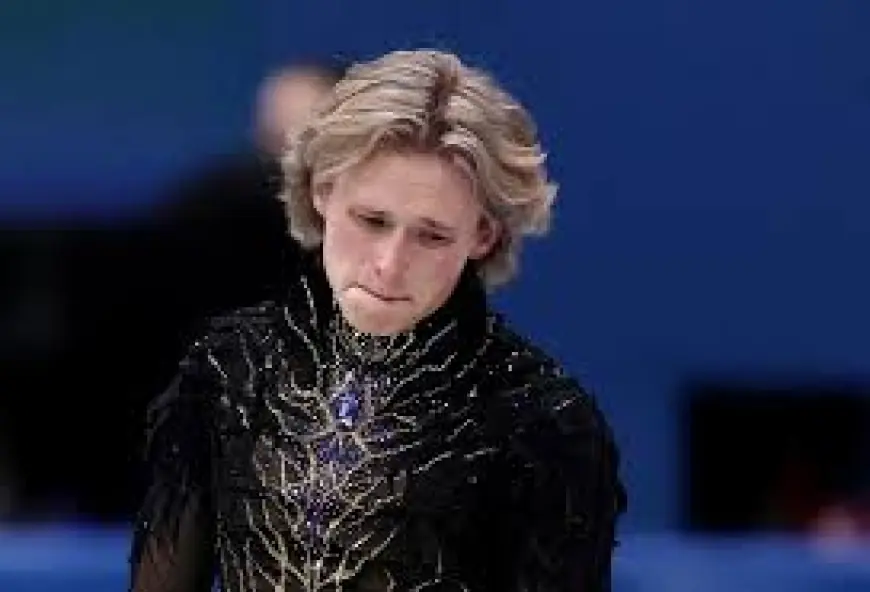
Ilia Malinin arrived at the Milano Ice Skating Arena as the runaway favorite for the men's Olympic title, carrying a short-program lead and a program built around the sport's most difficult elements. What unfolded during his seven-minute free skate turned that expected coronation into a lesson in how quickly modern figure skating scoring can erase an advantage.
How the free skate unraveled
Malinin took the ice at 4: 48pm ET with momentum on his side: unbeaten for nearly three years, fresh off consecutive world championships and leading by more than five points after the short program. The program he planned to skate was stuffed with high-base-value elements designed to make victory almost inevitable.
Early in the program a key axel element vanished, forcing a rapid reordering of his planned content. He briefly steadied himself with a quad lutz, but a planned quad loop was rotated down to a double, slashing roughly 10 points from the program's expected base value. A fall followed on the opening leg of a high-value quad lutz–single euler–triple flip combination; where that pass would normally deliver mid-teens in base value and positive grade of execution, it barely reached single-digit scoring after deductions.
Later, what had been slated as one of the skate's biggest scoring opportunities—a quad salchow–triple axel sequence—collapsed into a double salchow and a fall. By the time Malinin completed an elite quad toe loop–euler–triple flip combination, the cumulative loss in base value and the cascade of negative GOE left the program structurally damaged. His technical element score ended at 76. 61 points; the winner closed with 114. 68.
Why the math of modern skating is so unforgiving
At elite level competitions, margins are determined as much by planned technical content as by execution. Programs are assembled like ledgers: each planned jump or sequence carries a base value that underpins overall scoring. When a high-base element is missed or downgraded, the loss isn't one discrete hit—it often removes the opportunity for adjacent combinations and changes the balance of what follows.
For Malinin, missing the axel ripple-effected through his entire layout. One wrong or downgraded jump forced immediate improvisation in a program constructed to be executed in a specific order. The result was not only individual element penalties and falls but a smaller cumulative base value and fewer chances to pick up compensating points elsewhere. In short, he stopped skating from a position of control and started skating to limit the damage.
Context and consequences
The scale of the upset was amplified by what happened around Malinin earlier in the night. Several of the plausible challengers also failed to deliver clean programs, while others never assembled the base technical content to threaten him. That sequence of events left the door wide open, which made the collapse all the more dramatic.
The outcome will raise fresh questions about program construction and risk management at the highest level. Technical dominance remains a path to victory, but it is one with razor-thin margins: a program that banks on four-quads and high-value combinations can produce astronomical scores when executed, and precipitous drops when it is not. For Malinin, a skater who has pushed the technical ceiling of the sport, the Olympic result is an acute reminder that in this scoring era, a single swing can rewrite the narrative of a career.
For the rest of the field, the event reinforced a simple truth: in modern Olympic men's skating, precision and consistency are as decisive as daring.