














Psycho Killer Movie Review: A long-delayed slasher lands in theaters with familiar cast and thin results

The Psycho Killer Movie has reached wide release after a protracted development history, arriving as a director’s feature debut and featuring a horror-oriented cast. The film’s arrival matters because it revives a long-circulating screenplay and tests whether a troubled production can still find an audience in theaters.
What happened and what’s new
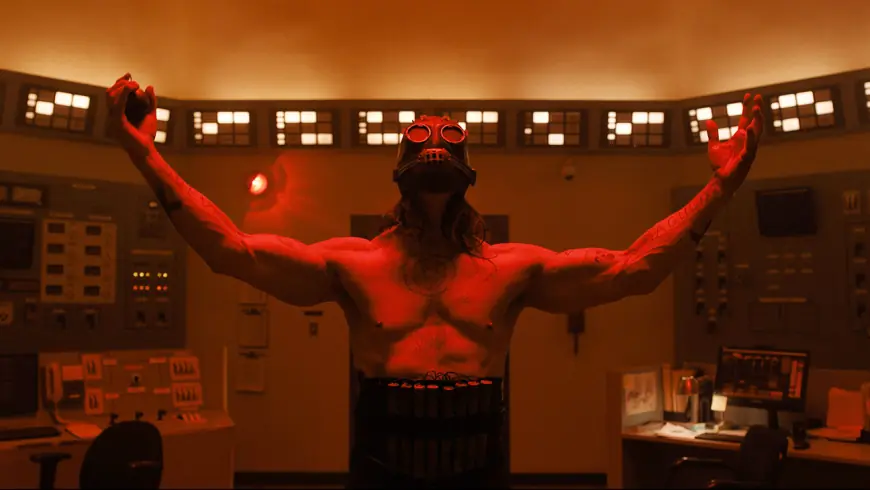
The film follows Jane, a highway patrol officer played by Georgina Campbell, as she pursues a hulking, menacing killer who fatally shot her husband during a traffic stop. That antagonist, portrayed by a former wrestler turned actor, is known in the story as the Satanic Slasher because he leaves satanic symbols and cryptic messages finger-painted in blood at murder scenes and motel rooms. The narrative tracks both the protagonist and the Slasher as they move across the country, with the surviving officer becoming obsessed with finding him after the highway ambush.
The production marks the feature directorial debut of a veteran producer, with a screenplay credited to the writer known for an influential 1990s serial-killer thriller. The movie runs approximately 1 hour and 32 minutes, carries an R rating for violence, and opened in theaters with a broad theatrical rollout.
Psycho Killer Movie: Behind the headline
The screenplay that underpins this release has a long, complicated history: it originated in the mid-2000s and passed through multiple attempts to get made over nearly two decades. Earlier iterations attached different potential directors and producers, and funding and production plans stalled at multiple points. The project was eventually produced years later and completed for release.
Key creative stakeholders include the director making his first feature, the screenwriter behind a well-known serial killer film of the 1990s, and a cast led by Georgina Campbell with supporting turns that include a large, physically imposing actor as the killer and a veteran performer in the role of a cultish figure who presides over a decadent estate. The story also incorporates a metal band that appears within the film’s diegesis and a subplot involving a group styled as poser Satanists.
In critical response sampled at release, reviewers described the film as failing to cohere as either an effective crime thriller or a successful horror picture, calling its scares and revelations underwhelming. Early critical reactions note an effective opening sequence but conclude that the film struggles to sustain momentum and fails to justify the lengthy path from script to screen.
What we still don’t know
- Box-office performance and audience reception beyond opening weekend.
- Whether the film will find a larger following on home platforms after its theatrical run.
- How broadly the film’s long development history affected the final cut and creative choices.
- Any further edits or alternate versions that might surface after initial release.
- Whether the creative team will pursue sequels, spin-offs, or expanded media tied to the film’s characters or iconography.
What happens next
- Modest theatrical stay: If early ticket sales are limited, the film could exit cinemas quickly and move to home platforms within weeks—trigger: low box-office receipts.
- Cult reassessment: The film might build a niche audience that appreciates its B-movie elements and cast, sustaining interest on streaming and physical media—trigger: steady post-theatrical viewership and social buzz.
- Critical reappraisal: Selective praise for performances or specific sequences could prompt a reassessment in genre circles—trigger: prominent critics or commentators spotlighting particular strengths.
- Franchise shelving: If critical and commercial response is poor, plans for any extensions or higher-profile follow-ups are likely to be abandoned—trigger: public confirmation of no sequel development and lack of financial incentive.
Why it matters
For filmmakers and studios, this release tests whether a screenplay with a long, troubled path can still justify a wide theatrical rollout. The project bundles a number of risk factors—an origin story tied to an earlier era of genre filmmaking, a director new to features despite producing experience, and a tonal balance between crime procedural and slasher elements—that make its commercial trajectory uncertain.
For audiences, the film’s practical implications are straightforward: it offers a compact, R-rated horror picture anchored by a lead performance that leans into genre conventions and a physical antagonist constructed for shock value. Near-term, viewers deciding whether to see the film in cinemas or wait for home viewing will weigh sparse critical enthusiasm against curiosity about a long-promised screenplay finally reaching screens.
At the industry level, how this title performs may influence decisions about greenlighting other stalled scripts with high-name pedigrees but uncertain contemporary appeal. The film’s reception will be watched as a gauge of appetite for theatrical horror that trades on recognizable serial-killer tropes rather than reinvention.