
























United States at Milano Cortina 2026: A Statement Win in Women’s Hockey and a Breakthrough Ski Medal Reset Expectations

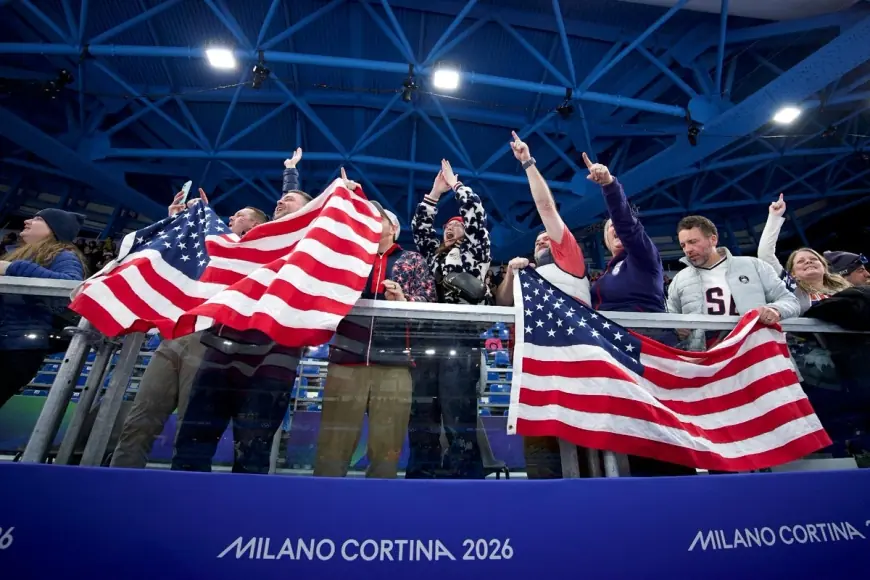
The United States is starting to shape the story of Milano Cortina 2026 around two themes that travel well in an Olympic fortnight: dominance in a rivalry that defines a sport, and an unexpected medal that signals a program turning a corner. On Tuesday, February 10, 2026, Team USA’s women’s ice hockey team delivered a 5–0 shutout over Canada in preliminary play, a result that immediately shifts bracket pressure and psychology across the tournament. In the same early stretch of the Games, the U.S. also grabbed a silver medal in men’s cross country sprint, a podium that carries outsized meaning for a discipline where American men rarely reach the top tier.
United States vs. Canada: The 5–0 that changes the women’s hockey bracket math
The United States did not just beat Canada; it controlled the game end-to-end and turned a marquee rivalry into a lopsided scoreboard. A shutout at this stage does more than pad goal differential. It influences seeding, potential matchups, and the emotional tone inside two locker rooms that often see each other again when the medals are on the line.
Behind the headline, the incentives are clear. For the U.S., a commanding win in the group phase reduces uncertainty later by improving the path through the knockout rounds. For Canada, the loss raises immediate questions about lineup availability and form, especially when any missing leader or key contributor can ripple through special teams, matchups, and bench decision-making.
Stakeholders extend beyond the two teams. Coaches and federation leadership are watching whether tactical choices under Olympic pressure are holding. Sponsors and broadcast partners care because this rivalry is a centerpiece product. And other contenders quietly celebrate any sign that the bracket could open up if one giant looks vulnerable.
What we still do not know is how much this game predicts the next one. Olympic hockey swings quickly on goaltending variance, special teams, and health. The shutout will be read as a signal, but the true test is whether the U.S. can reproduce this level when the margin for error disappears.
Second-order effects to watch include how both teams manage minutes and physical wear in the days ahead. A big win tempts a staff to keep riding hot lines, while a heavy loss can push a staff into juggling combinations that may or may not settle in time.
A U.S. men’s cross-country silver: Not just a medal, a program marker
The U.S. silver in men’s sprint is the kind of result that can reset internal expectations for an entire pipeline. Cross-country sprint rewards explosive speed and tactical positioning, and it also exposes weaknesses in waxing choices, pacing discipline, and confidence in tight finishes. A podium suggests the U.S. is narrowing gaps that, historically, have been structural: depth, funding continuity, and the day-to-day training environment needed to convert promise into medals.
Context matters here. For years, American cross-country has had flashes of top results, but sustaining men’s podium-level performance at the Olympics is a different standard. This silver will be interpreted as proof that investment and athlete development are translating under the highest pressure.
The stakeholders include national team leadership, sponsors who want to back a credible medal contender, and younger athletes who now have a tangible example that a U.S. man can reach the Olympic podium in this sport. The missing piece is whether this is a single-athlete peak or a sign of broader depth that can produce repeat finalists and relay contention.
Second-order effects could be significant: more attention can mean more resources, but also more scrutiny. If the U.S. program suddenly becomes a medal expectation, the psychological load increases in a sport where tiny mistakes decide outcomes.
What happens next: Scenarios that could define Team USA’s Milano Cortina 2026 arc
-
Women’s hockey sustains control through the knockout rounds if health holds and special teams remain disciplined. Trigger: clean games with low penalties and consistent goaltending.
-
Canada rebounds quickly and forces a rematch narrative that turns this 5–0 into “fuel,” not “forecast.” Trigger: a sharper defensive structure and improved conversion on early chances.
-
The U.S. cross-country medal becomes a springboard for another podium if conditions and confidence align. Trigger: strong qualifiers and tactical patience in heats.
-
The silver stands alone, but still rewires the program’s long-term trajectory. Trigger: younger athletes and staff using this as a blueprint rather than a one-off.
-
A wider Team USA momentum wave builds as early results reduce pressure on marquee stars in other sports. Trigger: multiple finals appearances in the first week, spreading belief across the delegation.
Why it matters
For the United States, early, high-signal results do two practical things: they change the competitive landscape and they change the internal temperature of a team. A 5–0 in women’s hockey is both a seeding asset and a psychological lever. A silver in men’s cross-country sprint is both a medal and a statement about progress in a discipline that rarely rewards the U.S. with hardware. Together, they suggest that Milano Cortina 2026 may be defined less by isolated star moments and more by a broader, harder-to-ignore depth across events.