
























Eileen Gu vs Mathilde Gremaud at the 2026 Winter Olympics: Slopestyle Gold Settled by 0.38 Points, With Big Air and Halfpipe Still Ahead

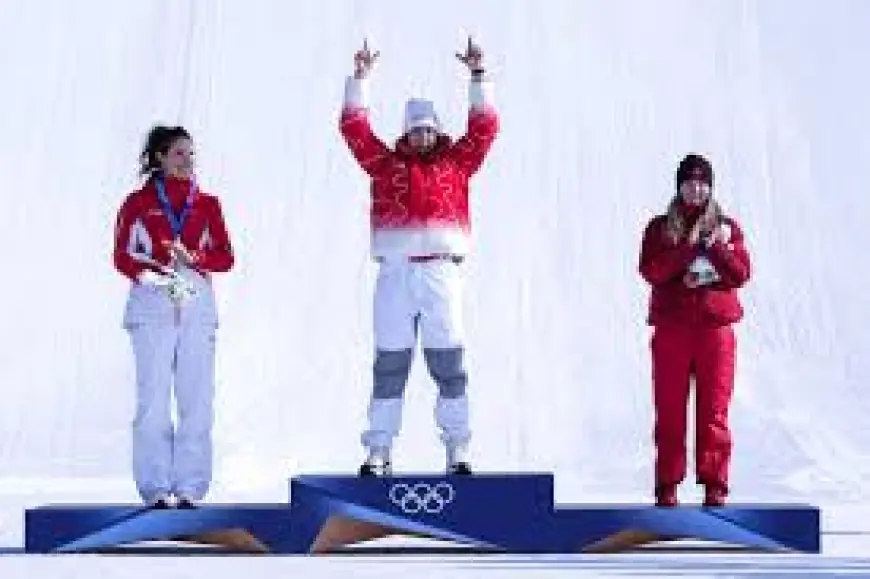
Eileen Gu, also known as Gu Ailing, and Switzerland’s Mathilde Gremaud have reignited one of freestyle skiing’s defining rivalries at the 2026 Winter Olympics, with Gremaud edging Gu for women’s freeski slopestyle gold by the slimmest of margins. In the final on Monday, February 9, 2026 ET, Gremaud defended her Olympic slopestyle title with a winning score of 86.96, while Gu took silver on 86.58, just 0.38 points back.
That tiny gap tells you everything about where women’s freeskiing is right now: the sport has moved into a “no free points” era where execution and landing quality are as decisive as difficulty, and where one imperfect moment can decide an entire Games narrative.
What happened in slopestyle and why it mattered
Gu came into the event carrying both expectation and complexity: she is the sport’s most recognizable star, yet she has also spoken openly in recent months about battling injuries and a serious concussion on her road back to Olympic form. In that context, a silver medal is not a footnote. It is proof she can still contend at the very top when the stakes peak.
For Gremaud, repeating as Olympic champion is a statement of dominance. She did not win on reputation. She won on precision under pressure, taking advantage of the small windows slopestyle judging gives you when every athlete in the final is capable of a run that would have won gold in earlier cycles.
The bigger competitive takeaway is that neither athlete “lost” control of the event. The result reflects how evenly matched their best versions are, and how the medal outcome can hinge on one landing, one grab, one slightly cleaner rail section.
Behind the headline: what each athlete is optimizing for now
The incentives differ, even if the medal table does not show it.
Gu’s incentive is to manage risk across a multi-event Olympic program. She is not chasing a single medal; she is trying to peak multiple times. That changes strategy. You can chase an extra fraction of difficulty in slopestyle, but that can also increase the odds of a crash that compromises the next event. For an athlete with recent health setbacks, the calculus is even sharper.
Gremaud’s incentive is to convert momentum into another gold while she is in full rhythm. Defending a title takes emotional energy, and the fastest way to protect your edge is to keep stacking clean results before the field adjusts, the snow changes, or the schedule fatigue hits.
What we still don’t know
Several missing pieces will decide whether this rivalry ends as a one-event thriller or becomes the story of the entire freeski program:
-
How aggressively Gu ramps difficulty for the next finals, and whether she does it without sacrificing landing security
-
Whether Gremaud’s slopestyle form carries cleanly into big air, where judging emphasis and risk profiles shift
-
How snow, visibility, and course speed evolve as the venues cycle through heavy use
-
Whether either athlete is managing lingering physical limitations that are not fully visible in broadcast highlights
This is the key ambiguity: fans see scores and podiums, but coaches see durability, recovery windows, and whether an athlete is landing “safe” or landing “max.”
What’s next for Gu Ailing and Gremaud in 2026
With slopestyle complete, the program moves toward the events that can redefine the medal narrative:
-
Women’s freeski big air qualification is scheduled for Saturday, February 14, 2026 ET
-
Women’s freeski big air medal event is scheduled for Monday, February 16, 2026 ET
-
Women’s freeski halfpipe qualification is scheduled for Thursday, February 19, 2026 ET
-
Women’s freeski halfpipe medal event is scheduled for Saturday, February 21, 2026 ET
Those dates matter because they create two pressure arcs: a quick turnaround for big air, and then a longer build toward halfpipe, where amplitude, flow, and landing consistency can swing medals dramatically.
Second-order effects: why this result echoes beyond one podium
This rivalry has ripple impacts across the sport.
Sponsors and federations read these margins as signals about where to invest: coaching, course time, new tricks, recovery teams, and competitive scheduling. A 0.38-point gold is the kind of result that pushes everyone else to chase marginal gains, and that often accelerates technical escalation across the entire discipline.
It also influences how younger athletes approach strategy. When the top two are separated by tenths, the lesson is not simply “go bigger.” The lesson is “go bigger only if you can land it every time.”
What happens next: realistic scenarios and triggers
-
Gu converts frustration into a big air surge
Trigger: a difficulty bump paired with clean landings that remove judging debate -
Gremaud turns slopestyle momentum into another gold
Trigger: she stays mistake-free while others chase risky upgrades -
A third contender breaks the two-athlete storyline
Trigger: someone hits the highest ceiling run of the Games and forces both stars into riskier responses -
Halfpipe becomes Gu’s redemption stage
Trigger: she arrives healthy and finds the pop and landing stability that make her nearly unbeatable when on -
The rivalry stays tight but medals split across events
Trigger: different judging emphases reward different strengths, producing a balanced medal share rather than a sweep
The practical point for anyone following “Eileen Gu” or “Mathilde Gremaud” this week is simple: the slopestyle result did not settle the debate. It set the tone. The next two events will decide whether this Olympics is remembered as Gremaud’s repeat-and-rise story, Gu’s comeback-and-closure story, or the moment the sport’s new depth finally broke the duopoly.