










Kid Rock halftime show headlines TPUSA’s alternative stream as culture-war backlash follows the official Super Bowl halftime booking

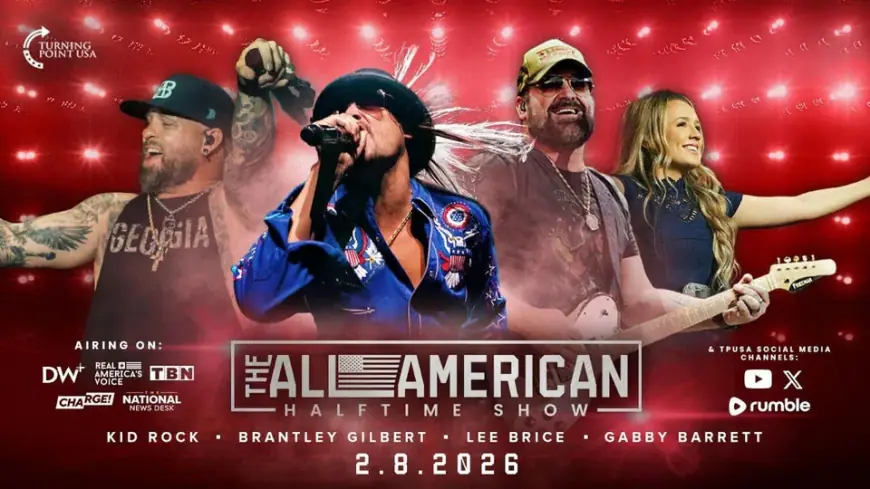
Kid Rock headlines TPUSA’s alternative halftime stream as backlash shadows official Super Bowl booking
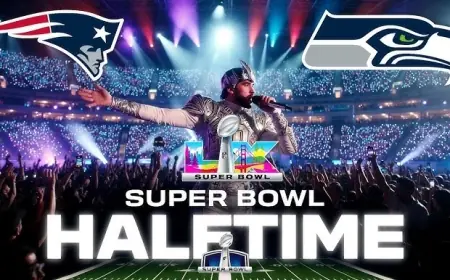
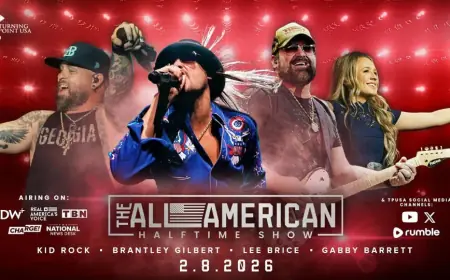
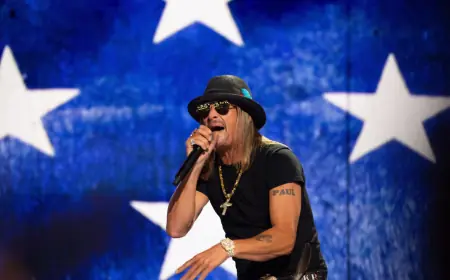
An unusual split-screen moment is unfolding on Super Bowl Sunday: while the NFL’s official halftime show is set to take over the broadcast, Turning Point USA is running a competing “All-American” halftime stream headlined by Kid Rock, aimed at viewers unhappy with the league’s headliner choice. The alternative show is scheduled to go live at about 8:00 p.m. ET on Sunday, Feb. 8, 2026, timed to overlap the game’s halftime window and capture a share of the night’s largest TV audience.
The counterprogramming comes after weeks of culture-war debate over the NFL’s booking of Puerto Rican superstar Bad Bunny—debate that has spilled from sports talk into broader arguments about language, immigration politics, and what the country’s biggest sports spectacle “should” represent.
What TPUSA’s alternative show is — and when it airs
Turning Point USA’s event is branded as “The All-American Halftime Show,” with Kid Rock as the marquee name and Brantley Gilbert, Lee Brice, and Gabby Barrett also slated to perform. Organizers have promoted it as a live stream that viewers can switch to during the break, framing the program as a patriotic alternative.
The timing is strategic because Super Bowl halftime is not a fixed clock time. It begins when the second quarter ends, so the exact start can drift depending on penalties, reviews, and pace of play. Still, planning the stream for roughly 8:00 p.m. ET aligns with the most common halftime window and the moment when many viewers are already picking up their phones, moving to the kitchen, or changing channels.
Why the official booking triggered backlash
The league’s choice of Bad Bunny as halftime headliner has been treated by supporters as a landmark cultural moment and by critics as a provocation. The backlash has centered on a few themes:
-
Some conservative voices have complained about a Spanish-language-heavy performance on the country’s biggest sports stage.
-
Others have tied their criticism to broader political arguments about immigration and national identity, turning a music booking into a proxy fight.
-
Bad Bunny’s own public profile—both artistic and political—has made the halftime slot feel less “neutral entertainment” than it might have in other years.
Bad Bunny has responded to the noise in recent days by urging fans not to get hung up on language, emphasizing that the performance is meant to be enjoyed rather than litigated.
The Kid Rock choice and the message behind it
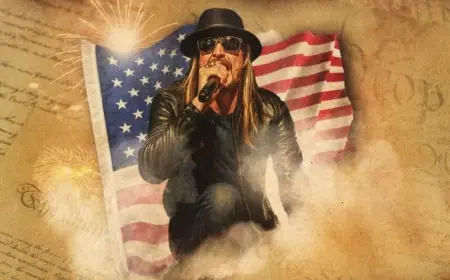
Kid Rock’s selection fits the organizers’ intent: he is a recognizable name with an established political identity, and he reliably draws attention in polarized moments. Pairing him with country artists creates a clear genre and branding contrast with the official headliner, while also signaling to viewers exactly what kind of show they will get without needing a long explanation.
The alternative stream is also part of a broader tactic: building media moments that don’t require permission from mainstream gatekeepers. A live stream can be launched quickly, promoted heavily, and measured in real time by shares and engagement—useful metrics for a political organization that treats attention as a form of power.
What the NFL is up against — and why it may not matter
In practical terms, the official halftime show still has the largest advantage possible: it sits inside the Super Bowl broadcast itself, where the overwhelming majority of viewers remain by default. Even people curious about the alternative show may only sample it briefly, then return to the game and the main broadcast.
But the presence of an organized alternative does matter in one key way: it changes the story around halftime from a single shared cultural moment into a choice. Instead of everyone watching the same performance and arguing about it afterward, a noticeable segment of the audience may opt out entirely—then argue about that decision.
That dynamic is increasingly common in U.S. culture: major events now produce parallel “side stages” designed to siphon off attention from the main one.
Key takeaways for viewers tonight
-
TPUSA’s alternative “All-American” halftime stream is slated for about 8:00 p.m. ET and is designed to overlap the Super Bowl halftime window.
-
Kid Rock headlines the alternative show, alongside other country performers, as a direct contrast to the NFL’s official headliner.
-
The backlash around the official booking has turned halftime into a broader political debate rather than a simple entertainment segment.
What to watch after halftime
The immediate measure will be how visible the alternative stream becomes beyond its core audience: whether it breaks into mainstream conversation, attracts notable public figures, or prompts a response from the league or advertisers. The longer-term measure is whether this becomes a repeatable template—political groups or brands offering “shadow programming” whenever a mass audience gathers.
For the NFL, the key risk isn’t that millions permanently abandon the halftime show; it’s that the halftime conversation becomes less about performance and more about polarization. If that trend continues, future halftime bookings may be judged as much by anticipated backlash as by artistic ambition.
Sources consulted: The Independent; Variety; Forbes; The Guardian